
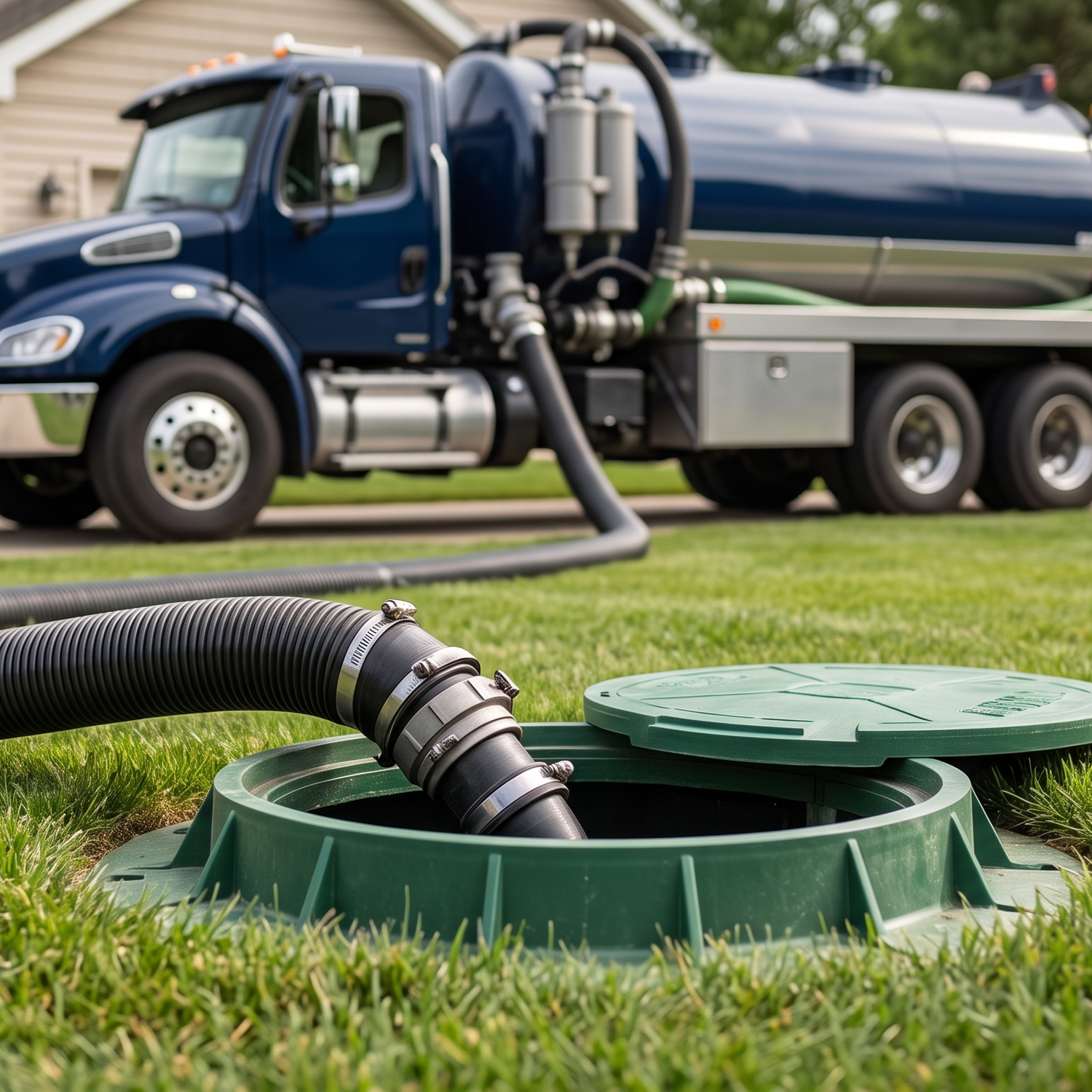
Quick Answer: Most septic tanks need pumping every 3 to 5 years, but the right interval for your home depends on your tank size, how many people live there, and how much water and waste the system handles. A smaller tank or a larger household fills with solids faster and needs more frequent pumping; a larger tank or smaller household can go longer. Pumping removes the sludge and scum that build up in the tank — solids the system can't fully break down. Staying on schedule keeps those solids from overflowing into the drain field, where they clog it and cause backups and costly failure. Regular pumping is the most important thing you can do to protect a septic system.
Run your home on a septic system, and one job sits above all the rest: getting the tank pumped on time. Skip it, and you're courting one of the priciest repairs a homeowner can face. So how often does it actually need doing? There's a rule of thumb, but the real answer comes down to your house. Here's what sets the interval, and why staying on schedule matters as much as it does.
The Cost of Getting It Wrong
Start with the stakes, because they're what make this worth your attention. Let a tank go too long without pumping, and the solids build up until they spill into the drain field, clog it, and trigger backups and system failure — and a failed drain field is about the most expensive septic repair there is. So pumping isn't a chore you can let slide. It's the maintenance that protects an expensive system. Nail the interval, and you sidestep both traps: paying to pump far more often than you need and waiting so long you wreck the field. That's why the right frequency for your home is worth getting right.
The General Guideline
For most homes, the recommended interval is every 3 to 5 years. That range fits many households, and it's the standard starting point. It's a range, not a single number, because how fast your tank fills with solids depends on your situation. Some homes land at the short end or sooner. Others can ride closer to the long end. So treat 3 to 5 years as the baseline, then let the factors below tell you where your home actually falls.
| Factor | More frequent pumping | Less frequent |
|---|---|---|
| Tank size | Smaller tank | Larger tank |
| People in household | More people | Fewer people |
| Water and waste volume | Heavy use | Light use |
What Changes the Interval for Your Home
A few things decide where in that range — or outside it — your home sits. Tank size is one: a smaller tank fills with solids faster and needs pumping more often, while a bigger tank holds more and buys you time. Household size carries even more weight. More people mean more wastewater and waste pouring into the system, so the tank fills faster, and a full house needs pumping more often than a couple does. Your overall water use and what you put down the drain also factor in. Add it up, and a big household on a smaller tank might be due every 3 years or sooner, while a small household with a larger tank can stretch to 5 years or more. Matching the schedule to your home beats leaning on the general number.
Why Pumping Is Essential, Not Optional
Look inside the tank, and you'll see why you can't skip it. Wastewater coming in separates into layers: the heavy solids sink to the bottom as sludge, lighter stuff floats up as scum, and the liquid in the middle flows out to the drain field. The system breaks down some of that waste, but not all of it — solids pile up over the years and never fully clear. Pumping is what hauls that sludge and scum out. Skip it, and the solids keep stacking until they reach the outlet and ride out into the drain field with the liquid, where they don't belong and where they clog the field. So pumping clears what the system can't before it causes downstream damage. That's the heart of why regular pumping is essential.
Keep a simple log of when your tank is pumped, along with your tank size and the number of people in your home. That record helps you and your septic pro fine-tune the right interval over time — a schedule based on your actual situation is far more reliable than waiting until something goes wrong.
Why Staying on Schedule Pays Off
Stay on a sensible pumping schedule, and you protect the whole system and your wallet at once. Regular pumping keeps solids away from the drain field, so the field keeps doing its job and the system lasts longer. It heads off the backups, odors, and soggy-yard problems that come with an overfull tank. And it turns septic care into a routine, predictable cost instead of the gut-punch of a failed field. Since the right interval rides on your tank size, household, and usage, a septic pro can set a schedule for your home, pump the tank, and check its condition while they're out. Treat pumping as scheduled, preventive upkeep, and the system runs reliably for the long haul.
Frequently Asked Questions
Most septic tanks need pumping every 3 to 5 years, but the right interval depends on your tank size, the number of people in the household, and your water and waste volume. Smaller tanks and larger households need more frequent pumping; larger tanks and smaller households can go longer. The 3-to-5-year range is the baseline, with the exact number depending on how fast solids fill your tank.
Tank size, household size, and water and waste volume. A smaller tank fills with solids faster; a larger one holds more and can go longer. More people mean more wastewater entering the system, filling the tank faster. Heavy water use also fills it sooner. So, a large household with a small tank pumps more often than a small household with a large tank — match the schedule to these factors.
Because solids accumulate in the tank, the system can't fully break them down. Wastewater separates into sludge (sinking solids), scum (floating materials), and liquid that flows to the drain field. The solids build up over time, and pumping removes them. Without pumping, those solids overflow into the drain field, where they clog it and cause backups and costly failure, so pumping is essential maintenance.
Solids build up beyond the tank's capacity and overflow into the drain field, clogging it and preventing it from dispersing liquid into the soil. This leads to backups into the home, sewage surfacing in the yard, and eventually drain field failure — among the most expensive septic repairs. So skipping pumping risks ruining the drain field and the whole system, which is far costlier than regular pumping.
Possibly, if you have a small household, a larger tank, and light water use, some homes can stretch a bit beyond 5 years. But going too long risks solids reaching the drain field and causing damage. The safest approach is to match the interval to your tank size, household, and usage rather than simply waiting as long as possible. A septic professional can advise the right schedule.
Yes. Regular pumping is widely considered the single most important septic maintenance task, because it removes the solids the system can't break down before they clog the drain field. Staying on schedule prevents backups and protects the drain field and the whole system, which is far cheaper than dealing with a failure. Other care helps, but pumping is the essential routine.
Pump on Schedule, Protect the System
Most septic tanks need pumping every 3 to 5 years, with the exact interval set by your tank size, household size, and water use. Pumping removes the solids that the system can't break down, keeping them from clogging the drain field and causing backups and costly failure. Stay on a regular schedule, and septic care becomes a predictable cost instead of a disaster, which is why pumping is the most important thing you can do for your system.
Due to have your septic tank pumped? — Get it pumped on the right schedule and its condition checked. Heavy Duty Pumping & Septic LLC serves Lucedale, Leakesville, Hurley, MS. Call (601) 804-2230.
