Commercial Septic Pumping In The Lucedale, MS Area




Opening hours
Our Trusted Commercial Septic Pumping in Lucedale, MS
Commercial septic pumping supports the wastewater needs of businesses, multi-tenant properties, and shared facilities that rely on on-site septic systems. Septic tanks collect solids and waste continuously, and routine pumping helps prevent excessive buildup that can interfere with normal operation. In Lucedale, MS, higher occupancy levels and daily usage place additional demand on commercial septic systems, making consistent pumping an important part of system care.
Our commercial septic pumping service focuses on maintaining proper tank capacity so wastewater can move through the system without restriction. Removing accumulated solids supports balanced separation inside the tank and helps protect downstream components from unnecessary strain. Addressing waste levels at the right time reduces the risk of backups, odors, and performance issues that can disrupt business operations or customer experience.
Commercial properties in Lucedale, MS, depend on septic pumping to support daily activity across restrooms, kitchens, and shared spaces. Understanding how occupancy patterns, system size, and usage intensity affect waste accumulation allows for a thoughtful service approach. Clear communication, careful pumping practices, and attention to system condition help maintain reliable septic performance for a wide range of commercial environments.

Types of Septic Tank Pumping and Cleaning Services We Offer in Lucedale, MS
Septic Tank Pumping
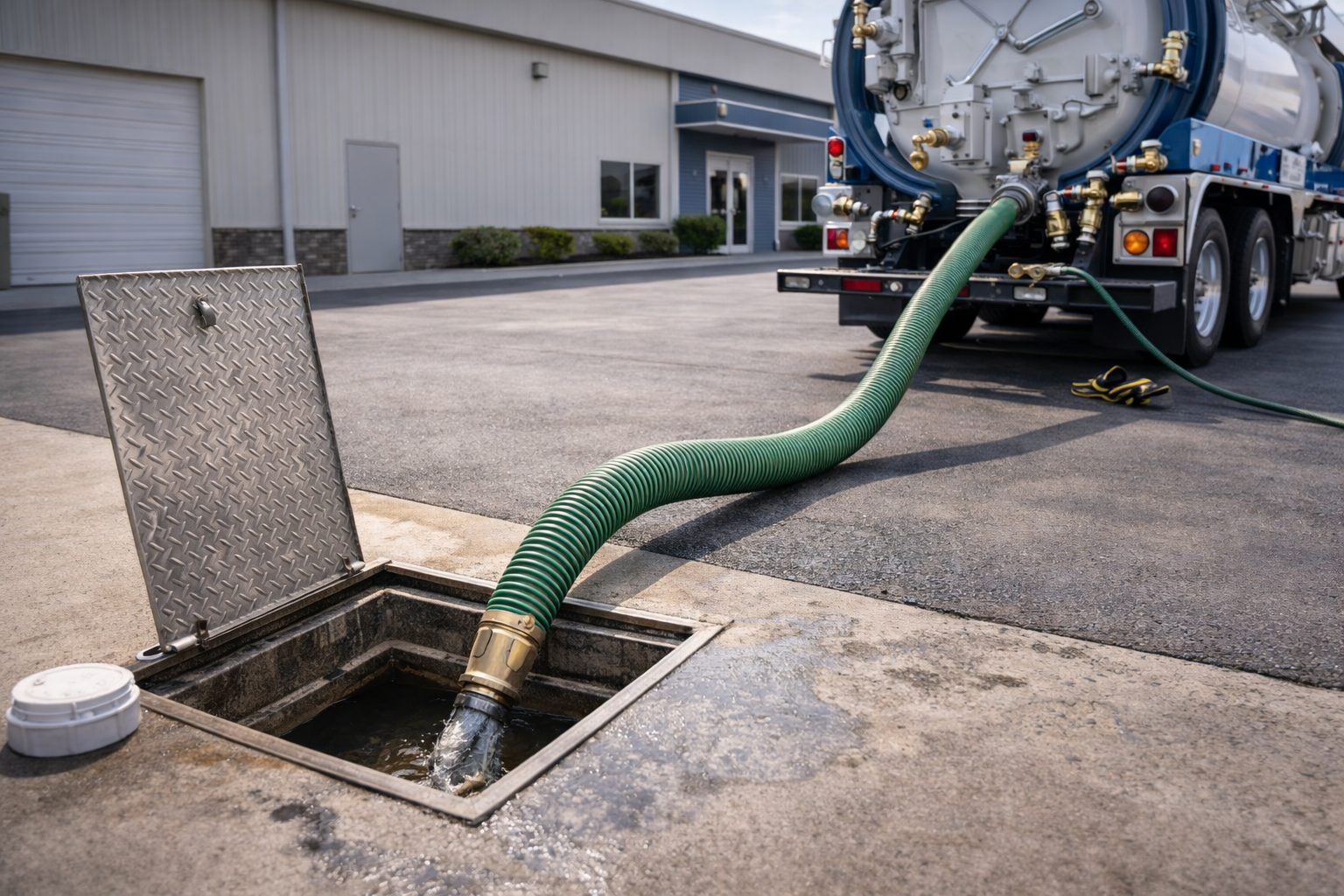
Septic tank pumping for commercial systems removes accumulated solids and waste that collect during daily business operations. Pumping restores proper tank capacity and supports steady wastewater flow. This service helps protect drain fields from overload, reduces the risk of backups or odors, and supports consistent system performance for facilities with higher usage demands.
Emergency Septic Tank Pump-Out (24/7)
Emergency septic tank pump-out addresses urgent situations such as backups, sewage odors, or surface pooling that require immediate attention. Homeowners usually notice fast relief once excess waste is removed. This service matters because quick pumping limits property impact and restores basic plumbing function during unexpected system overload.
Routine Septic Tank Cleaning
Routine septic tank cleaning focuses on removing residue that accumulates on tank walls and internal components over time. Homeowners may not see this buildup, but it affects how waste separates. This service matters because cleaner tank surfaces support smoother operation and help maintain predictable maintenance intervals.
Residential Septic Pumping
Residential septic pumping is based on normal household water use from bathrooms, kitchens, and laundry appliances. Homeowners often notice quieter, more consistent system behavior after service. This approach matters because aligning pumping frequency with household demand helps protect the tank and reduce interruptions caused by overfilling.
High-Capacity Tank Pumping
High-capacity tank pumping is designed for larger septic tanks, serving multi-residence properties or high-water-use households. Homeowners often rely on this service when standard pumping volumes are not sufficient. This option matters because removing larger waste loads helps the system continue operating safely without overwhelming the tank or connected drain field.
Holding Tank Pumping
Holding tank pumping removes wastewater from systems that store sewage without a drain field, commonly used in temporary or limited-space setups. Homeowners may notice faster fill times compared to standard systems. This service matters because regular removal prevents overfilling, controls odors, and keeps wastewater contained until it is properly disposed of.
Septic Sludge and Waste Removal
Septic sludge and waste removal target dense material that settles at the bottom of the tank and does not flow easily. Homeowners rarely see this buildup, but it impacts tank capacity. This service matters because removing heavy sludge restores usable tank space and supports consistent wastewater separation.
What Commercial Properties Can Expect During Our Septic Pumping Visit in Lucedale, MS

Reviewing Tank Access And Current Usage Conditions
We begin by locating the septic tank and reviewing how the property uses the system during normal business operations. Property managers often notice capacity concerns or slow drainage before service. This step matters because understanding access points and usage patterns helps pumping proceed efficiently while reducing disruption to daily activity.

Measuring Waste Levels Inside The Septic Tank
The tank is checked to determine how much solid waste and liquid have accumulated since the last pumping. Property owners may not see this step, but it guides how thoroughly the tank needs to be emptied. This step matters because proper removal restores usable capacity and prevents solids from moving toward the drain field.
Confirming Tank Condition And System Stability
After pumping, the tank interior and access points are reviewed before closing. Property managers typically notice normal drainage returning across fixtures. This step matters because confirming stability verifies proper pumping and supports dependable septic system performance for ongoing commercial use in Lucedale, MS.
Removing Accumulated Solids And Wastewater
Pumping equipment removes solids and liquids from the tank, allowing internal levels to reset. Property owners often notice improved system behavior after pumping. This step matters because excessive buildup interferes with separation inside the tank, and removal helps protect downstream components from overload.

Our Service Area
Heavy Duty Pumping & Septic proudly serves a wide coverage area to support residential, commercial, and shared septic and pumping needs. Our Mississippi service area includes Lucedale, Hurley, Wade, McLain, Leakesville, Ocean Springs, Pascagoula, Agricola, Big Point, Vancleave, Gautier, Moss Point, Escatawpa, Gulfport, Wiggins, Perkinston, Latimer, Hickory Hills, Beaumont, Helena, Brooklyn, Saint Martin, Gulf Hills, and Gulf Park Estates. Our Alabama service area includes Wilmer, Semmes, Mobile, Calvert, Gulfcrest, Citronelle, Eight Mile, Chunchula, Saraland, Grand Bay, Satsuma, Chickasaw, Prichard, Tillmans Corner, Saint Elmo, Deer Park, Creola, Mount Vernon, Sims Chapel, Irvington, and Vinegar Bend.

How Commercial Septic Pumping Helps Protect Drain Fields And Infrastructure
-
We begin by locating the septic tank and reviewing how the property uses the system during normal business operations. Property managers often notice capacity concerns or slow drainage before service. This step matters because understanding access points and usage patterns helps pumping proceed efficiently while reducing disruption to daily activity.
-
The tank is checked to determine how much solid waste and liquid have accumulated since the last pumping. Property owners may not see this step, but it guides how thoroughly the tank needs to be emptied. This step matters because proper removal restores usable capacity and prevents solids from moving toward the drain field.
-
Pumping equipment removes solids and liquids from the tank, allowing internal levels to reset. Property owners often notice improved system behavior after pumping. This step matters because excessive buildup interferes with separation inside the tank, and removal helps protect downstream components from overload.
-
After pumping, the tank interior and access points are reviewed before closing. Property managers typically notice normal drainage returning across fixtures. This step matters because confirming stability verifies proper pumping and supports dependable septic system performance for ongoing commercial use in Lucedale, MS.
Maintaining Stable Septic Performance During Daily Business Use
Commercial septic pumping helps keep wastewater systems operating smoothly despite higher daily volume from employees, customers, or tenants. Businesses often notice more consistent drainage after pumping. Stability matters because excess waste limits tank capacity, and restoring space allows wastewater to separate properly, supporting predictable performance and reducing disruptions during normal commercial activity.
How Commercial Septic Pumping Helps Protect Drain Fields And Infrastructure
Reducing Unexpected Backups And Operational Interruptions
Commercial septic pumping lowers the likelihood of sudden backups that interrupt restroom access or kitchen operations. Property managers often value fewer emergencies after service. Prevention matters because backups affect customers, employees, and compliance requirements, so maintaining proper tank levels supports uninterrupted operations and reduces stress tied to system uncertainty.
Protecting Drain Fields From Excess Solids And Overload
Removing accumulated solids prevents material from moving beyond the tank into the drain field. Commercial properties benefit from protecting this critical area, as drain fields help disperse treated wastewater. Protection matters because solids entering the drain field can cause long-term damage, so timely pumping helps preserve system health and reduces the risk of costly restoration work.
Supporting Longer System Life For High-Use Septic Systems
Commercial systems experience heavier demand than residential setups, increasing wear over time. Pumping removes waste that accelerates internal stress. Longevity matters because extending system life helps businesses avoid premature replacement, supports budgeting predictability, and keeps wastewater infrastructure functioning reliably as occupancy and usage patterns evolve.
FAQs - Commercial Septic Pumping
For commercial septic pumping in Lucedale, MS, contact Heavy Duty Pumping.
Routine pumping helps manage higher wastewater volume, protect drain fields, reduce backup risk, and support dependable daily operations for businesses, multi-tenant properties, and shared facilities.