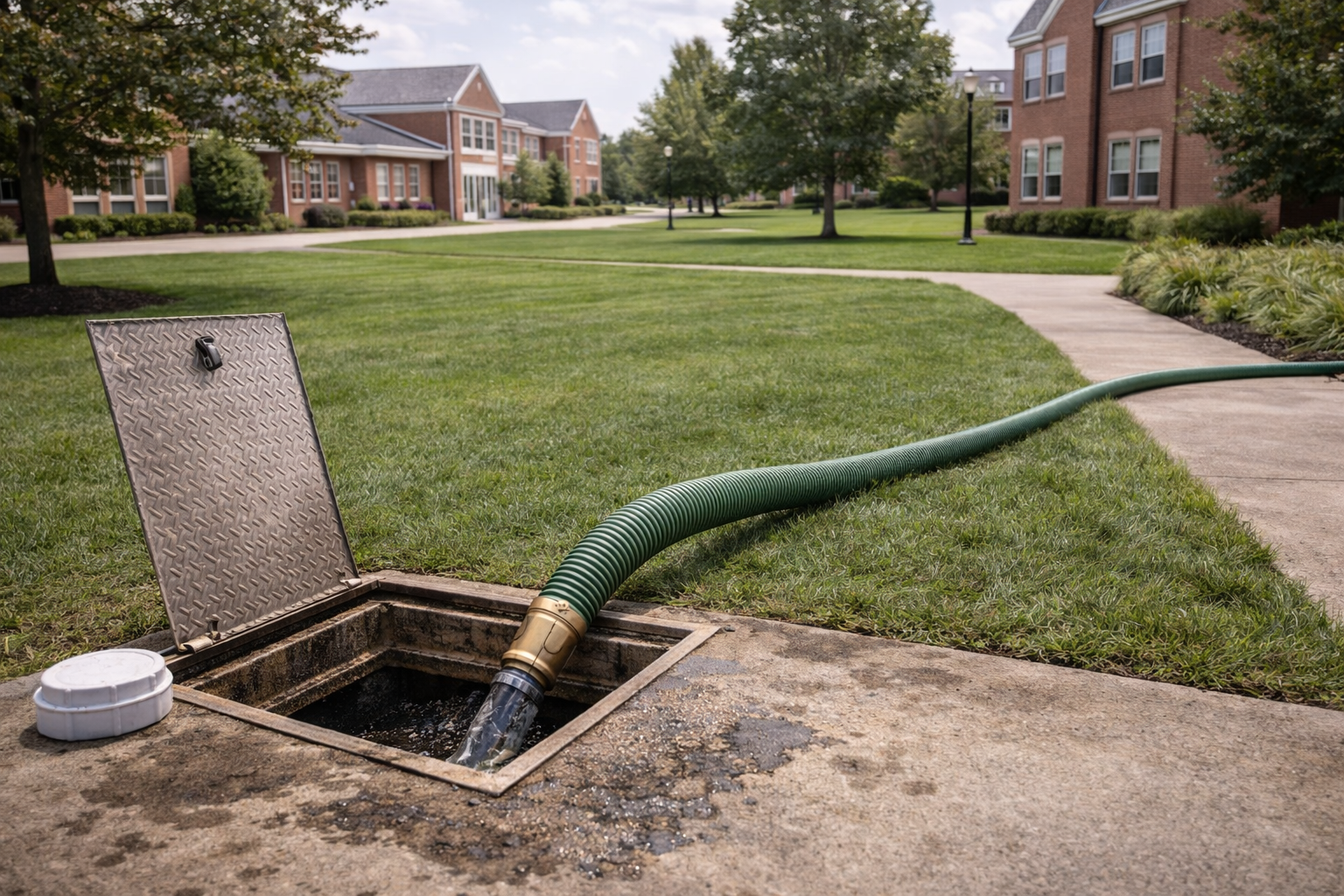
Warehouse, School & Government Facility Septic Service in Lucedale, MS




Opening hours
Our Dedicated Warehouse, School & Government Facility Septic Service in Lucedale, MS
Large facilities in Lucedale, MS, depend on septic systems that support steady daily use without disruption. Our warehouse, school, and government facility septic service addresses the unique demands placed on systems serving high-occupancy buildings. Consistent wastewater flow, dependable capacity, and responsible waste handling are essential to maintaining the cleanliness, functionality, and compliance with operational expectations in these environments.
We approach facility septic service with an understanding of how schedules, staffing, and public access affect timing and execution. Our work focuses on maintaining system performance while minimizing interference with daily operations. Facility managers often notice clear communication, organized service activities, and predictable coordination that allow septic work to move forward without unnecessary interruptions to staff or visitors.
Heavy Duty Pumping & Septic provides septic service for facilities that require dependable support across long operating hours and varied usage levels. Experience with large-scale systems enables our service to remain adaptable while maintaining consistent execution. Properties in Lucedale, MS, benefit from septic care that supports safety, reliability, and long-term system performance for essential community spaces.

Types of Commercial & Industrial Septic Services We Offer in Lucedale, MS
Large-Capacity Septic System Installation
We install septic systems designed to handle high daily wastewater volumes from warehouses, schools, and government buildings. Facility managers often notice careful planning and organized site preparation throughout installation. Proper capacity matters because systems serving large groups must handle consistent use without backups, protect surrounding soil, and support reliable operation during long operating hours and peak occupancy periods.
Industrial Waste Pumping
We remove liquid waste and heavy sludge from tanks, pits, and holding areas used by commercial and industrial operations. Property managers often notice steadier daily operations once waste levels stay controlled. Pumping matters because unmanaged buildup places strain on storage systems, increases overflow risk, and can interrupt essential processes tied to wastewater handling.
Municipal Lift Station Support
We service lift stations that move wastewater from lower collection points to higher sewer connections. Many people rely on these systems without seeing them operate. Support matters because accumulated solids reduce pumping efficiency, increase odor concerns, and raise the risk of backups that impact nearby properties and connected public infrastructure systems.
Multi-Property Septic Maintenance Programs
We coordinate scheduled septic service for owners managing multiple properties with separate systems. Organized programs help track pumping cycles and system conditions across locations. Ongoing maintenance matters because consistent oversight reduces surprise failures, improves planning accuracy, and helps each system operate within safe capacity limits over time.
Commercial Drain Field Rebuilds
We rebuild drain fields when soil absorption areas fail or become oversaturated from prolonged use. Property managers may notice pooling water or slow drainage beforehand. Rebuilding matters because functional drain fields allow treated wastewater to disperse underground safely, supporting system stability and protecting surrounding land from contamination.
How Our Septic Service Is Coordinated for Large Public and Commercial Facilities in Lucedale, MS

Facility Assessment and Service Planning
We begin by reviewing facility size, occupancy patterns, and daily water use to understand septic demand. Managers often notice walkthroughs, questions about schedules, and clear discussions around access points. Planning matters because warehouses, schools, and government buildings require services that align with operating hours, avoid disruption, and account for sustained use across restrooms, kitchens, and common areas.

System Capacity Review and Preparation
We evaluate existing septic capacity or planned system design to confirm it matches facility needs. Staff may notice documentation review and coordination with maintenance contacts during this step. Capacity review matters because systems serving large populations must handle consistent flow, and preparation helps prevent backups, surface issues, or operational interruptions once service work begins.
Post-Service Review and Ongoing Guidance
We review completed work with facility contacts and discuss future service considerations. Managers often notice clearer expectations around maintenance timing and system use afterward. Review matters because understanding system limits and next steps supports long-term performance, reduces emergencies, and helps facilities plan responsibly for continued daily operation.
Coordinated Service Execution on Site
We perform septic service or installation work according to the agreed plan, focusing on efficiency and controlled activity. Facility teams often notice organized equipment placement and predictable work zones. Execution matters because maintaining safe access, clear pathways, and orderly progress keeps buildings functional while septic work moves forward without unnecessary interference.

Our Service Area
Heavy Duty Pumping & Septic proudly serves a wide coverage area to support residential, commercial, and shared septic and pumping needs. Our Mississippi service area includes Lucedale, Hurley, Wade, McLain, Leakesville, Ocean Springs, Pascagoula, Agricola, Big Point, Vancleave, Gautier, Moss Point, Escatawpa, Gulfport, Wiggins, Perkinston, Latimer, Hickory Hills, Beaumont, Helena, Brooklyn, Saint Martin, Gulf Hills, and Gulf Park Estates. Our Alabama service area includes Wilmer, Semmes, Mobile, Calvert, Gulfcrest, Citronelle, Eight Mile, Chunchula, Saraland, Grand Bay, Satsuma, Chickasaw, Prichard, Tillmans Corner, Saint Elmo, Deer Park, Creola, Mount Vernon, Sims Chapel, Irvington, and Vinegar Bend.

-
Regular septic service helps facilities maintain dependable restroom and wastewater function throughout daily operations. Staff and visitors often notice fewer disruptions during high-use periods. Consistency matters because warehouses, schools, and government buildings rely on uninterrupted access to restrooms and sinks, and steady system performance supports productivity, comfort, and safe conditions for everyone using the facility.
-
Proactive septic care helps prevent sudden backups or overflows that can force temporary closures. Facility managers often appreciate fewer emergency situations after service routines are established. Prevention matters because unexpected shutdowns disrupt schedules, affect public access, and create logistical challenges that extend beyond plumbing concerns into staffing, operations, and compliance responsibilities.
-
Proper service reduces strain on tanks, pipes, and drain fields that handle continuous wastewater flow. These components remain out of sight, but protection is still a major factor. Longevity matters because systems serving large populations are in constant use, and preserving infrastructure helps prevent premature failure, extensive excavation, and costly replacement projects.
-
Ongoing septic service allows managers to plan maintenance around operating schedules and budget cycles. Clear expectations often reduce uncertainty around system performance. Predictability matters because facilities operate on structured timelines, and planned service supports smoother coordination, improved oversight, and fewer last-minute decisions regarding wastewater management.
How Coordinated Septic Service Supports Reliable Facility Operations
FAQs - Warehouse, School & Government Facility Septic Service
For septic service at warehouse, school, and government facilities in Lucedale, MS, contact Heavy Duty Pumping & Septic to coordinate scheduling and system support.
Consistent service planning helps facilities maintain dependable wastewater performance while minimizing disruption to daily operations and public access.