
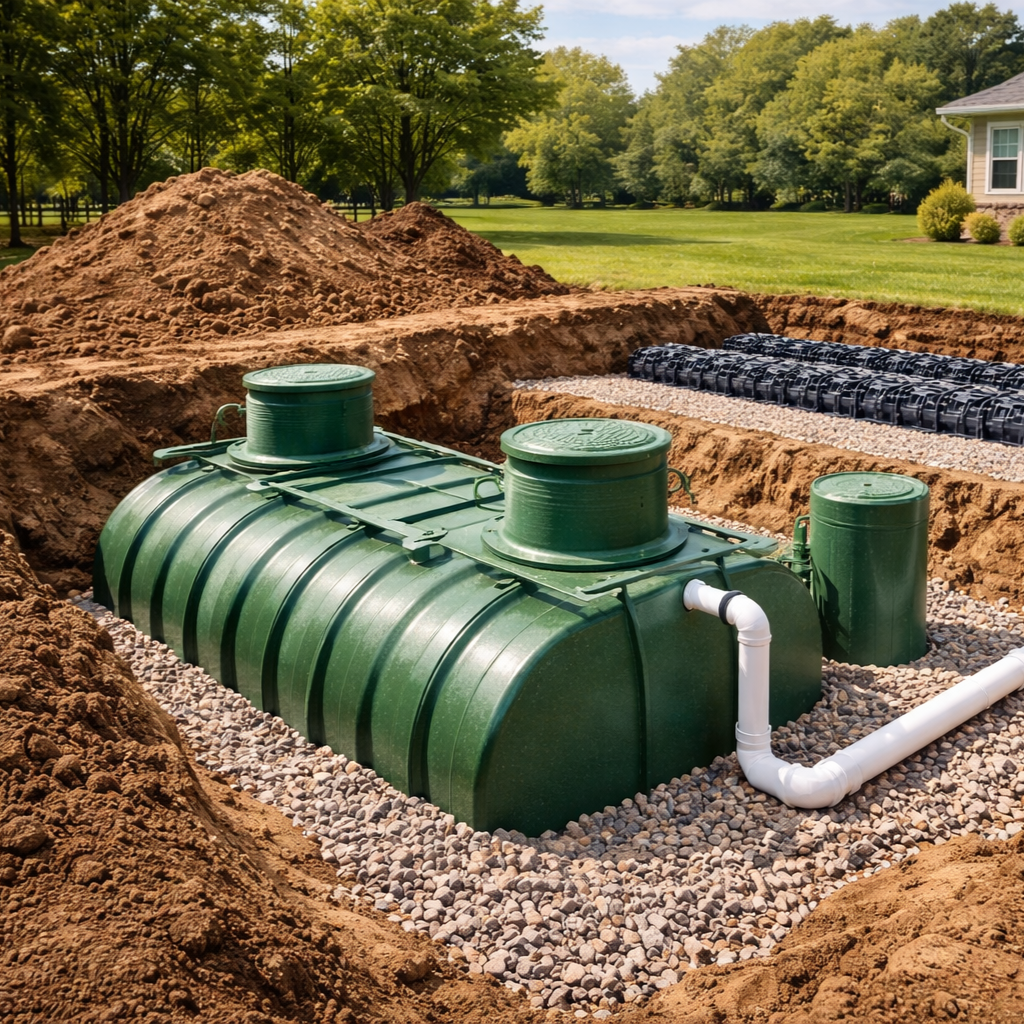
When a septic system starts failing unevenly, backing up in strange ways, or saturating only part of the drain field, the distribution box usually sits at the center of the problem.
Septic distribution box installation rarely gets the attention it deserves, even though it plays a quiet but critical role in how a septic system ages. After decades in the field, opening lids, regrading yards, and tracing failures back to their source, one pattern repeats itself more often than most homeowners realize. When a septic system starts failing unevenly, backing up in strange ways, or saturating only part of the drain field, the distribution box usually sits at the center of the problem. Many systems that appear to have drain-field issues actually suffer from poor distribution that began on the day the box was installed.
A septic system relies on balance. Wastewater leaving the tank should flow evenly into all drain lines so the soil has time to absorb and treat it. Septic distribution box installation controls that balance. When done correctly, the box quietly performs its job year after year. When installed poorly, the system begins aging unevenly, stressing some areas while leaving others underused. Problems develop slowly at first, then accelerate until repair options narrow and costs rise.
What A Septic Distribution Box Actually Does
A septic distribution box acts as the traffic controller between the septic tank and the drain field. Wastewater flows out of the tank into the box, where it is divided into multiple outlets that feed individual drain lines. Each outlet should receive roughly the same amount of flow during normal use. Balanced flow allows each trench to perform its share of treatment and absorption, preventing localized overload that damages soil structure.
The septic distribution box installation determines how evenly the flow is divided. Even small leveling errors can cause wastewater to flow preferentially to one outlet over others. Over time, the favored line receives more effluent than the soil can handle, while other lines remain relatively dry. Homeowners often misinterpret early symptoms, assuming plumbing issues are inside the house when the imbalance actually occurs underground.
Long-term performance depends on equal distribution. Soil needs oxygen and recovery time between dosing cycles. When a trench remains constantly saturated, oxygen is depleted, treatment slows, and the biomat thickens rapidly. The system may still function for a while, but failure begins building beneath the surface long before visible signs appear.
Why Leveling Is The Most Critical Part Of Installation
Leveling stands as the single most important factor in septic distribution box installation. Gravity systems depend entirely on precise elevation to distribute flow evenly. A box that sits slightly tilted can send most wastewater to a single outlet without obvious warning signs at first. Pipes do not correct themselves over time, and soil conditions cannot compensate for chronic imbalance.
Installers must account for soil settling, box material, and long-term stability during placement. A distribution box that starts level but shifts after backfilling creates delayed failure conditions. Seasonal moisture changes and soil compaction can cause subtle movement that throws off flow balance months or years after installation.
Experienced installers take extra steps to stabilize the box base and confirm level alignment after backfill. That extra effort protects the entire drain field from uneven loading. Systems with properly leveled distribution boxes often operate quietly for decades, while systems with minor leveling errors frequently experience early trench failure and partial collapse of the drain field.
Outlet Configuration And Flow Behavior Over Time
Not all distribution boxes behave the same way. Outlet height, pipe diameter, and box design all influence flow behavior. Septic distribution box installation must match the outlet configuration to the system design and soil conditions. Boxes with adjustable outlets offer flexibility, but only when installers understand how to fine-tune them correctly.
Fixed outlet boxes rely heavily on accurate installation from the start. Once buried, adjusting the flow becomes difficult without excavation. Adjustable outlet boxes allow minor corrections, but improper adjustment can create new imbalances if done without a full understanding of the system. Homeowners sometimes attempt adjustments on their own, unaware of how small changes affect long-term performance.
Over time, sediment buildup, minor pipe sagging, and soil movement can alter flow dynamics inside the box. A well-installed box tolerates these changes better than one installed at the margin of acceptability. Proper septic distribution box installation anticipates long-term behavior rather than assuming conditions will remain static.
Material Choices And Durability Concerns
Distribution boxes come in various materials, including concrete and plastic. Each option has advantages and limitations that affect installation and longevity. Concrete boxes offer weight and stability but require careful handling to avoid cracking. Plastic boxes resist corrosion and weigh less, but they demand secure bedding to prevent movement.
Septic distribution box installation must account for material behavior under soil pressure and moisture exposure. A plastic box installed without proper support can shift or deform over time, altering outlet elevations. Concrete boxes installed on uneven bases may crack, leading to infiltration or internal collapse.
Material choice should reflect site conditions, soil type, and expected traffic loads above the system. Long-term performance depends on the box maintaining its shape and alignment year after year. Poor material selection often becomes apparent only after damage has occurred underground.
Connection Integrity And Leak Prevention
Connections between the septic tank, distribution box, and drain lines require precise alignment and secure sealing. A septic distribution box installation that overlooks connection quality is prone to infiltration and exfiltration problems. Groundwater entering the box during wet periods can overload the drain field. Effluent leaking out before reaching the drain lines saturates the surrounding soil unevenly.
Leaking connections often go undetected because their symptoms mimic drain field failure. Persistent wet spots, odors, or slow drainage may appear without an obvious cause. Excavation often reveals compromised seals or misaligned pipes that allowed wastewater to bypass proper treatment zones.
Proper installation techniques include careful pipe cutting, correct seal placement, and alignment checks before backfill. Long-term system health depends on maintaining controlled flow paths that deliver wastewater exactly where the design intended.
Impact Of Uneven Distribution On Drain Field Longevity
Uneven distribution accelerates drain field aging. Trenches receiving excess flow develop thicker biomat layers faster, reducing infiltration capacity. As those trenches fail, remaining trenches must absorb additional load, creating a cascade effect that eventually overwhelms the entire field.
The installation of the septic distribution box directly influences this process. Balanced systems spread wear evenly across the drain field, allowing soil to age uniformly. Systems with imbalanced flow create isolated failure zones that expand outward over time.
Homeowners often notice problems only after damage has progressed significantly. By the time surface symptoms appear, soil structure in overloaded trenches may already be compromised beyond repair. Preventing that outcome begins with careful placement and leveling of the distribution box.
Soil Interaction And Moisture Management
Soil conditions interact closely with distribution behavior. Fast-draining soils tolerate minor imbalance better than slow-draining soils, but even sandy soils eventually suffer when overloaded. Clay-heavy soils amplify the effects of uneven distribution, leading to rapid saturation and surface seepage.
The installation of the septic distribution box must reflect soil absorption rates and moisture retention characteristics. Boxes feeding slow-draining soils require especially precise leveling and outlet control. Small imbalances create large performance differences when soil absorption margins are narrow.
Seasonal changes in moisture further complicate soil interactions. Wet seasons reduce available absorption capacity, making balanced distribution even more important. Systems designed with soil behavior in mind perform consistently across seasonal cycles rather than fluctuating between functional and failing.
Maintenance Access And Future Adjustability
Accessibility often gets overlooked during septic distribution box installation. Boxes buried too deeply or placed under permanent structures limit future inspection and adjustment options. Over a system's lifespan, minor corrections may become necessary to restore balance as conditions change.
Accessible boxes allow professionals to evaluate flow patterns, adjust outlets if applicable, and identify early warning signs before widespread damage occurs. Lack of access forces invasive excavation for even minor service tasks.
Designing for future maintenance reflects a long-term mindset. Systems built with accessibility in mind adapt better to changing conditions and remain serviceable without major disruption.
Real World Failure Patterns Seen In The Field
Years of field experience reveal consistent failure patterns tied to distribution box issues. One drain line fails early while others remain functional. Standing water appears downhill from the system. Odors surface intermittently depending on usage. Each scenario often traces back to an imbalanced flow caused by improper installation of the septic distribution box.
Many homeowners invest in repeated pumping, chemical additives, or partial repairs without addressing the root cause. Those measures provide temporary relief but allow the underlying imbalance to continue damaging the soil. Eventually, repair options narrow to full drain field replacement.
Correcting distribution early can sometimes significantly extend system life. Catching the imbalance before the soil structure collapses offers a chance to restore performance without major excavation. Prevention remains far less expensive than repair.
Designing for Long-Term System Stability
Long-term system stability depends on attention to small details during installation. Septic distribution box installation sits at the intersection of hydraulic behavior and soil treatment. Precision at this junction protects every downstream component.
Systems designed conservatively tolerate variability in usage, weather, and soil conditions better than systems built to minimum standards. Distribution boxes installed with long-term stability in mind reduce stress across the entire drain field.
A well-installed distribution box rarely draws attention. Its success is evident in years of trouble-free operation, quiet drainage, and stable soil conditions. Systems that fail often reveal how critical that hidden component truly was.
FAQs
What happens if a septic distribution box is not level?
An unlevel box sends more wastewater to certain drain lines, causing uneven saturation and early drain field failure. Over time, overloaded trenches fail, while others remain underused, shortening the system's lifespan.
Can a distribution box be adjusted after installation?
Some boxes allow outlet adjustments if accessible, but correcting major leveling issues often requires excavation. Proper septic distribution box installation reduces the need for future adjustment.
How can I tell if my distribution box is failing?
Warning signs include uneven drain field saturation, recurring backups, or odors without tank issues. An inspection by a professional often reveals imbalances or connection problems.
Does replacing the drain field fix distribution problems?
Replacing the drain field without correcting the distribution box issues often leads to repeated failure. The quality of the septic distribution box installation must match the drain field design.
How long should a properly installed distribution box last?
A properly installed box can last decades when material choice, leveling, and soil conditions align. Longevity depends more on installation quality than material alone.
Heavy Duty Pumping & Septic delivers a full-service, start-to-finish solution for professional septic system care, including septic tank drain field services, septic system installation, septic system upgrades, and septic tank locating & mapping in the Lucedale area. Our team of professionals with over 35 years of experience use advanced septic equipment with a focus on proper system design, preventing costly failures, and ensuring long-term performance. Protect your property today and enjoy reliable septic performance.
