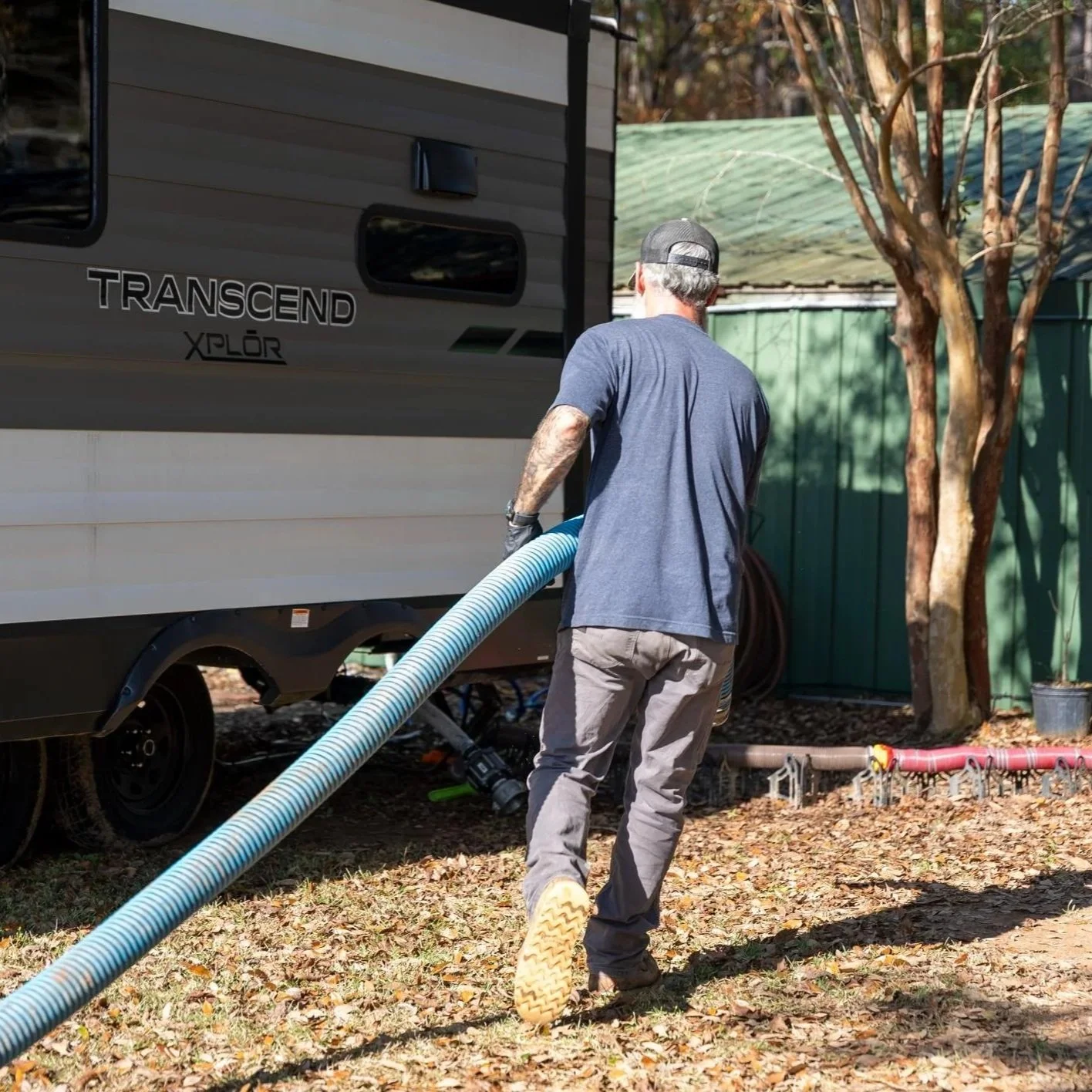
Technician carrying vacuum hose toward RV for high-capacity septic pumping, demonstrating large volume wastewater removal and mobile service operations.
Understanding What High-Capacity Septic Tank Pumping Really Means
High-capacity septic tank pumping refers to servicing systems that generate or store wastewater volumes beyond what standard residential equipment and schedules can handle effectively. These systems often serve commercial properties, multi-family buildings, large estates, or facilities with specialized wastewater demands. High-capacity pumping involves larger vacuum trucks, increased storage capacity, stronger suction power, and technicians trained to manage dense sludge, grease-heavy waste, or rapid accumulation cycles. The goal extends beyond simple waste removal. High-capacity septic tank pumping restores operational margins that smaller-scale service cannot achieve when systems operate under constant or heavy load.
Many property owners do not realize their system has outgrown standard pumping approaches until performance problems emerge. Tanks may fill faster than expected, odors return quickly after service, or backups occur despite recent pumping. These symptoms often indicate that waste volume, composition, or usage patterns exceed what conventional pumping can manage. High-capacity septic tank pumping addresses the mismatch by thoroughly and efficiently removing waste, creating sufficient internal capacity to stabilize flow and separation processes. Recognizing when standard service falls short helps owners avoid repeated service calls that never fully resolve the underlying issue.
Situations Where Waste Volume Exceeds Standard Pumping Limits
High-capacity septic tank pumping is the right solution when daily or peak wastewater volumes consistently exceed standard system margins. Facilities with high occupant turnover, extended operating hours, or clustered peak usage periods generate wastewater faster than solids can settle and bacteria can process. Examples include restaurants during service hours, event venues, medical offices, manufacturing facilities, and apartment complexes. In these settings, tanks accumulate sludge and scum rapidly, reducing effective treatment space and increasing the risk of solids migrating downstream.
Residential properties can also fall into this category under certain conditions. Large households, homes with multiple bathrooms, properties hosting frequent gatherings, or residences with water-intensive amenities can place unexpected demand on septic systems. Seasonal rentals experience similar challenges when occupancy fluctuates dramatically. High-capacity septic tank pumping enables the removal of large volumes in a single visit, restoring capacity that standard pumping cannot efficiently restore. Addressing excessive volume through higher capacity service reduces stress across the system and prevents chronic performance issues from becoming routine.
When Waste Composition Demands More Than Routine Service
Volume alone does not determine the need for high-capacity septic tank pumping. Waste composition plays an equally important role. Systems receiving heavy grease loads, food waste, paper products, or non-organic materials accumulate dense sludge that resists breakdown. Restaurants, commercial kitchens, and food processing facilities frequently encounter this challenge. Grease solidifies inside tanks and adheres to surfaces, reducing capacity even when liquid levels appear manageable. High-capacity pumping equipment handles these conditions by removing compacted waste that lighter equipment struggles to extract.
Certain residential habits can also shift waste composition enough to justify higher capacity service. Frequent use of garbage disposals, introduction of wipes or hygiene products, and disposal of cleaning residues alter sludge density and volume. High-capacity septic tank pumping removes stubborn buildup that standard pumping may leave behind, restoring internal conditions more completely. Matching pumping capability to waste characteristics prevents partial service and leads to fewer recurring problems and less false confidence.
Why System Design Influences the Need for High-Capacity Pumping
System design often dictates whether high-capacity septic tank pumping represents the most effective solution. Large tanks, multiple chambers, grease interceptors, lift stations, and advanced treatment components require coordinated waste removal to function properly. Standard pumping equipment may lack the reach, suction strength, or storage capacity needed to service complex configurations thoroughly. High-capacity pumping supports complete waste removal across interconnected components, preserving hydraulic balance and preventing bottlenecks.
Depth and access also matter. Tanks installed deeper below grade or located in challenging access areas require equipment capable of maintaining suction over longer distances. Inadequate pumping leaves residual waste that quickly compromises system performance again. High-capacity septic tank pumping addresses these logistical realities by combining power, reach, and volume-handling into a single service. Proper alignment between system design and service capability improves outcomes and reduces the frequency of follow-up visits.
Indicators That Standard Septic Pumping Is No Longer Enough
Several warning signs suggest that high-capacity septic tank pumping may be the right solution. A rapid return of odors after pumping indicates that residual waste remains behind. Frequent backups despite recent service point toward insufficient capacity removal rather than new blockages. Rising sludge levels between visits, faster than expected, often reflect usage patterns that exceed standard assumptions. High-capacity septic tank pumping addresses these symptoms by restoring full internal capacity rather than treating surface-level symptoms.
Inspection findings also provide clarity. Thick, compacted sludge layers, grease mats coating tank walls, or solids present in downstream components indicate that waste removal has not kept pace with accumulation. Repeated pumping at short intervals without lasting improvement signals the need for a different approach. High-capacity septic tank pumping shifts service from reactive maintenance to structural correction, addressing the root cause rather than repeating temporary fixes.
How High-Capacity Pumping Protects Downstream Components
Downstream components depend on consistent effluent quality and flow. When tanks operate near capacity, solids escape into distribution boxes, drainfields, or advanced treatment units. High-capacity septic tank pumping removes accumulated waste before it reaches those vulnerable areas. Protecting downstream components reduces the likelihood of soil clogging, pipe obstruction, and treatment inefficiency that lead to system-wide failure.
Drainfield preservation remains one of the most compelling reasons to adopt high-capacity pumping. Soil absorption areas tolerate only limited particulate loading. Once clogged, restoration becomes difficult or impossible without replacement. High-capacity septic tank pumping reduces particulate migration by restoring proper retention time inside the tank. Preventing downstream damage protects one of the most expensive and disruptive system elements to repair.
Operational Continuity and Why Capacity Matters
For commercial and multi-occupant properties, operational continuity often determines whether high-capacity septic tank pumping becomes necessary. Downtime caused by septic issues disrupts business operations, tenant satisfaction, and regulatory compliance. High-capacity pumping minimizes service duration by efficiently removing large volumes. Fewer service visits translate into less disruption and more predictable maintenance scheduling.
Emergency scenarios highlight the value of capacity. Systems under stress benefit from rapid volume removal that stabilizes conditions quickly. High-capacity septic tank pumping enables decisive responses rather than incremental ones. For facilities where sanitation directly affects operations, capacity is a matter of reliability rather than luxury.
Cost Considerations and Long-Term Value
High-capacity septic tank pumping often costs more upfront than standard service. Evaluating long-term value reveals a different picture. Thorough waste removal reduces the frequency of service calls, emergency repairs, and downstream damage. Systems maintained through adequate capacity experience longer component lifespan and fewer surprises. Over time, total ownership cost decreases even as individual service visits may cost more.
Repeated standard pumping that fails to address accumulation fully often costs more in aggregate. Frequent call-outs, partial waste removal, and recurring issues add up quickly. High-capacity septic tank pumping consolidates maintenance into fewer, more effective visits. Aligning service capability with system demand supports budget predictability and risk reduction.
Environmental and Regulatory Factors
High-capacity septic tank pumping also supports environmental responsibility. Systems handling large volumes pose a greater contamination risk if waste escapes containment. Proper waste removal maintains treatment efficiency and protects soil and groundwater. Commercial properties often face regulatory oversight that requires documented maintenance. High-capacity pumping providers typically supply detailed records that support compliance efforts.
Environmental stewardship increasingly influences public perception. Facilities that manage wastewater responsibly demonstrate commitment to community health. High-capacity septic tank pumping aligns operational needs with environmental accountability, reducing the likelihood of violations or remediation requirements that carry financial and reputational consequences.
Planning and Scheduling High-Capacity Septic Pumping
Successful high-capacity septic tank pumping begins with planning. Inspections establish baseline conditions and inform service intervals: usage patterns, seasonal fluctuations, and waste composition guide scheduling decisions. Coordinating pumping with operational lulls minimizes disruption and maximizes efficiency. High-capacity service works best when integrated into a broader maintenance strategy rather than treated as an emergency response alone.
Planning also allows property owners to anticipate future needs. Growth, increased occupancy, or operational changes may require adjustments to pumping frequency or capacity. High-capacity septic tank pumping provides flexibility to adapt as conditions evolve, supporting system resilience over time.
When High-Capacity Septic Tank Pumping Becomes the Practical Choice
High-capacity septic tank pumping becomes the right solution when system demand consistently exceeds what standard service can manage. Indicators include rapid accumulation, dense waste composition, complex system design, and operational sensitivity to downtime. Choosing capacity-aligned service addresses the underlying mismatch rather than repeating temporary fixes.
Recognizing the tipping point between routine maintenance and capacity-driven service protects systems from chronic stress. High-capacity septic tank pumping restores balance, preserves downstream components, and supports reliable operation under demanding conditions. Matching service capability to system reality allows owners to move from reactive maintenance to confident, long-term stewardship.
FAQs
Heavy Duty Pumping & Septic offers a comprehensive, one-stop solution for professional septic service in Lucedale, MS, including septic tank pumping and cleaning, septic tank replacement, septic system repair, septic system maintenance, and septic system inspection and testing. Our experienced technicians focus on preventing backups, ensuring system efficiency, and long-term performance. Protect your residential or commercial septic system today and enjoy reliable, worry-free operation.
