
The real challenge is knowing when a repair still makes sense and when replacement becomes the smarter long-term move.
Septic lines sit out of sight, which makes decisions about repairing or replacing them harder than most homeowners expect. After years spent locating collapsed pipes, flushing cameras through lines that never should have survived that long, and explaining why a “small fix” did not stay small, one reality stands out. Septic line problems almost always start quietly. The real challenge is knowing when a repair still makes sense and when replacement becomes the smarter long-term move. Choosing incorrectly often means paying twice for the same problem.
Septic lines carry wastewater from the home to the septic tank and from the tank to the drain field. When they fail, symptoms can mimic tank issues, drain field problems, or even simple plumbing clogs. Homeowners understandably want the least disruptive solution. Repair sounds appealing. Replacement sounds extreme. The right choice depends on pipe condition, failure type, soil behavior, and the remaining useful life of the system. Understanding those factors helps property owners make decisions based on long-term performance rather than short-term relief.
Understanding What Septic Line Failure Really Looks Like
Septic line failure rarely presents as a single dramatic break. More often, it shows up as recurring backups, slow drainage, wet spots in specific areas, or unexplained odors. These symptoms develop as pipes crack, sag, separate, or collapse underground. In clay-heavy soils or areas with frequent moisture swings, even small defects worsen over time as soil shifts around the line.
A repair may make sense when the damage remains localized, and the surrounding pipe retains structural integrity. Small cracks, joint separations, or root intrusions can sometimes be corrected without disturbing the entire line. Replacement becomes more appropriate when damage recurs across multiple sections or when the pipe material itself has reached the end of its service life. Ignoring early warning signs often narrows options. Lines that could have been repaired initially may require replacement later once soil intrusion, corrosion, or collapse spreads. Evaluating failure patterns early preserves flexibility and reduces long-term cost.
Pipe Material And Age Play A Major Role
The material used for septic lines heavily influences repair-versus-replacement decisions. Older systems often contain clay tile, cast iron, Orangeburg, or thin-wall PVC. Each material fails differently and carries different repair potential. Clay tile cracks easily and separates at joints. While individual sections can sometimes be repaired, widespread cracking often signals material fatigue. Cast iron corrodes internally over time, reducing its diameter and eventually causing collapse. Repairs on corroded cast iron rarely hold for long. Orangeburg pipe deforms and collapses unpredictably, making replacement the only reliable option once failure begins.
Newer PVC lines typically offer better repair potential because the surrounding pipe often remains structurally sound. Localized damage in PVC systems may justify repair when age and condition support it. Replacement becomes the better option when multiple repairs have already been made or when the pipe shows widespread deformation. Age matters as much as material. Lines approaching or exceeding their expected lifespan often justify replacement, even if damage appears limited. Repairing aging materials may briefly postpone failure but rarely delivers long-term stability.
Extent And Location Of The Damage
The location of the damage strongly influences the decision. A single break near an accessible area often favors repair. Damage beneath driveways, foundations, or mature landscaping complicates repairs and sometimes makes replacement more practical. Lines that fail repeatedly at different points usually indicate systemic issues rather than isolated defects. Soil movement, improper bedding, or installation errors affect the entire run. In those cases, repairing one section rarely prevents the next failure.
Depth also matters. Shallow lines experience greater temperature and moisture variation, which increases movement and stress. Deep lines may be affected by settlement or groundwater pressure. When damage appears at multiple depths or transitions, replacement often offers greater long-term reliability. Repair makes sense when failure remains isolated and surrounding conditions support stability. Replacement becomes the safer choice when damage patterns suggest continued deterioration.
Soil Conditions And Environmental Stress
Soil behavior heavily impacts septic line longevity. Expansive clay soils swell when wet and shrink when dry, repeatedly stressing pipes. Sandy soils shift and erode, undermining the support for pipes. High water tables add buoyancy and pressure, weakening joints and seals. In areas where soil movement caused the original failure, repairing the pipe without correcting bedding or support can lead to recurring problems. Replacement allows installers to address underlying soil issues through proper bedding, alignment, and support strategies.
Environmental stress also includes surface loads. Vehicle traffic over septic lines compresses soil and crushes pipes over time. Repairing a crushed section without rerouting or reinforcing leaves the system vulnerable to repeated damage. Replacement enables design adjustments that protect the line in the long term. Soil conditions do not change. Design and installation choices must adapt to them. Replacement often provides that opportunity more effectively than repeated repairs.
Frequency Of Past Repairs
Repair history offers valuable insight. A line that has already undergone multiple repairs rarely stabilizes again without replacement. Each repair introduces new joints, potential weak points, and soil disturbance, increasing future risk.
Homeowners often reach a tipping point where repair costs accumulate quietly. Individual fixes seem manageable, but the total expense over time surpasses the replacement cost. More importantly, repeated disruptions increase stress and uncertainty. Replacement resets the clock. It eliminates accumulated weaknesses and allows modern materials and installation standards to improve performance. When repair history grows longer, replacement usually becomes the more economical and reliable choice.
Impact On Septic Tank And Drain Field Performance
Failing septic lines affect more than wastewater transport. Restricted or leaking lines alter flow patterns into the tank and drain field. Excess water may infiltrate the system through cracked pipes, overloading downstream components. Effluent may escape before reaching treatment areas, resulting in improper soil saturation.
Repairs that do not restore full pipe integrity may allow ongoing infiltration or exfiltration. Replacement provides better sealing and alignment, protecting the entire system from hydraulic imbalance. When drain field symptoms accompany line issues, replacement often addresses multiple problems at once. Repairing lines alone may not restore proper system behavior if underlying flow issues persist.
Balancing System Longevity With Disruption
Homeowners often weigh disruption heavily when deciding between repair and replacement. Excavation impacts landscaping, hardscaping, and daily routines. Repair typically feels less invasive. That calculation should include future disruption. Multiple repairs mean repeated digging, repeated landscape damage, and repeated inconvenience. Replacement concentrates disruption into a single project with longer-lasting results.
Planning replacement strategically minimizes impact. Coordinating with other property work, selecting optimal seasons, and properly restoring surfaces reduce long-term inconvenience. Short-term disruption often buys long-term peace of mind. Repair makes sense when it truly resolves the issue rather than postponing it.
Cost Considerations Beyond Initial Price
Repair almost always costs less upfront than replacement. That difference drives many decisions. Long-term cost tells a different story. Repeated repairs add labor, materials, and restoration expenses. Emergency repairs often cost more than planned replacement. Collateral damage from backups or leaks adds further expense.
Replacement costs more initially but often eliminates ongoing expenses. Modern materials reduce maintenance needs. Improved alignment and bedding reduce the risk of failure. Evaluating cost over the expected remaining lifespan of the system provides a clearer comparison. Replacement frequently proves less expensive over time.
Situations Where Repair Makes Sense
Repair remains appropriate when damage is localized, pipe material remains sound, and soil conditions support stability. Newer systems with limited failure history often benefit from targeted repair.
Root intrusion into otherwise intact pipes may be resolved through section replacement and root management. Minor joint separation may respond to proper reconnection and support. Repair also makes sense when replacement would require excessive disturbance for minimal added benefit. Careful evaluation distinguishes between legitimate repair opportunities and false economy.
Situations Where Replacement Becomes The Smarter Choice
Replacement becomes the better option when the pipe material has degraded, failures repeat, or soil conditions remain hostile. Systems with aging clay, cast iron, or Orangeburg lines rarely respond well to ongoing repair.
Widespread sagging, collapse, or infiltration favors replacement. Lines that have shifted significantly often require realignment that repair cannot provide. Replacement also makes sense when system upgrades or property changes are planned. Installing new lines alongside other work improves efficiency and reduces overall disruption.
The Role Of Modern Installation Techniques
Modern installation standards significantly improve septic line performance. Proper bedding, alignment, and material selection reduce stress and extend lifespan.
Replacement allows installers to correct original design flaws. Adjusting slope, improving support, and protecting lines from surface loads improves long-term reliability. Repair rarely allows for such comprehensive improvement. Replacement modernizes the system rather than patching outdated infrastructure.
Making The Decision With Accurate Information
Choosing between repair and replacement requires an accurate diagnosis. Camera inspections, soil evaluation, and system history all inform the decision.
Guesswork leads to poor outcomes. Visual confirmation of pipe condition reveals whether repair remains viable or replacement becomes inevitable. Experienced professionals explain tradeoffs clearly and recommend solutions aligned with long-term performance rather than short-term convenience.
Planning For Long-Term Ownership
Homeowners planning long-term occupancy benefit most from replacement when appropriate. Eliminating chronic issues supports predictable maintenance and stable performance.
Short-term owners may prioritize repair, but unresolved issues often resurface during property transactions. Replacement improves disclosure outcomes and buyer confidence. Thinking beyond immediate inconvenience leads to better decisions and fewer regrets.
FAQs
How do I know if septic line repair will last?
Repair lasts when damage is localized, the pipe material remains sound, and soil conditions are stable. Repeated failures usually indicate that replacement makes more sense.
Is septic line replacement always disruptive?
Replacement involves excavation, but modern planning and restoration techniques limit long-term impact compared to repeated repairs.
Can a camera inspection determine whether repair or replacement is needed?
Camera inspections provide critical information on pipe condition, alignment, and the extent of failure, guiding accurate decision-making.
Do older septic lines usually need replacement?
Older materials often degrade to the point of being irreparable. Replacement typically offers better long-term performance for aging systems.
Does replacing septic lines improve overall system performance?
Replacement restores proper flow, reduces infiltration risk, and protects downstream components, often significantly improving system stability.
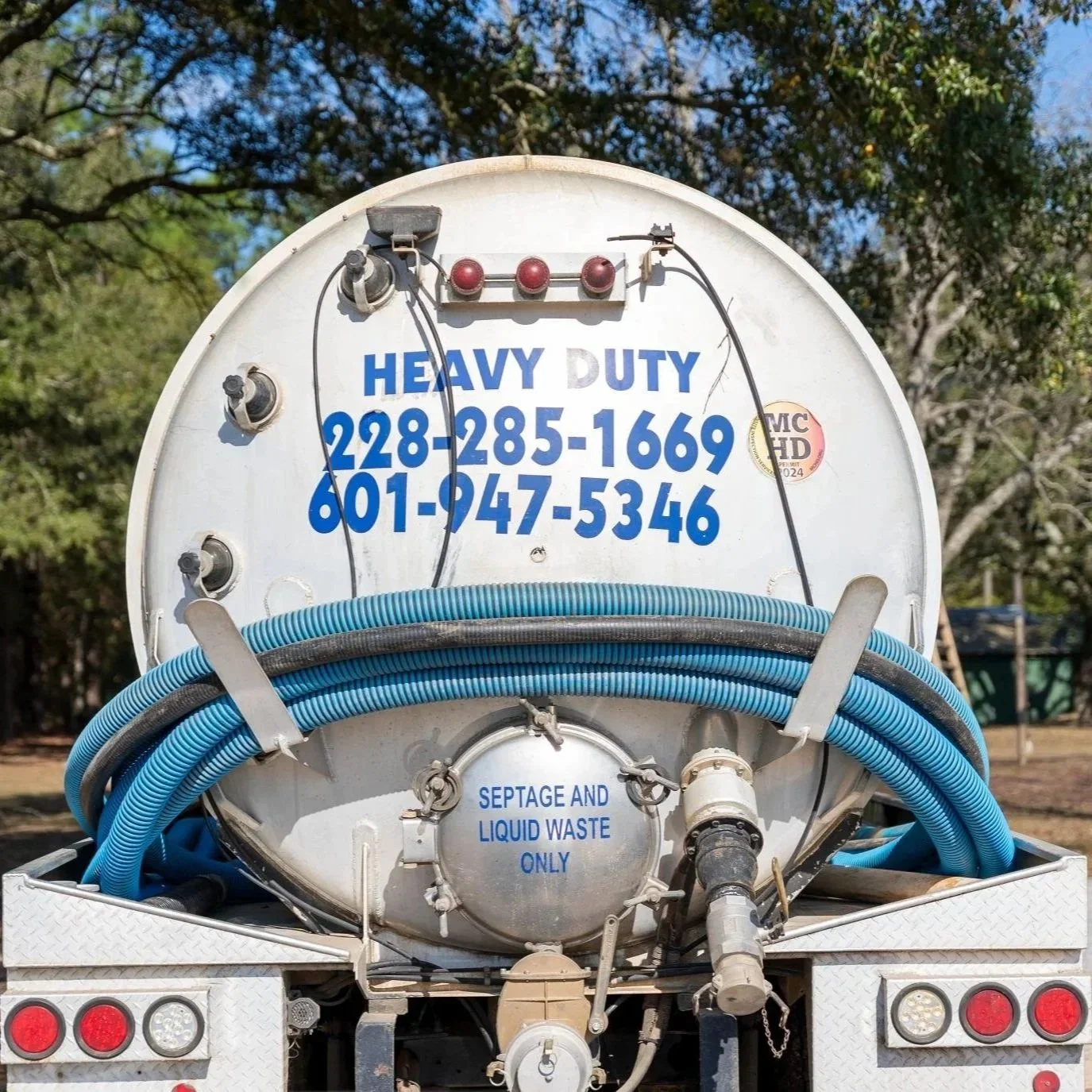
Heavy Duty Pumping & Septic offers a comprehensive, one-stop solution for professional septic service in Lucedale, MS, including septic tank pumping and cleaning, septic tank replacement, septic system repair, septic system maintenance, and septic system inspection and testing. Our experienced technicians focus on preventing backups, ensuring system efficiency, and long-term performance. Protect your residential or commercial septic system today and enjoy reliable, worry-free operation.
