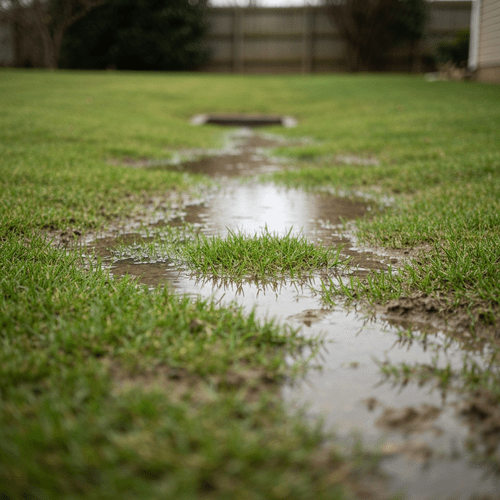
Quick Answer: A soggy or smelly drain field means wastewater isn't soaking into the soil as it should and is surfacing instead. The usual causes are a drain field clogged by solids (often because the tank wasn't pumped and solids flowed into the field), an overloaded system handling more water than the field can absorb, ground saturated by heavy rain or high groundwater, or a field that's aged out and failing. The result is wet, mushy ground, standing water, and sewage odors over the field, sometimes with unusually lush grass. This is a serious septic warning and a health concern — surfacing sewage can carry harmful bacteria — and a failing drain field is among the most expensive septic repairs, so it needs prompt attention.
The drain field is where your septic system quietly does its last job — releasing treated wastewater into the soil, out of sight, with normal-looking ground on top. So when that ground turns soggy, mushy, or smelly, it's a clear signal that something's gone wrong. A soggy or smelly drain field is one of the more serious septic warnings, and knowing the causes is what makes it clear why it needs fast attention. Here's what's behind it.
The Field Isn't Absorbing the Water
To get to the problem, it helps to know the drain field's role. Liquid effluent flows from the tank into the field — a network of perforated pipes in gravel trenches — where it's released into the soil and naturally filtered and absorbed. When the field works, the soil soaks up the liquid, and the ground above stays dry. So a soggy or smelly field means the soil isn't absorbing the effluent the way it should, and it's surfacing instead of soaking in. That's the heart of it. A few things can prevent the field from absorbing as it should, ranging from a maintenance slip to a worn-out field.
Cause One: A Clogged Field
A leading cause is a clogged field, usually from solids reaching it. Skip regular tank pumping, and the solids build up and overflow into the drain field, clogging the pipes and the soil. Once it's clogged, the field can't absorb liquid, so wastewater surfaces and the ground turns soggy and smelly. This is precisely why regular pumping is so important — let it go, and solids ruin the field. A field clogged by solids is one of the most common and serious causes of sogginess, and it traces straight back to tank maintenance. So a soggy field is sometimes just the downstream cost of an overdue pumping.
| Cause | What's happening |
|---|---|
| Clogged field (solids) | Field can't absorb; wastewater surfaces |
| Overloaded system | More water than the field can absorb |
| Saturated ground | Heavy rain or high groundwater fills the soil |
| Aged/failing field | End of the field's service life |
Cause Two: Overload or Saturation
Two related causes come down to too much water for the field. An overloaded system — taking on more wastewater than the field can disperse, from heavy water use, a household bigger than the system was built for, or leaks adding water — swamps the field, so liquid surfaces. And saturated ground from heavy rain or high groundwater leaves the soil unable to absorb the effluent because it's already full of water; that can leave the field soggy and backed up, especially after a downpour. The overload may ease with reduced water use and leak fixes, and saturation can be weather-driven and temporary — but a field that's soggy all the time, or that won't recover, points to something deeper. Both come down to more water reaching the field than it can handle.
Cause Three: A Failing Field
Finally, drain fields don't last forever — they reach the end of their service life and fail. An aging field, especially one that's been overloaded or had solids accumulate in it over the years, can lose its ability to absorb and start to surface wastewater. A failing field is among the most serious and costly septic problems, since it may need major repair or replacement. Sogginess, odors, and surfacing that won't clear up with pumping or reduced water use can mean a field that's failing and needs a professional's evaluation. So a chronically soggy, smelly field may be telling you the field itself has aged out — the most consequential of the causes.
Standing water or surfacing sewage over a drain field is a health hazard as well as a septic problem. Keep people and pets away from the wet, smelly area, since surfacing wastewater can carry harmful bacteria. Don't ignore it — a soggy, smelly drain field signals a failing or overwhelmed system that needs prompt professional attention.
Why It Needs Prompt Attention
A soggy or smelly drain field shouldn't be ignored, because it's a sign the system is failing at its job, and the problem tends to grow. Surfacing sewage is a health and environmental hazard, and a clogged or failing field can build toward full system failure and backups into the home. The cause sets the fix — a clogged field may come down to overdue pumping, an overloaded system may need water-use changes or an evaluation, saturation may be weather-driven, and a failing field may need repair or replacement. Because diagnosing a drain field problem and handling it right takes expertise, and because a failing field is expensive, getting it assessed promptly by a septic pro matters. Catch the cause early — sometimes just an overdue pumping — and you can head off the worst.
Frequently Asked Questions
Because wastewater isn't soaking into the soil and is surfacing instead. Common causes are a clogged field (often from solids that reached it because the tank wasn't pumped), an overloaded system handling more water than the field can absorb, ground saturated by heavy rain or high groundwater, or a field that's aged out and failing. The soggy ground means the field isn't absorbing the liquid as it should.
A drain field smells when wastewater surfaces instead of being absorbed and filtered by the soil — the escaping effluent and sewage gases produce the odor. This happens when the field is clogged, overloaded, saturated, or failing, so the liquid comes up rather than soaking in. A smelly drain field, often with soggy ground, signals the system isn't dispersing wastewater properly and needs attention.
Yes. Heavy rain or high groundwater can saturate the soil around the drain field, leaving it unable to absorb the effluent because the ground is already full of water. This can make the field soggy and back up temporarily. While it can be weather-driven and temporary, a field that's frequently soggy in wet conditions or doesn't recover may indicate a deeper problem needing evaluation.
Yes. A soggy or smelly drain field signals the system is failing to absorb wastewater, and surfacing sewage is a health and environmental hazard. A clogged or failing field can progress to full system failure and backups into the home, and a failing drain field is among the most costly septic repairs. So it needs prompt attention — and the cause may be addressable if caught early.
It depends on the cause. A field clogged from solids may relate to overdue tank pumping; an overloaded system may need reduced water use or evaluation; saturated ground may be weather-driven; and a failing field may need repair or replacement. Because diagnosing the cause and addressing it properly requires expertise, a septic professional should assess the field and recommend the right fix, especially since a failing field is costly.
Sometimes, if caught early. If the field is being affected because the tank is overdue for pumping and solids are reaching it, pumping the tank promptly can help prevent further damage. But if the field is already clogged, overloaded, saturated, or failing, pumping alone may not fix it, and professional evaluation is needed. Catching the cause early gives the best chance of a simpler fix.
A Soggy Field Is a Serious Warning
A soggy or smelly drain field means wastewater is surfacing rather than soaking into the soil — often caused by a clogged field, an overloaded or saturated system, or a failing field. It's a serious septic warning and a health concern, since surfacing sewage can carry harmful bacteria, and a failing drain field is among the costliest septic repairs. Keep away from the surfacing wastewater and have the cause assessed promptly, because catching it early — sometimes just an overdue pumping — can prevent the worst.
Drain field soggy, wet, or smelly? — Get it assessed promptly before the system fails. Heavy Duty Pumping & Septic LLC serves Lucedale, Leakesville, Hurley, MS. Call (601) 804-2230.
