Quick Answer: An aerobic septic system, or aerobic treatment unit (ATU), pumps air into the tank so oxygen-loving bacteria digest waste faster and more completely than the anaerobic bacteria in a standard septic tank. The result is cleaner effluent that can be spray- or drip-dispersed on sites where a conventional drain field would fail.
If a soil test came back poor, your lot is small, or your water table sits high, an installer may have told you a standard septic tank won't pass. The usual alternative is an aerobic treatment unit. It handles the same household waste, but it treats that waste to a much higher standard before the water ever reaches the ground. Understanding the difference starts with the bacteria doing the work, not the tanks themselves.
Aerobic vs. Anaerobic: The Core Difference
Every septic system relies on bacteria to break down the organic solids in wastewater. The split comes down to which bacteria you feed.
A conventional septic tank is an anaerobic system. It is sealed and holds no free oxygen, so the microbes that thrive there are the kind that live without it. They work, but they work slowly, and they leave a fair amount of partially treated organic matter in the liquid that flows out. That liquid, called effluent, still needs a large drain field of good soil to filter it the rest of the way.
An aerobic system does the opposite. It deliberately mixes air into the wastewater, which lets aerobic bacteria take over. These oxygen-breathing microbes digest waste several times faster and far more thoroughly. By the time water leaves an aerobic unit, most of the organic load is already gone. Cleaner water out the back means the soil has much less work left to do, which is exactly why an ATU can succeed where a standard system cannot.
The trade is simple to state and important to grasp: you are adding a mechanical process, powered by electricity, in exchange for far better treatment.
How an Aerobic Treatment Unit Works
An ATU is usually built as a series of connected chambers, though some models combine stages inside one large tank. Wastewater moves through each stage in order.
Pretreatment or Trash Tank: The first compartment works like a small conventional tank. Heavy solids settle to the bottom, and grease and lighter material float to the top. This step keeps rags, wipes, and large debris from reaching the working parts of the system, where they would cause clogs and damage.
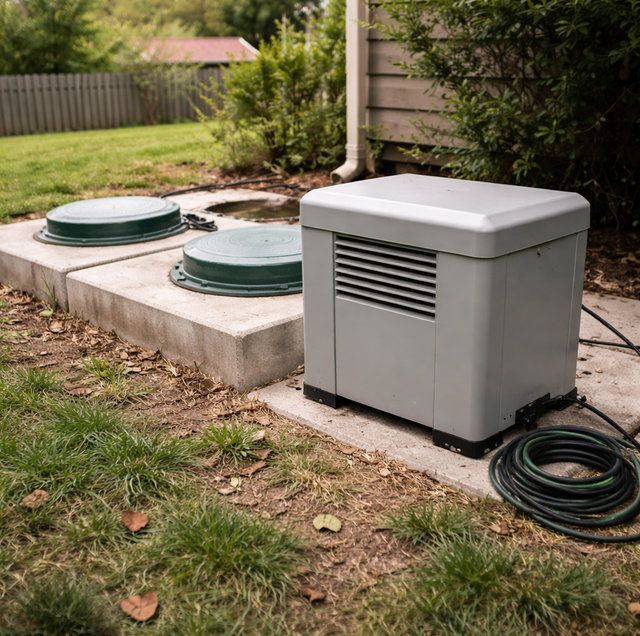
Aeration Chamber: This is the heart of the system and what makes it aerobic. An electric air pump, called a blower, sits above ground and pushes air down into the chamber through a diffuser. The rising bubbles keep the liquid churning and saturated with oxygen. Aerobic bacteria multiply in that oxygen-rich soup and consume the dissolved and suspended waste. The constant stirring also keeps solids in contact with the microbes rather than settling out too soon.
Clarifier or Settling Stage: After aeration, water flows into a quieter chamber where the remaining biological solids settle. Many designs slope the walls of this chamber so settled material slides back toward the aeration tank to be digested again. The clear liquid rises to the top and moves on.
Optional Disinfection: Some sites require a final disinfection step, often a chlorine tablet feeder or an ultraviolet unit, to reduce bacteria in the treated water before it is released. Whether this stage is required depends on local rules and how the effluent will be dispersed.
Dispersal: Finally, the treated effluent is sent out. Because it is so much cleaner than standard tank output, it can be distributed by a spray field using sprinkler heads, or through a drip line buried a few inches down. Both methods spread the water over a wide area for final polishing by the soil and, in a spray field, by sunlight and air.
Why These Systems Get Installed
An aerobic system costs more to run than a plain tank, so it is chosen when a conventional setup truly will not work. Common reasons include:
- Poor or shallow soil: Heavy clay drains too slowly, while very sandy ground drains too fast to filter properly. Cleaner ATU effluent needs far less soil to finish the job.
- Small lots: A spray field has a smaller footprint than a full conventional drain field, so it fits where space is tight.
- High water table: Where groundwater sits close to the surface, there is not enough dry soil beneath a standard field to filter effluent safely. Better treatment upstream reduces that risk.
- Sensitive locations: Near wells, ponds, streams, or wetlands, the higher effluent quality helps protect the water.
- A failed conventional system: When an old drain field stops absorbing, replacing the whole system with an ATU is often the fix that a cramped or worn-out lot will support.
Aerobic vs Conventional: The Tradeoffs
The upside of an aerobic system is real. It produces markedly cleaner effluent, works on difficult lots, and takes up less ground for dispersal. A conventional tank, by contrast, is beautifully simple: a couple of chambers, no moving parts, no power, and very little to go wrong.
Picture two engines doing the same trip. One coasts downhill under gravity alone and asks nothing of you. The other has a motor that gets there faster over rougher ground, but it burns fuel and needs a mechanic on schedule. An ATU is the second engine. That extra capability comes with more parts, a continuous electricity bill for the blower, more frequent maintenance, and, in most areas, a required service contract with periodic inspections. A conventional tank mainly needs periodic pumping and little else.
Neither is better in the abstract. The right choice depends almost entirely on the soil, the space, and the site conditions of the property.
Maintaining an Aerobic System
An ATU is a small treatment plant in the yard, and it needs steady attention to keep producing clean water.
The blower runs around the clock and is the single most important component. It draws in dust and can wear over time, so its intake filter needs cleaning and the unit needs periodic professional service. If the blower quits, the aerobic bacteria begin to die within hours and treatment effectively stops.
On systems that spray, the spray heads and any effluent filters need to be checked and cleared so they do not clog. A high-water or malfunction alarm is built in to warn you when a pump or the air supply fails; it should be tested and never ignored. Most jurisdictions also require routine inspections by a licensed maintenance provider, often several times a year, with the results reported to the local authority. Those rules vary by area, so confirm what applies to your property.
Signs Your Aerobic System Needs Attention
Because an ATU depends on power and moving parts, it tells you when something is wrong. Watch for:
- An alarm light or buzzer. This usually points to a failed blower, a failed pump, or a high water level. It is the system asking for service.
- Foul odors. A properly working aerobic unit is nearly odorless. A strong sewage or rotten smell often means the air supply has failed and the tank has gone anaerobic.
- Ponding or soggy ground around the dispersal area, which can signal a dispersal or drainage problem.
- Cloudy or gray discharge from a spray field, which suggests solids are carrying through and the treatment stages are not finishing the job.
Any of these deserves a prompt call to a professional rather than a wait-and-see approach.
Treat a septic or aeration tank as a confined space that can kill. The gases inside displace oxygen and are toxic, so no one should ever enter or lean into a tank, and that work belongs to trained pros with the right equipment. Keep children and pets away from any spray-dispersal zone, since treated effluent is not safe to contact or swallow even after treatment. And because an ATU relies on electricity, a tripped breaker or failed blower means the system has stopped treating your waste, so respond to alarms quickly. Pumping, servicing, and repairs are jobs for a licensed septic professional.
Frequently Asked Questions
The oxygen-breathing colony starts to decline within hours of losing air and can largely collapse over a day or two of no power. A brief outage is usually survivable because the bacteria rebound once air returns, but a blower that fails and sits unnoticed for days will need time to reestablish a full biological population after repair.
It is best avoided. Ground food waste adds a heavy load of fats and solids that overwhelms the trash tank and coats the aeration chamber, starving the bacteria of oxygen. If a disposal is used at all, the pretreatment compartment generally needs to be larger and pumped more often to compensate.
Chlorine bleach in quantity, drain cleaners, antibacterial cleaners, paint, and solvents all kill the very microbes the system depends on. Even large volumes of soft water backwash or antibacterial soap can suppress the colony. Spacing out laundry loads also helps, since a sudden surge of water can push solids through before they are fully digested.
A mound system is still an anaerobic septic tank; it simply pumps standard effluent up into a raised bed of imported sand and soil to gain the filtering depth a flat lot lacks. An aerobic unit instead improves the water quality itself, so it often needs far less added soil or elevation to disperse safely.
Yes. Solids still accumulate in the trash tank and clarifier, and they must be pumped out on a schedule, though the interval depends on use and design. Skipping pump-outs lets sludge migrate into the aeration chamber and out to the dispersal field, where it clogs spray heads and drip lines.
It can, if the generator can carry the blower's continuous draw, since the blower is what keeps the system treating. Many owners in outage-prone areas add a small backup power source for exactly that reason, and limiting water use during an outage reduces the load on a system running at reduced capacity.
Ask us whether an aerobic system fits your soil and lot — a proper assessment saves years of headaches. Heavy Duty Pumping & Septic serves Lucedale, Pascagoula, and the Gulf Coast. Call (601) 804-2230.
