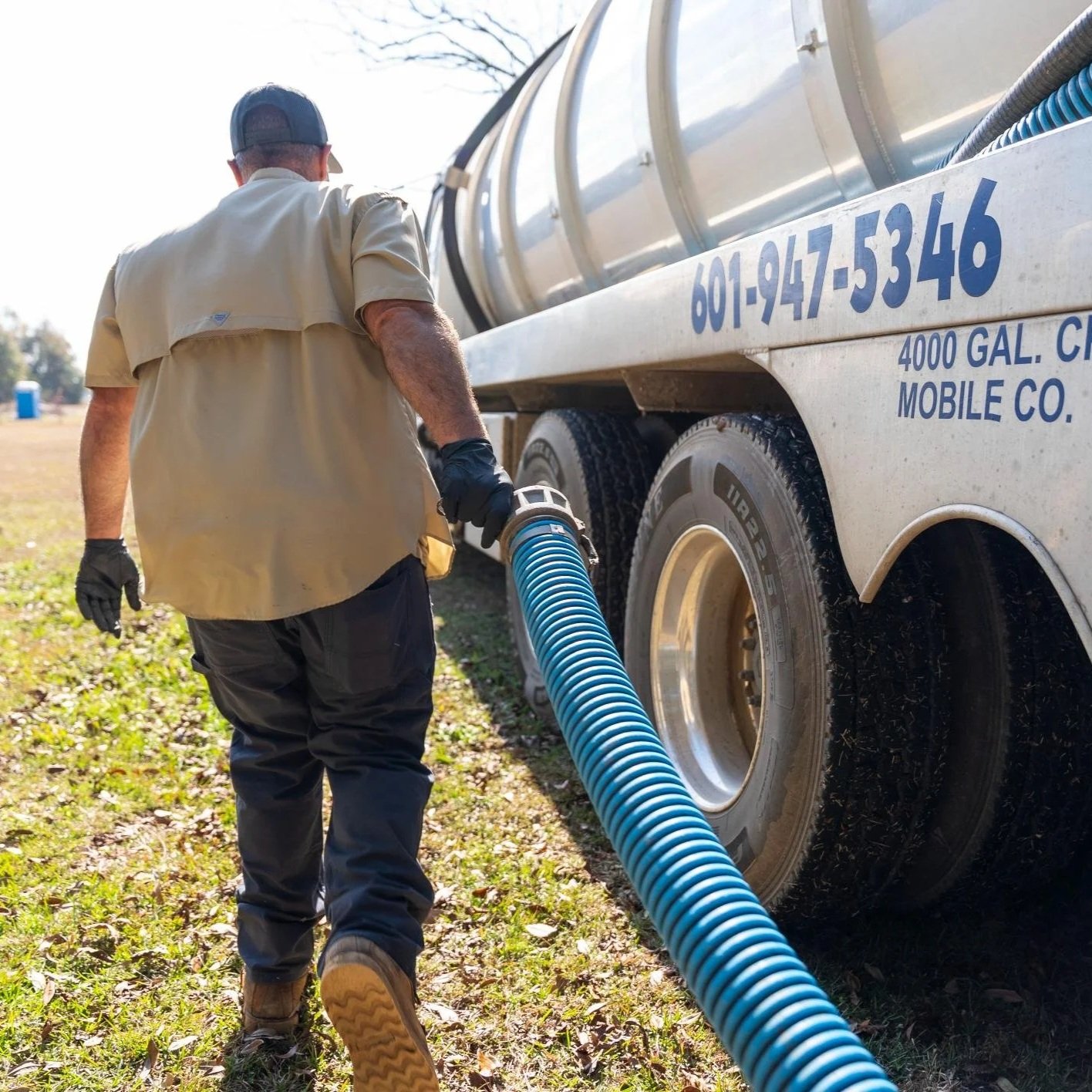
Technician operating septic pump truck hose during septic tank service, illustrating routine wastewater removal and residential system maintenance process.
Understanding Why Septic Tank Material Matters More Than Most Homeowners Realize
Septic tanks all serve the same basic purpose, but the materials they are made of have a significant impact on how well they perform over time. Tank material influences structural strength, resistance to environmental conditions, installation requirements, long-term durability, and maintenance expectations. Many homeowners assume septic tanks are interchangeable as long as the size is correct. In reality, material choice shapes how the tank responds to soil pressure, groundwater, traffic loads, and decades of constant use underground.
Choosing the right septic tank material is not about picking the most modern option or the least expensive one upfront. It is about matching the tank to the property, soil conditions, usage patterns, and long-term ownership goals. Concrete, plastic, and fiberglass tanks each behave differently once buried. Understanding those differences helps homeowners avoid premature failure, unexpected repairs, or performance issues that only appear years after installation.
Concrete Septic Tanks and Their Longstanding Role
Concrete septic tanks have been used for generations, largely because of their strength and availability. These tanks are cast from reinforced concrete and are extremely heavy. That weight provides inherent stability once installed, especially in areas with high groundwater or shifting soil. Concrete tanks naturally resist buoyancy, reducing the risk of floating or shifting during wet conditions.
Durability remains one of concrete's biggest advantages. Properly manufactured and installed concrete tanks can last several decades under normal conditions. They tolerate surface loads better than lighter materials, making them suitable for properties where vehicles or equipment may pass nearby. Concrete also performs well in varied climates, handling freeze-thaw cycles with minimal movement when installed correctly. For many traditional residential properties, concrete remains a reliable and proven option.
Potential Drawbacks of Concrete Septic Tanks
Despite their strengths, concrete tanks are not without limitations. Over time, concrete can degrade due to chemical reactions inside the tank. Gases produced during waste breakdown, particularly hydrogen sulfide, can slowly erode interior surfaces. This process happens gradually, but it shortens lifespan if inspections and maintenance are neglected.
Installation complexity also matters. Concrete tanks require heavy equipment for placement due to their weight. Access challenges can increase installation cost, especially on tight or landscaped lots. Poor manufacturing quality or improper installation increases the risk of cracks, joint separation, or leaks. While concrete tanks perform well long term, their success depends heavily on proper handling from production through burial.
Plastic Septic Tanks and Their Lightweight Appeal
Plastic septic tanks, typically made from polyethylene, offer a very different approach. These tanks weigh far less than concrete, making them easier to transport and install. In locations with limited access or where heavy equipment cannot operate easily, plastic tanks provide logistical advantages. Installation often requires less site disruption, which appeals to homeowners concerned about the impact on landscaping.
Plastic tanks resist corrosion completely. They do not deteriorate from internal gases or wastewater chemistry. Their seamless construction reduces the number of joints that could leak. For properties with neutral soil conditions and controlled groundwater levels, plastic tanks can perform effectively when installed according to the manufacturer's specifications.
Limitations and Risks Associated With Plastic Tanks
Lightweight construction introduces challenges that must be addressed carefully. Plastic tanks rely on proper backfilling and anchoring to remain stable underground. In areas with high groundwater levels, plastic tanks are at a higher risk of buoyancy if not properly secured. Improper installation can lead to shifting, deformation, or structural stress over time.
Plastic tanks are also more vulnerable to external pressure. Heavy surface loads or soil compaction can deform the tank if installation guidelines are not followed precisely. While modern plastic tanks are engineered for underground use, they tolerate less abuse during installation than concrete alternatives. Their long-term performance depends heavily on installer experience and adherence to site-specific requirements.
Fiberglass Septic Tanks and Their Balanced Design
Fiberglass septic tanks combine characteristics of both concrete and plastic. They offer greater strength than plastic while remaining lighter than concrete. Fiberglass tanks resist corrosion completely and maintain structural integrity, unlike concrete, which undergoes gradual chemical erosion. Their rigid shell design allows them to handle soil pressure more evenly than plastic tanks.
Because fiberglass tanks are lighter than concrete tanks, installation typically requires less heavy equipment while still offering improved stability compared to plastic tanks. They perform well in areas with moderate groundwater when appropriately installed. Many homeowners appreciate fiberglass as a middle ground option that balances durability with installation flexibility.
Considerations When Choosing Fiberglass Tanks
Fiberglass tanks require careful handling during transport and installation. While strong, fiberglass can crack if dropped or mishandled. Quality varies by manufacturer, making tank selection important. Lower-quality fiberglass tanks may suffer from manufacturing defects that only become apparent after burial.
Cost can also factor into the decision. Fiberglass tanks often cost more than plastic and may approach or exceed concrete pricing depending on size and availability. As with other materials, performance depends on proper installation. Fiberglass tanks reward careful planning and experienced installers rather than rushed or budget-driven decisions.
How Soil Conditions Influence Tank Material Choice
Soil composition plays a major role in determining which septic tank material performs best. Expansive clay soils exert pressure as they swell and shrink with changes in moisture. Concrete handles this stress well due to its mass and rigidity. Sandy soils drain quickly and apply less lateral pressure, which may suit plastic or fiberglass tanks when groundwater remains controlled.
High water tables increase buoyancy risk. Concrete tanks naturally resist floating due to weight. Plastic and fiberglass tanks require additional anchoring or specific installation techniques to counteract groundwater pressure. Ignoring these factors leads to movement, pipe separation, or structural stress regardless of tank material.
Installation Environment and Access Considerations
Property access often narrows material choices more than homeowners expect. Narrow lots, steep driveways, mature landscaping, or limited equipment access complicate concrete tank installation. In these cases, plastic or fiberglass tanks offer practical solutions that reduce site disturbance.
Conversely, properties with open access and stable soil conditions may benefit from concrete's longevity without installation challenges. Matching tank material to site logistics avoids unnecessary cost escalation and prevents compromises that affect performance later.
Longevity Expectations and Maintenance Realities
Concrete tanks often last several decades with proper maintenance and inspection. Plastic and fiberglass tanks also offer long service lives, but they require proper installation from the outset to realize that potential. No material eliminates the need for inspections, pumping, and responsible use.
Material choice influences how tanks age, not whether maintenance is required. Understanding that septic tanks are long-term infrastructure investments helps homeowners evaluate materials based on lifecycle value rather than just initial price.
Regulatory Acceptance and Local Preferences
Some jurisdictions favor certain tank materials based on historical performance or regulatory comfort. Local health departments may maintain approved material lists or installation standards that influence availability. Experienced local installers often know which materials perform best in regional conditions.
Working within regulatory frameworks confirms that the approval proceeds smoothly. Choosing a material unfamiliar to local inspectors or installers may complicate permitting and installation, even if the material itself performs well elsewhere.
Cost Considerations Beyond the Tank Itself
Upfront tank cost represents only part of the overall installation expense. Excavation, access, anchoring, backfill requirements, and labor vary by material. A less expensive tank may require additional installation measures that offset savings.
Evaluating total project cost rather than tank price alone produces better outcomes. Material selection should align with site needs, not just budget targets.
Matching Tank Material to Long-Term Ownership Goals
Homeowners planning to stay long term may prioritize durability and reduced risk over initial cost. Those developing properties or planning future sales may focus on compliance and proven reliability. Concrete often appeals to longevity-focused owners, while fiberglass and plastic are better suited to situations where installation flexibility matters more.
Matching material choice to ownership horizon verifies that expectations align with performance.
Why Professional Guidance Matters in Material Selection
Choosing the right septic tank material requires understanding soil science, structural behavior, regulatory requirements, and installation logistics. Professional guidance helps homeowners avoid mismatches that look fine on paper but fail under real conditions.
Experienced professionals assess the entire system rather than focusing solely on the tank. Material choice becomes part of an integrated design rather than an isolated decision.
FAQs
Heavy Duty Pumping & Septic offers a comprehensive, one-stop solution for professional septic service in Lucedale, MS, including septic tank pumping and cleaning, septic tank replacement, septic system repair, septic system maintenance, and septic system inspection and testing. Our experienced technicians focus on preventing backups, ensuring system efficiency, and long-term performance. Protect your residential or commercial septic system today and enjoy reliable, worry-free operation.
