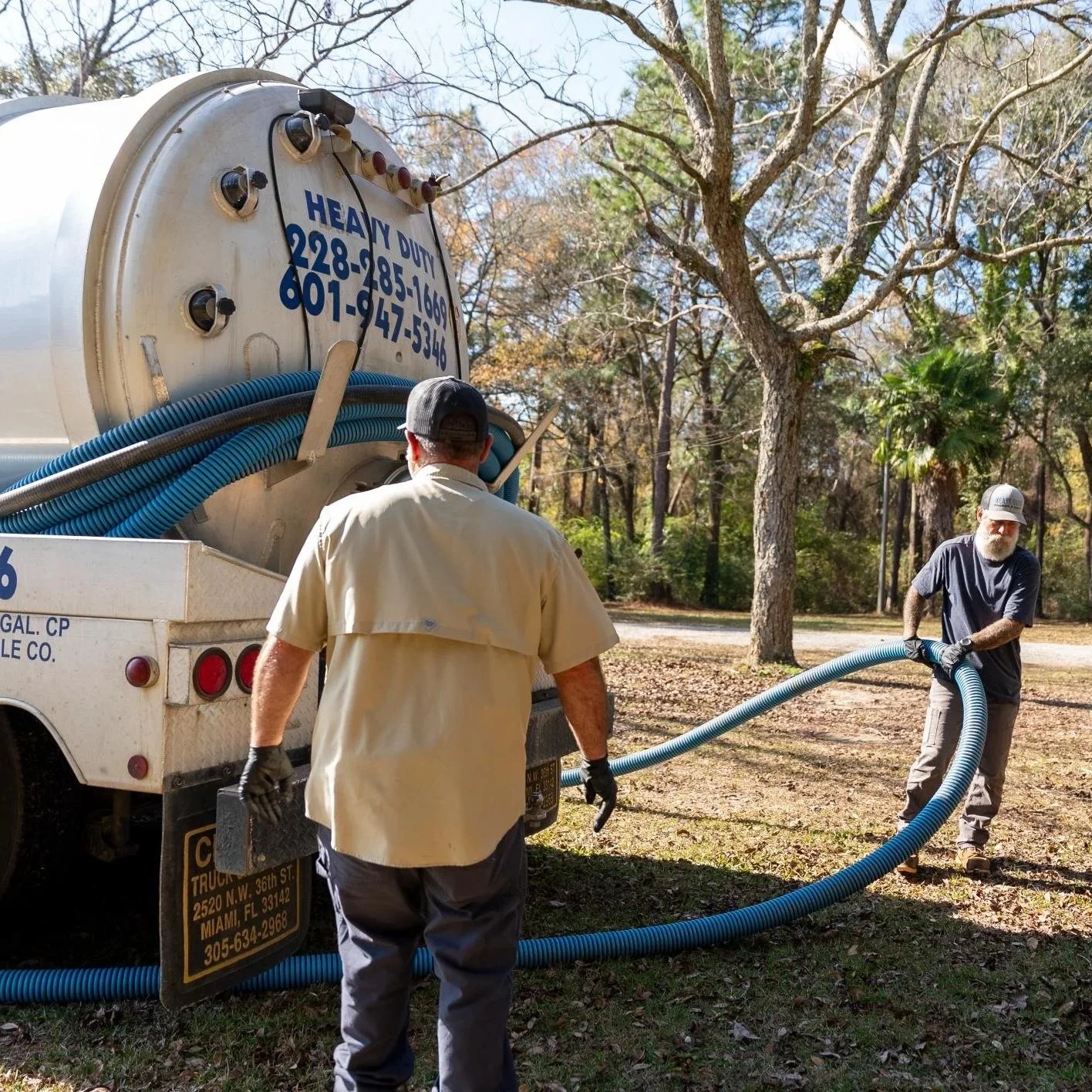
Technicians servicing conventional septic system with vacuum truck, demonstrating routine wastewater removal and drainfield maintenance on residential property outdoors.
Understanding What Defines a Conventional Septic System
A conventional septic system relies on a straightforward, gravity-based design that has been used for decades across residential properties. Wastewater flows from the home into a septic tank where solids settle, lighter materials rise, and clarified liquid exits toward a drainfield. The drainfield disperses that effluent into the surrounding soil, where natural biological processes complete treatment. No pumps, advanced filtration units, or mechanical dosing systems are required when conditions allow gravity to do the work.
This simplicity explains why conventional septic systems became the standard for so long. Fewer components mean fewer mechanical failures and lower installation complexity. When soil conditions, lot size, and groundwater depth cooperate, conventional systems operate quietly and predictably. The question many homeowners face today is whether those ideal conditions still exist on modern residential properties and whether simplicity still aligns with current environmental expectations.
Why Conventional Systems Performed So Well Historically
Conventional septic systems thrived in an era of larger lots, lower housing density, and fewer environmental restrictions. Homes sat farther apart, soil disturbance was minimal, and groundwater protection standards were less stringent. These systems relied on ample space and naturally draining soils to function effectively. When installed under the right conditions, they provided decades of reliable service with modest maintenance requirements.
Water usage patterns also played a role. Older homes typically housed fewer occupants and used less water overall. Plumbing fixtures consumed more water per use, but total daily demand remained lower due to lifestyle differences. Conventional systems matched those patterns well, allowing sufficient retention time in the tank and effective soil absorption in the drainfield. That historical success built confidence in the design that still influences homeowner expectations today.
How Modern Site Conditions Challenge Conventional Designs
Residential development has changed dramatically over time. Smaller lot sizes, higher housing density, and stricter environmental protections have reduced the number of sites suitable for conventional septic system installation. Many properties no longer have the soil depth or absorption characteristics needed to support gravity-based drainfields without risking groundwater contamination.
High water tables present another obstacle. Conventional systems depend on unsaturated soil to treat wastewater effectively. When groundwater sits too close to the surface, effluent cannot disperse properly. Even if a system functions initially, long-term performance becomes unpredictable. Modern site evaluations often reveal limitations that older systems never had to account for, making conventional installation less viable in many locations.
Regulatory Changes and Their Impact on System Choice
Regulations surrounding septic system installation have evolved significantly. Health departments and environmental agencies now prioritize groundwater protection, nutrient reduction, and long-term system performance. Setback requirements from wells, property lines, and water bodies have expanded. Soil testing standards have become more rigorous. These changes directly influence whether a conventional septic system installation is allowed.
In many jurisdictions, conventional systems remain approved only when site conditions clearly meet minimum requirements. Marginal soils that might have passed decades ago now require alternative designs. Regulatory scrutiny does not reflect distrust in conventional systems themselves, but rather recognition that not every site can support them safely. Understanding local regulatory expectations helps homeowners assess whether a conventional approach remains realistic for their property.
Performance Expectations Compared to Modern Alternatives
Conventional septic systems perform best when conditions are ideal and remain stable over time. They rely on consistent soil performance and predictable wastewater flow. Modern alternative systems introduce controls that compensate for less favorable conditions. Pressure distribution, advanced treatment units, and dosing systems allow wastewater to receive more uniform treatment even when soils drain slowly or space is limited.
That does not mean conventional systems perform poorly. When installed correctly on suitable sites, they often outperform more complex systems simply because fewer components can malfunction. The tradeoff lies in flexibility. Conventional systems offer reliability through simplicity, but they lack adaptability when conditions change or margins shrink.
Installation Cost Considerations in Today’s Market
Cost remains one of the strongest arguments in favor of conventional septic system installation. These systems typically cost less to install because they require fewer components and less specialized equipment. Homeowners often find conventional systems appealing when budgets are tight or when alternative systems introduce significant upfront expense.
However, cost comparisons must account for site preparation. If soil amendments, grading, or extensive excavation are required to make a conventional system work, savings diminish quickly. In some cases, forcing a conventional design onto a marginal site costs more than installing an alternative system designed for those conditions. Evaluating total project cost rather than base system price produces more accurate comparisons.
Long-Term Maintenance and Ownership Realities
Conventional septic systems appeal to homeowners who prefer minimal mechanical maintenance. Without pumps, blowers, or control panels, routine care focuses on inspections and tank pumping. Owners experience fewer service calls due to mechanical failures, which supports predictable maintenance routines.
That simplicity does not eliminate responsibility. Drainfields still require protection from compaction, surface water intrusion, and misuse. Conventional systems are less forgiving when soils become compromised. Once a drainfield fails, recovery options remain limited. Owners who understand these limitations and protect the system accordingly often experience long service life without complications.
Environmental Considerations and Changing Priorities
Environmental expectations have shifted significantly in recent decades. Nutrient loading, especially nitrogen, has become a growing concern in many regions. Conventional septic systems provide effective treatment under ideal conditions, but they do not actively reduce nutrients beyond what soil biology can manage. In sensitive watersheds, regulators increasingly favor systems that provide enhanced treatment.
This shift does not mean conventional systems are environmentally unsound. It means they rely on the surrounding environment to complete treatment. Where soil and separation distances remain sufficient, that approach works well. Where environmental sensitivity increases, additional treatment stages become necessary. Environmental priorities now influence system selection as much as engineering feasibility.
When Conventional Septic System Installation Still Makes Sense
Conventional septic systems remain an excellent choice on properties with suitable soils, adequate space, and stable groundwater conditions. Rural or semi-rural lots with well-drained soils often support conventional installation without compromise. In these settings, the simplicity, durability, and lower cost of conventional systems align well with homeowner expectations.
New construction on properly evaluated sites often benefits most. When system design occurs early in the planning process, the lot layout can accommodate drainfield placement without restriction. Conventional systems perform best when chosen intentionally rather than by default or under cost pressure alone.
When Alternative Systems Become the Better Option
Alternative systems become the better choice when site conditions fall outside conventional limits. Shallow soils, high water tables, limited space, or environmental sensitivity all push design toward advanced treatment or pressure-based dispersal. Attempting to install a conventional system under these conditions introduces long-term risk rather than savings.
Modern alternatives exist to solve real constraints rather than to replace conventional systems universally. They allow properties that would otherwise be unsuitable for septic use to manage wastewater safely. Choosing an alternative system reflects site reality, not technological trend chasing.
How Professional Evaluation Shapes the Decision
The decision between conventional and alternative septic system installation should never rely solely on assumptions. Professional site evaluation provides data that clarifies what is possible and what is advisable. Soil testing, groundwater assessment, and regulatory review remove guesswork from the process.
Professionals also consider future conditions. Climate patterns, water-use trends, and potential property changes influence long-term performance. Choosing a system that meets current requirements while accommodating future needs protects homeowners from premature replacement or regulatory conflict.
Balancing Simplicity, Compliance, and Longevity
Conventional septic systems offer simplicity and proven reliability when conditions allow. Modern alternatives offer adaptability and enhanced treatment when conditions demand it. The right choice balances installation feasibility, regulatory compliance, environmental responsibility, and long-term ownership goals.
Choosing a conventional system today requires more deliberate evaluation than in the past. When chosen appropriately, it remains a solid, dependable option. When chosen solely for habit or cost, it becomes a liability. Understanding that distinction helps homeowners make informed decisions rather than default ones.
FAQs
Heavy Duty Pumping & Septic delivers a full-service, start-to-finish solution for professional septic system care, including septic tank drain field services, septic system installation, septic system upgrades, and septic tank locating & mapping in the Lucedale area. Our team of professionals with over 35 years of experience use advanced septic equipment with a focus on proper system design, preventing costly failures, and ensuring long-term performance. Protect your property today and enjoy reliable septic performance.
