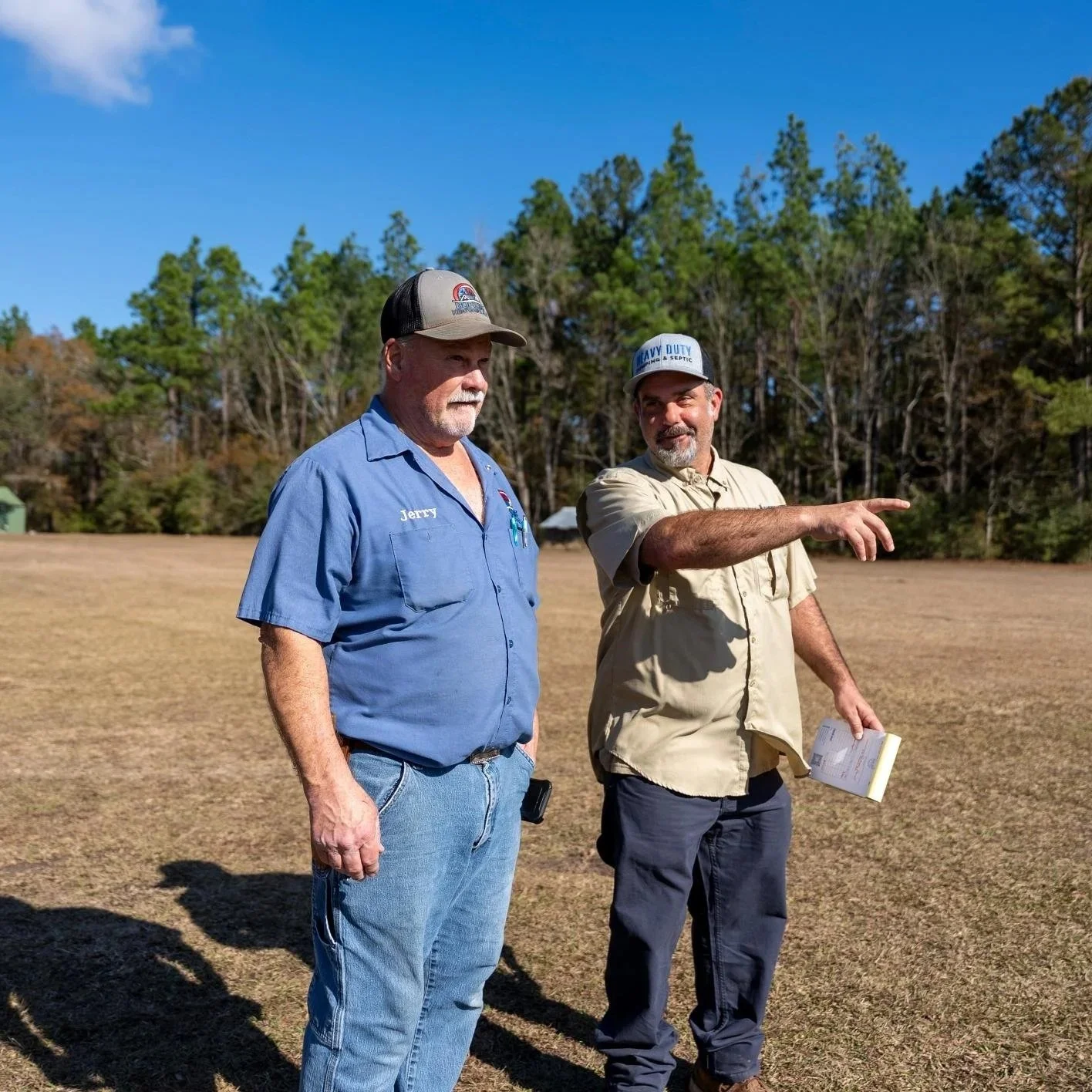
Septic professionals inspecting restaurant grease interceptor area, discussing cleaning schedule and wastewater management plan for smooth commercial kitchen operations.
Understanding the Role of a Grease Interceptor in a Restaurant Setting
A grease interceptor sits at a critical junction between a restaurant’s kitchen and its plumbing system. Every sink, dishwasher, mop basin, and floor drain that handles kitchen wastewater sends fats, oils, grease, and food particles toward that interceptor. Unlike smaller grease traps, interceptors are designed to manage higher volumes and heavier loads over longer periods. Wastewater slows inside the interceptor, allowing grease to rise, solids to settle, and clarified water to exit toward the sewer system. This separation protects interior plumbing and downstream infrastructure from buildup that would otherwise cause chronic blockages.
That protection only works when the interceptor has available capacity. As grease and solids accumulate, the separation zone shrinks. Flow speeds up. Grease bypasses containment and enters drain lines. At that point, the interceptor no longer protects anything. Grease interceptor cleaning removes accumulated material, allowing the interceptor to continue performing its intended function. In a restaurant environment where wastewater volumes remain high daily, cleaning becomes a core operational requirement rather than an occasional maintenance task.
Why Restaurants Face Unique Risk Without Regular Interceptor Cleaning
Restaurants generate grease continuously. Fryers, grills, sauté stations, dishwashing operations, and cleanup routines all contribute fats and oils to the wastewater stream. Even kitchens with strong scraping and disposal practices still send grease into the plumbing system. That grease does not disappear between services. It layers, thickens, and expands inside the interceptor. Because restaurant activity remains consistent, accumulation accelerates faster than in most other commercial environments.
Peak usage compounds the risk. Lunch and dinner rushes push large volumes of hot wastewater through the interceptor in short windows. When capacity is already compromised, grease escapes during these surges. Drain backups often occur during the busiest service periods, not because something suddenly changed, but because the interceptor loses its ability to contain grease under load. Grease interceptor cleaning restores the margin for error that restaurants rely on to operate through peak demand without disruption.
How Full Interceptors Disrupt Daily Kitchen Operations
When a grease interceptor approaches capacity, operational symptoms appear well before a full backup. Drains slow during heavy use. Dishwashers take longer to empty. Floor drains may bubble or emit odors as airflow becomes restricted. Staff adapt by working around these issues, often without realizing the underlying cause. These inefficiencies increase stress during service and reduce overall kitchen productivity.
Once grease escapes the interceptor, problems escalate quickly. Grease coats interior pipes, narrowing flow paths and trapping food debris. Backups occur unpredictably, forcing staff to stop prep or service while drains clear. In severe cases, wastewater surfaces in food preparation areas or dining spaces, creating immediate sanitation concerns. Grease interceptor cleaning prevents this chain reaction by maintaining proper containment before grease reaches critical levels.
The Connection Between Grease Interceptor Cleaning and Health Code Compliance
Health departments closely monitor grease management in food service establishments. Drain backups, odors, or visible wastewater immediately raise red flags during inspections. Even without a backup, inspectors may request maintenance records for grease interceptors. In many jurisdictions, documented cleaning at required intervals forms part of compliance obligations.
Grease interceptor cleaning supports compliance by demonstrating proactive management rather than reactive cleanup. Clean interceptors reduce odor, prevent wastewater exposure, and lower the likelihood of plumbing- or sanitation-related violations. Restaurants that maintain consistent cleaning schedules face fewer inspection complications and avoid citations that can lead to fines or temporary closures. Compliance depends on prevention, not last-minute responses.
Why Drain Cleaning Alone Cannot Protect Restaurant Plumbing
When restaurant drains slow or back up, emergency drain cleaning often becomes the first response. While this may restore temporary flow, it does not address the root cause if grease remains in the interceptor. Clearing downstream pipes without cleaning the interceptor simply creates space for new grease to travel farther into the system. The problem returns, often worse than before.
Grease interceptor cleaning removes the source rather than chasing symptoms. It stops grease at the interception point instead of allowing it to migrate. Restaurants that rely solely on drain cleaning often experience recurring service calls, which increase costs and disrupt operations. Effective protection starts upstream, not at the point where failure becomes visible.
How Grease Interceptor Cleaning Protects Equipment and Infrastructure
Grease does more than clog pipes. It increases pressure throughout the plumbing system, placing strain on joints, seals, and fittings. Dishwashers and pre-rinse stations drain more slowly, forcing equipment to work harder. Pumps, if present, cycle more frequently under higher load. Over time, mechanical wear accelerates.
Cleaning the grease interceptor restores predictable flow conditions. Wastewater moves freely through the system, reducing pressure fluctuations and protecting equipment. Pipes remain cleaner longer, extending their service life. Infrastructure protection becomes another operational benefit of routine cleaning rather than an afterthought following failure.
The Operational Cost of Emergency Grease Failures
Emergency grease-related failures rarely happen at convenient times. Backups tend to occur during peak service hours when wastewater volume spikes. Kitchens may need to shut down lines or stop service entirely while waiting for emergency response. Lost revenue, overtime labor, and customer dissatisfaction follow quickly.
Emergency service costs also exceed routine cleaning expenses. After-hours calls, expedited drain clearing, and potential cleanup add financial strain. Grease interceptor cleaning shifts cost from unpredictable emergencies to planned maintenance. Restaurants gain control over scheduling, budgeting, and operational stability.
Why Interceptor Size Does Not Eliminate the Need for Cleaning
Larger grease interceptors provide more storage, but they do not solve the accumulation. Grease continues to enter the system every day. A larger volume simply delays the point at which capacity is compromised. Without cleaning, grease hardens, solids compact, and removal becomes more difficult over time.
Relying on size alone often leads to longer gaps between cleanings, which increases risk. Thick, compacted grease layers reduce effective volume faster than expected. Cleaning frequency should reflect actual usage and accumulation rates, not just interceptor size. Capacity buys time, not immunity.
How Grease Interceptor Cleaning Supports Consistent Service Quality
Restaurant success depends on consistency. Guests expect reliable service, clean facilities, and uninterrupted operations. Plumbing problems undermine that consistency in visible and disruptive ways. Grease interceptor cleaning removes one of the most common sources of unexpected disruption.
When interceptors remain clean, kitchens operate smoothly. Drains handle peak demand. Odors stay contained. Staff focus on food preparation rather than plumbing issues. Consistency extends beyond the kitchen into the dining experience. Clean systems support clean service environments.
Environmental and Municipal Impact of Poor Grease Management
Grease that escapes private interceptors does not disappear after leaving the building. It enters municipal sewer systems where it combines with other debris to form large blockages. These blockages cause sewer overflows that affect entire communities. Municipalities increasingly enforce grease management requirements to prevent these outcomes.
Regular grease interceptor cleaning reduces grease discharge into public infrastructure. Proper disposal verifies that waste receives appropriate treatment rather than contributing to sewer failures. Restaurants that manage grease responsibly support broader environmental health and avoid penalties tied to sewer contamination.
Why Scheduled Cleaning Outperforms Reactive Maintenance
Reactive maintenance relies on waiting for problems to appear. By the time symptoms show up, grease has already escaped containment. Scheduled grease interceptor cleaning prevents problems before they develop. Capacity remains available. Separation continues working as designed.
Scheduling also improves coordination. Cleaning can occur during off-hours or slower periods, minimizing disruption. Staff remain informed. Records stay current. Reactive maintenance forces rushed decisions under pressure. Preventative cleaning supports control and predictability.
The Role of Cleaning in Inspection and Long-Term Planning
Grease interceptor cleaning provides opportunities for inspection that visual checks cannot match. Once grease and solids are removed, technicians can evaluate baffles, inlet and outlet conditions, and structural integrity. Early signs of damage or improper flow become visible.
Inspection data helps restaurants adjust practices. Excess food solids, poor scraping routines, or changes in menu items may influence accumulation rates. Cleaning supports informed operational decisions rather than guesswork. Long-term planning improves when maintenance data reflects actual system behavior.
Why Grease Interceptor Cleaning Protects Restaurant Reputation
Plumbing failures do not stay hidden. Odors, visible wastewater, or closed restrooms affect guest perception immediately. Even short disruptions can lead to negative reviews or lost repeat business. Reputation depends on reliability as much as food quality.
Grease interceptor cleaning protects that reputation by preventing incidents that customers notice. Operations remain smooth behind the scenes. Problems stay out of public view. Clean systems support clean impressions.
Why Grease Interceptor Cleaning Remains Essential, Not Optional
Restaurants operate under constant demand. Wastewater volume stays high. Grease input never stops. Under those conditions, grease interceptor cleaning becomes a foundational requirement for system performance. No additive, shortcut, or equipment upgrade replaces removal.
Cleaning restores capacity, protects plumbing, supports compliance, and stabilizes operations. Preventing disruption depends on maintaining the interception point where grease enters the system. Consistent cleaning keeps restaurants focused on service rather than sanitation crises.
FAQs
Heavy Duty Pumping & Septic offers reliable and lasting solutions for professional commercial and industrial pumping and septic services, including lift station & pump system services, grease trap services, commercial septic pumping, and industrial waste pumping. Our experienced team, with over 35 years in the industry experience, has the latest pumping equipment and focus on preventing backups, maintaining efficient flow, and ensuring long-term system performance. Call today and secure efficient, uninterrupted operation for your business.
