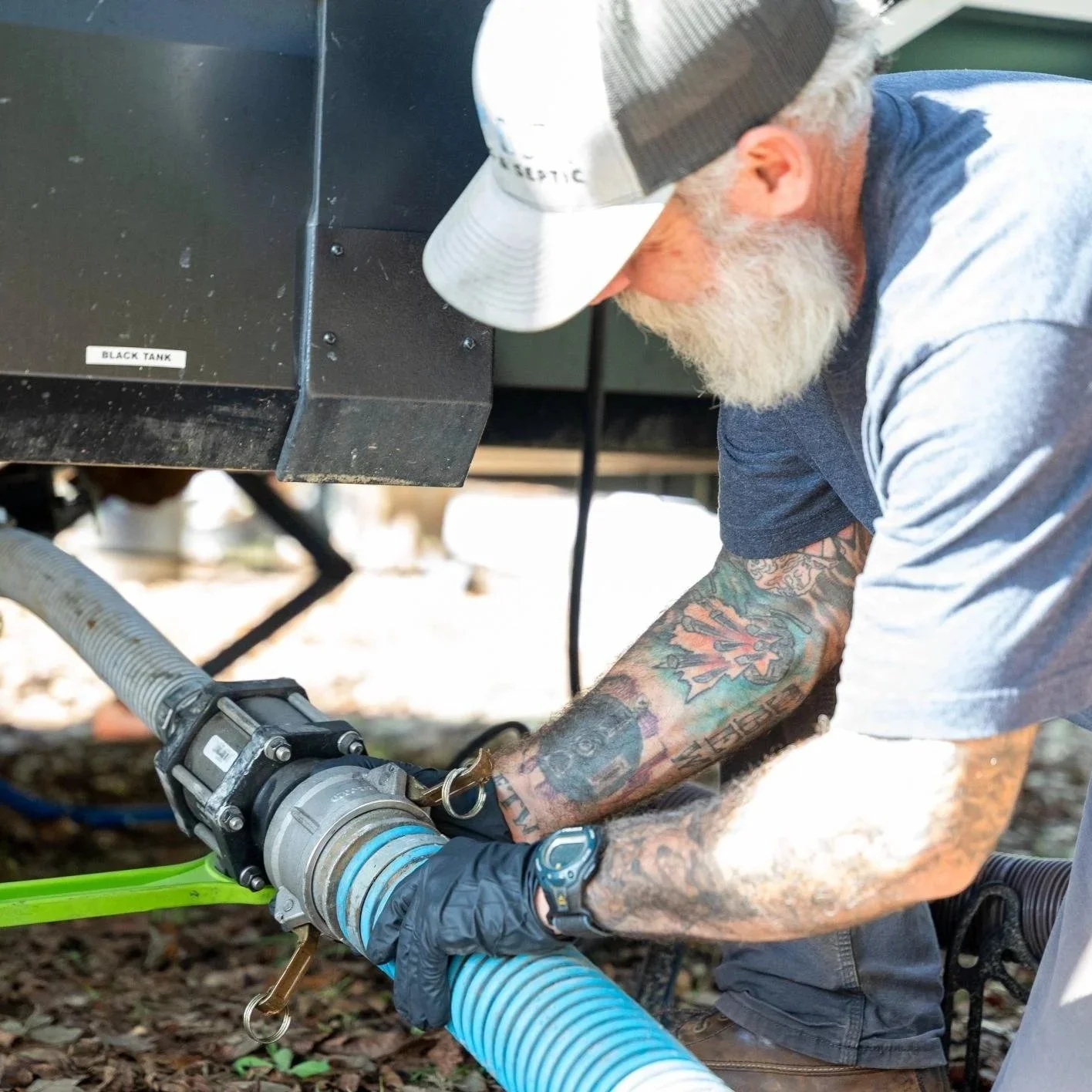
Technician connecting RV septic hose for pumping service, demonstrating proper wastewater removal and holding tank maintenance during travel setup.
Understanding How RV Septic Systems Actually Function
RV septic systems operate very differently from residential or commercial wastewater systems, even though they handle similar waste. Instead of relying on gravity-fed drainfields or treatment processes, RV systems store wastewater in holding tanks. Black tanks collect toilet waste, while gray tanks handle water from sinks and showers. Nothing leaves these tanks unless they are intentionally emptied. That design allows mobility, but it also means capacity is finite and fills faster than many travelers expect.
Because RV tanks do not treat waste, they depend entirely on timely pumping to remain functional. Each use directly reduces available storage space. There is no buffer, no biological breakdown that meaningfully extends capacity. RV septic pumping removes accumulated waste so tanks can continue operating safely. Understanding this storage-based design explains why pumping timing matters so much more in RV travel than in stationary systems.
Why Waiting Too Long Creates Sanitation Risks
Delaying RV septic pumping introduces sanitation issues long before a tank reaches complete capacity. As tanks fill, internal pressure increases. Gases from decomposing waste concentrate and push back through plumbing vents. Odors appear inside the RV even when fixtures still seem usable. Wastewater may linger in toilet bowls or drains, signaling reduced airflow and limited tank space.
Once capacity drops too low, waste begins behaving unpredictably. Backflow occurs during flushing. Gray water drains slowly or stops entirely. In severe cases, waste escapes through seals or vents, contaminating storage compartments or ground surfaces. RV septic pumping prevents these conditions by restoring full containment before sanitation breaks down. Clean travel depends on staying ahead of capacity limits rather than reacting after discomfort appears.
How Usage Patterns Accelerate Tank Fill Rates
RV septic tanks fill faster than many travelers anticipate because daily habits concentrate waste into smaller storage volumes. Showers feel brief, dishes seem minimal, and toilet use mirrors home routines. Inside an RV, those same habits consume a much larger percentage of available capacity. Traveling with multiple occupants compounds the issue quickly, especially during extended stays without hookups.
Weather and travel conditions also influence usage. Hot climates increase water consumption. Long driving days reduce opportunities to dump tanks. Campgrounds without full hookups require more careful planning. RV septic pumping becomes necessary sooner under these conditions, even when usage feels conservative. Recognizing how travel patterns affect tank levels helps prevent surprise overflows and uncomfortable stops.
Why Full Tanks Disrupt RV Plumbing Performance
RV plumbing relies on airflow and gravity within confined spaces. When tanks approach capacity, that balance breaks down. Toilets struggle to flush cleanly. Gray water backs up into sinks or showers. Gurgling sounds indicate restricted airflow due to rising liquid levels in the tanks. These symptoms reflect reduced system functionality rather than isolated fixture problems.
Once tanks reach critical levels, plumbing performance deteriorates rapidly. Wastewater seeks the lowest available outlet, which may be inside the RV rather than outside. RV septic pumping restores proper flow paths by reestablishing space inside the tanks. Smooth plumbing performance depends on maintaining adequate capacity, not just avoiding complete overfill.
Health Considerations During RV Travel
RV travel places occupants in close quarters with their wastewater system. Unlike homes, there is little physical separation between living space and holding tanks. When tanks remain full too long, bacteria, gases, and odors circulate more easily. Exposure risks increase, especially for children or individuals with respiratory sensitivities.
Leaks or spills create additional health concerns. Contaminated surfaces require immediate cleaning and sanitation to prevent illness. Campground environments amplify these risks when waste escapes containment and affects shared spaces. RV septic pumping protects health by keeping waste securely stored and properly disposed of rather than allowing gradual contamination to develop during travel.
Why Chemical Treatments Do Not Replace Pumping
Many RV owners rely on tank treatments to manage odors and breakdown waste. While these products can help control smell, they do not remove volume. Liquids and solids remain inside the tank regardless of additives. Treatments may even create false confidence, masking warning signs as capacity continues to shrink.
RV septic pumping remains the only way to restore usable tank space. Additives support comfort between pump outs but cannot extend storage indefinitely. Relying solely on chemicals often leads to sudden problems because tanks appear manageable until they are not. Pumping addresses the physical limitation that additives cannot change.
Recognizing the Right Time to Schedule RV Septic Pumping
The right time for RV septic pumping arrives before tanks reach capacity, not after symptoms become severe. Monitoring tank levels provides helpful guidance, but gauges are not always precise. Many experienced travelers schedule pumping based on days of use, the number of occupants, and travel plans, rather than waiting for indicators to reach maximum.
Odors, slow drains, and sluggish flushing signal that pumping should already be scheduled. Waiting longer risks spills or backups during transit or at campsites. Planning pump outs as part of travel logistics supports predictable, stress-free travel rather than emergency stops dictated by tank limitations.
Why Dump Stations Are Not Always Enough
Dump stations provide convenient options for emptying RV tanks, but they are not always available when needed. Remote travel routes, crowded campgrounds, or seasonal closures limit access. Some stations handle volume slowly, creating backups or delays that complicate travel schedules.
Professional RV septic pumping offers flexibility when dump stations are unavailable or impractical. Mobile services remove waste efficiently without requiring relocation or long waits. Knowing when pumping is necessary rather than optional helps travelers avoid situations where access constraints turn manageable tank levels into urgent problems.
The Environmental Impact of Proper RV Septic Pumping
Responsible RV septic pumping protects the environments travelers enjoy. Improper disposal or accidental spills contaminate soil, water sources, and campground facilities. Many parks enforce strict waste management rules to protect ecosystems and public health.
Pumping guarantees that waste reaches approved treatment facilities rather than remaining in storage too long or being released improperly. Clean travel depends not only on personal comfort but also on environmental stewardship. Managing waste responsibly supports continued access to natural destinations and shared facilities.
Why Regular Pumping Supports Longer RV System Life
Holding tanks, seals, valves, and sensors last longer when tanks are emptied regularly. Prolonged exposure to waste accelerates material degradation. Valves stick. Sensors foul. Odors linger even after dumping. RV septic pumping reduces wear by limiting how long waste remains in contact with system components.
Regular pumping also supports inspection. Empty tanks allow owners or technicians to identify developing issues early. Cracks, sensor issues, or valve wear become visible before failure. Long-term reliability improves when pumping becomes part of routine maintenance rather than an occasional necessity.
Travel Planning and Pumping Frequency
Travel style directly influences pumping needs. Full-time RV living requires more frequent pumping than weekend trips: boondocking limits disposal options, increasing reliance on capacity management. Long-distance travel may delay access to dump stations, making pumping before departure a smart decision.
Planning routes with pumping options in mind reduces stress. Scheduling pump outs before extended travel segments prevents emergencies in unfamiliar locations. RV septic pumping becomes part of travel planning rather than a last-minute reaction to tank alarms.
Why Emergency Pumping Creates Unnecessary Stress
Emergency RV septic pumping often occurs at inconvenient times and locations. Full tanks during travel force detours, delays, or campsite disruptions. Cleanup may be required if waste escapes containment. Emergency services cost more and offer fewer scheduling options.
Routine pumping eliminates these scenarios. Predictable service keeps travel enjoyable rather than reactive. Clean, safe travel depends on anticipation rather than improvisation. Pumping before tanks reach critical levels keeps RV living comfortable and controlled.
How RV Septic Pumping Supports Comfort and Confidence on the Road
Comfort during RV travel extends beyond sleeping arrangements and scenery. Reliable plumbing contributes significantly to the overall experience. Knowing tanks have capacity allows travelers to focus on destinations rather than logistics. Odor-free interiors, smooth-draining fixtures, and predictable routines build confidence on the road.
RV septic pumping supports that confidence by removing uncertainty around waste management. Clean systems feel invisible, which is exactly how they should feel during travel. Pumping keeps wastewater from becoming a constant concern and allows travelers to enjoy mobility without compromise.
Why RV Septic Pumping Is Part of Responsible Travel
RV travel blends freedom with responsibility. Waste management represents one of the clearest examples of that balance. Pumping protects personal health, campground facilities, and natural environments. Responsible travelers recognize that storage-based systems require active management.
RV septic pumping ensures waste remains contained, properly disposed of, and kept out of living spaces and shared environments. Clean travel relies on discipline, planning, and understanding system limits rather than pushing them until failure occurs.
FAQs
Heavy Duty Pumping & Septic offers soil, excavation, & utility services, large-capacity septic system installation, warehouse, school, & government facility septic service, mobile home park septic maintenance, and campground & RV park septic services in Lucedale. Our family-owned team with over 35 years of experience has advanced excavation and septic equipment. Upgrade your septic infrastructure today and gain dependable performance backed by clear communication and expert care.
