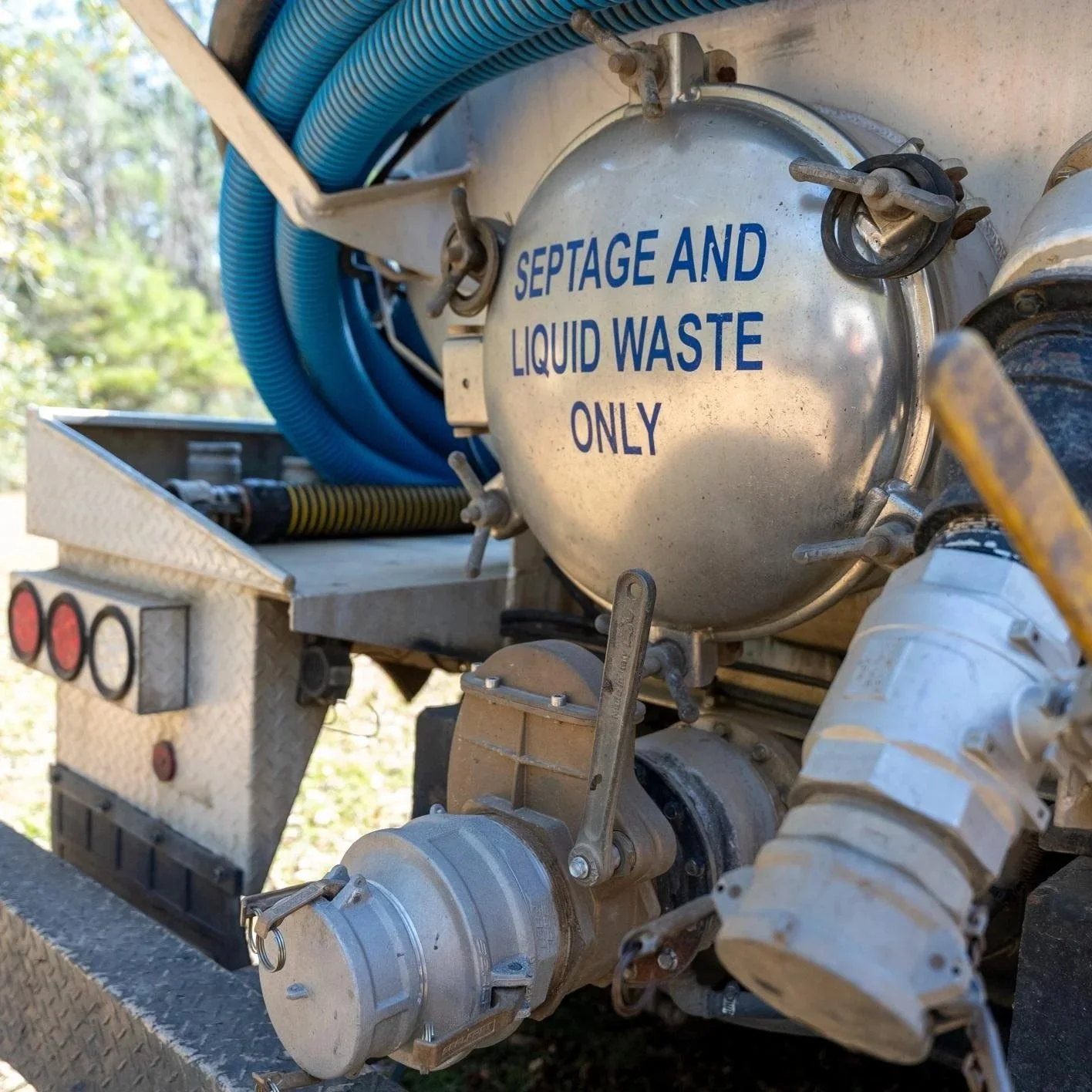
Septic pump truck discharging sludge during septic tank pumping service, demonstrating wastewater removal process and routine residential maintenance work.
Understanding What Septic Sludge Is and Why It Never Stops Accumulating
Septic sludge is the dense layer of solids that settles at the bottom of a septic tank as wastewater flows in from the property. Every flush, shower, load of laundry, and sink drain contributes organic material, paper products, and fine debris that gravity pulls downward. Bacteria inside the tank break down a portion of that material, but the process is incomplete by design. Septic systems rely on controlled accumulation rather than full digestion. Sludge continues to build year after year because there is no natural mechanism to remove it from the tank. That reality applies to every system, regardless of size, age, or usage pattern.
Many homeowners assume sludge buildup only becomes relevant when dramatic symptoms appear. In practice, performance decline begins much earlier. Sludge occupies physical space inside the tank, and as it grows, the tank loses its ability to function as designed. The system does not fail suddenly. It degrades quietly as internal conditions shift. Understanding sludge as a permanent byproduct rather than a temporary inconvenience reframes how system performance should be evaluated over time. Ignoring sludge accumulation allows gradual inefficiencies to compound until downstream components absorb the consequences.
How Sludge Buildup Reduces Effective Tank Capacity
A septic tank depends on available internal volume to separate solids from liquids. That separation requires time. Wastewater must remain in the tank long enough for heavier material to settle and lighter material to rise. As sludge buildup increases, the working volume inside the tank shrinks. Less space means wastewater moves through faster, reducing retention time and compromising separation efficiency. Liquids leave the tank carrying suspended particles that should have remained behind.
Reduced capacity also affects how the system handles daily fluctuations in water use. Normal activities like running multiple fixtures or completing laundry cycles place sudden demand on the tank. With adequate capacity, the system absorbs those surges without disruption. When sludge has taken up too much space, even modest increases in flow can overwhelm the system. Performance problems arise not because usage has changed, but because internal capacity no longer supports routine operations.
The Relationship Between Sludge Levels and Drainfield Stress
The drainfield relies on receiving relatively clear effluent from the septic tank. Sludge buildup directly undermines that relationship. As solids escape the tank, they enter distribution pipes and soil absorption areas that are not designed to handle particulate matter. Over time, those solids clog pipe perforations and coat soil pores, reducing the ability of wastewater to disperse evenly. Drainfield stress develops gradually, often without obvious surface symptoms, until damage becomes advanced.
Once soil absorption capacity declines, the system loses its final treatment stage. Wastewater begins to pool underground or on the surface, creating health and environmental hazards. Sludge buildup acts as the upstream trigger for this cascade. Addressing drainfield issues without correcting sludge accumulation treats symptoms rather than causes. System performance depends on maintaining proper separation inside the tank long before wastewater reaches the soil.
How Sludge Affects Internal Flow Patterns and Baffles
Septic tank baffles guide wastewater through the tank at controlled rates and prevent solids from prematurely escaping. Sludge buildup interferes with those flow patterns. When sludge rises too high, it contacts baffles continuously, increasing wear and disrupting directional control. Wastewater enters and exits the tank under altered conditions, bypassing intended settling zones. That disruption allows solids to move freely toward the outlet.
Flow turbulence increases as sludge encroaches on the inlet areas. Incoming wastewater stirs settled material back into suspension, undoing the separation that previously occurred. Internal flow patterns shift from calm stratification to constant agitation. System performance declines even though the tank remains physically intact. Sludge buildup changes how the tank behaves hydraulically, not just how full it appears to be.
Why Septic Sludge Buildup Leads to Frequent Backups
Backups are often blamed on pipe blockages or sudden failures, but sludge buildup remains one of the most common underlying causes. As internal capacity diminishes, wastewater has fewer places to go during peak usage. Pressure builds within the system, and wastewater seeks the path of least resistance. That path often leads backward into household plumbing rather than forward into an already stressed drainfield.
Repeated minor backups signal systemic overload rather than isolated obstructions. Clearing drains or reducing short-term water use may provide temporary relief, but performance issues return because sludge remains in place. Sludge buildup creates chronic vulnerability. The system operates closer to failure thresholds every day, making backups more likely during normal use rather than exceptional circumstances.
The Impact of Sludge on Septic Tank Structural Integrity
Sludge accumulation influences more than hydraulic performance. It affects the tank's physical condition. As organic material decomposes, gases such as hydrogen sulfide form inside the tank. When sludge remains in prolonged contact with tank walls, those gases concentrate near structural surfaces. Concrete tanks experience surface erosion over time, while metal components corrode faster under constant exposure.
Excess sludge also increases static pressure on tank floors and lower walls. Tanks designed for balanced loads experience uneven stress when sludge volumes exceed intended limits. Structural issues develop slowly, often remaining hidden until inspections reveal deterioration. Sludge buildup accelerates wear, shortening tank lifespan and increasing the likelihood of leaks or failure. Maintaining proper sludge levels supports both functional and structural performance.
How Sludge Alters Bacterial Efficiency Inside the Tank
Bacterial activity plays a central role in septic system performance, but sludge buildup alters the environment in which bacteria operate. As sludge thickens, oxygen-free zones expand, altering microbial balance. Certain bacteria thrive while others decline, shifting decomposition efficiency. Waste breakdown slows, allowing sludge to accumulate faster and creating a self-reinforcing cycle.
Excess sludge also traps fats, oils, and grease that resist digestion. Those materials coat solids and tank surfaces, limiting bacterial access. The system loses its ability to stabilize waste between pumping intervals. Sludge buildup does not simply reflect bacterial limitations. It actively worsens them by degrading the conditions bacteria require to function effectively.
Why Sludge Accumulation Speeds Up Between Pumping Cycles
As sludge occupies more tank volume, each incoming gallon of wastewater stirs existing material rather than settling cleanly. That agitation suspends solids that would otherwise remain at the bottom. Suspended solids exit the tank, but a portion resettles unevenly, creating denser accumulation zones. Sludge buildup accelerates as the system loses its ability to maintain stratification.
Household habits compound the problem. High water usage, garbage disposals, and non-biodegradable products increase sludge production while reducing settling efficiency. Once accumulation reaches a critical point, sludge builds faster between pumping cycles. Systems that previously tolerated longer intervals suddenly require more frequent service to maintain performance.
How Sludge Buildup Masks Early Warning Signs
One of the most problematic aspects of sludge buildup involves its ability to hide early warning signs. Systems often continue operating without obvious symptoms until capacity becomes severely restricted. By the time odors, slow drains, or surface pooling appear, sludge has already compromised internal performance for an extended period.
This delayed feedback leads owners to underestimate the severity. Performance decline feels sudden, but the underlying cause developed gradually. Sludge buildup masks early inefficiencies because the system adapts temporarily by shifting stress to downstream components. Recognizing sludge as a silent driver of performance loss emphasizes the importance of inspection rather than symptom-based decision-making.
The Role of Inspections in Managing Sludge Impact
Visual inspections provide the only reliable way to measure sludge depth and assess its impact on system performance. Tank lids conceal conditions that cannot be inferred from indoor plumbing behavior alone. Measuring sludge and scum layers reveals how much functional volume remains and whether separation processes still operate correctly.
Inspection-driven maintenance aligns pumping schedules with actual conditions rather than assumptions. Systems vary widely in how quickly sludge accumulates. Inspections identify accelerating trends before performance suffers. Proactively managing sludge through inspection prevents guesswork and supports consistent system operation over the long term.
Long-Term System Performance and Sludge Control
Septic systems perform best when internal conditions remain stable year after year. Sludge control supports that stability by preserving retention time, protecting downstream components, and maintaining bacterial efficiency. Systems with managed sludge levels experience fewer backups, slower drainfield degradation, and a longer overall service life.
Neglecting sludge buildup shifts costs forward. What appears to be deferred maintenance eventually manifests as repairs, replacements, or environmental issues. Controlling sludge accumulation remains one of the most direct ways to protect system performance and the investment in ownership. The system does not need perfection. It needs space to function.
FAQs
Heavy Duty Pumping & Septic offers a comprehensive, one-stop solution for professional septic service in Lucedale, MS, including septic tank pumping and cleaning, septic tank replacement, septic system repair, septic system maintenance, and septic system inspection and testing. Our experienced technicians focus on preventing backups, ensuring system efficiency, and long-term performance. Protect your residential or commercial septic system today and enjoy reliable, worry-free operation.
