The kitchen sink has slowed to a trickle again. Three weeks ago, a plumber fed a cable through it, poked a hole in whatever was sitting in the line, and water ran free for a day or two. Now you're standing at the basin watching it fill faster than it drains. Same drain. Same slow crawl back to the same problem.
That's not bad luck. It's the difference between what a drain snake actually does and what most people assume it does.
What a Drain Snake Actually Does
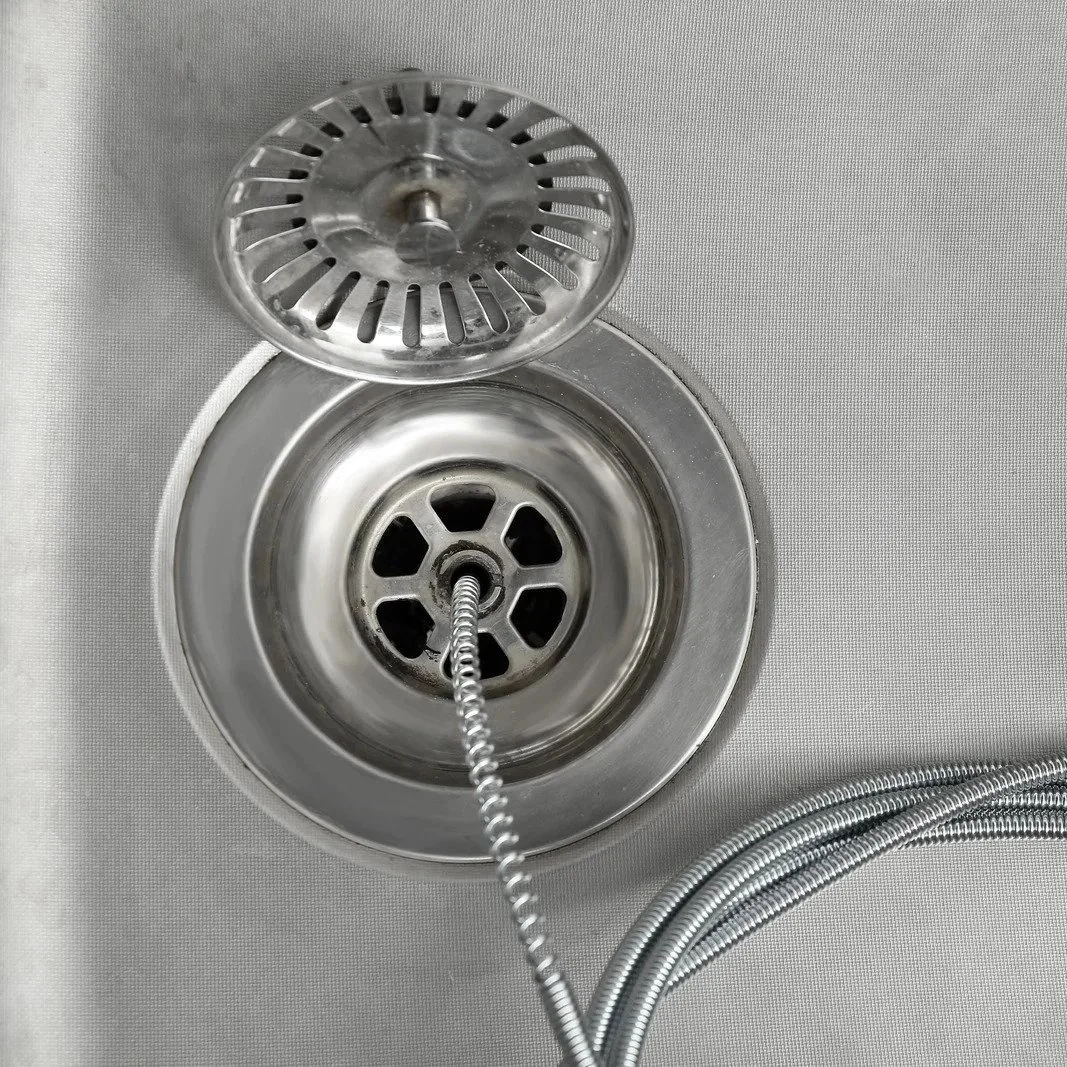
A drain snake — also called a drain auger or cable machine — is a long, flexible metal cable with a cutting tip at the end. The technician feeds it into the pipe, spins it, and drives it forward until the tip contacts the obstruction. The spinning tip bores through the clog and either breaks it apart or hooks into it so it can be pulled back out.
That is the part everyone understands. Here's the part that matters: the inside walls of the pipe stay exactly as they were.
Think of it like pushing a rod through a clogged paper towel tube. The rod punches through the center, and you can blow air through again — but the walls of the tube are still coated with whatever clogged it in the first place. A few days later, debris in the water starts sticking to those coated walls. Before long, the opening narrows again.
Snaking is a targeted fix. It clears the restriction at that moment. It does not clean the pipe.
One important note: chemical drain cleaners are not a substitute for either method. They can corrode pipe walls, weaken seals, and leave behind residue that makes future clogs worse. If water is backed up, a snake or a jetter is the right call — not a bottle of acid poured down the drain.
What Hydro Jetting Does That Snaking Cannot
Hydro jetting uses water under high pressure — typically 3,000 to 4,000 PSI at the nozzle, with some commercial-grade equipment reaching 4,500 PSI — to scour the inside of the pipe wall. The nozzle has multiple jets: a forward-facing jet that cuts through whatever is ahead and several rear-facing jets that blast the pipe wall behind it as the nozzle moves through.
The result is not just a hole through the clog. It's a pipe that has been pressure-washed from the inside.
Grease does not get poked open. It gets stripped from the pipe wall completely and flushed downstream in suspension. A root mass does not get tunneled through. The root fibers get cut and scoured until the pipe is clear. Scale, soap film, compacted debris that has built up over years — all of it gets mobilized and sent down the line.
That is why hydro jetting holds longer. The pipe goes back to something close to its original interior diameter. There is no residual coating for new debris to stick to.
Side-by-Side: Snaking vs. Hydro Jetting
| Factor | Drain Snaking | Hydro Jetting |
|---|---|---|
| What it clears | Localized physical obstruction | Full pipe-wall cleaning, root mass, grease, scale |
| How it works | Mechanical auger bores or hooks the clog | High-pressure water (3,000–4,500 PSI) scours pipe walls |
| Speed | 30–60 minutes for most jobs | 1–3 hours, depending on line length and condition |
| Results last | Days to weeks, if walls are coated | Months to years — pipe returns near original diameter |
| Works on root intrusion | Cuts a passage, roots regrow quickly | Severs and flushes roots; slows regrowth significantly |
| Works on grease buildup | Pokes through — leaves residue on walls | Strips grease from walls completely |
| Pipe risk | Very low — safe on almost any pipe | Low if pipe is intact; higher on cracked or deteriorated lines |
| Typical residential cost | $150–$300 | $350–$700 |
Why the Same Clog Keeps Coming Back
A drain that clogs twice in six months is telling you something specific. Either the snake did not remove the root cause — literally, in the case of roots — or the pipe wall is coated with a material that catches debris faster than normal flow can carry it away.
Grease is the most common culprit in kitchen drains. Cooking fat goes down the drain as a hot liquid, hits the cooler pipe wall a few feet in, and hardens into a wax-like film. Every plate rinsed, every pan drained adds to the layer. A snake breaks through the center of the hardened mass — water flows again, briefly — but the coating stays on the walls. The next load of grease sticks to the old grease. The pipe narrows faster this time.
In sewer lines and septic laterals, tree roots are the recurring culprit. Roots do not invade pipes by chance. They grow toward hairline cracks at pipe joints — cracks that leak moisture and warm gases. Once a root tip finds an opening, it pushes through and fans out inside the pipe. Cut the root with a snake, and the stump left behind sprouts new growth within weeks. The root did not go anywhere. The entry point at the joint is still open.
Repeated snaking on a line with this kind of problem doesn't fix anything — it just postpones the next call.
When You Actually Need Hydro Jetting
Hydro jetting earns its higher price in three clear scenarios.
Recurring clogs on the same line. If you have had the same drain snaked two or more times in 12 months, and it keeps slowing, the walls are coated. Snaking again is temporary. Jetting clears what the snake left behind.
Grease-heavy lines. Kitchen drain lines in homes where a lot of cooking happens accumulate grease faster than other lines. Once the coating is thick enough to catch debris, snaking provides only short-term relief. Hydro jetting strips the walls down to bare pipe.
Root intrusion. Roots grow back after snaking. They grow back more slowly after hydro jetting, because the high-pressure water cuts more of the root mass and flushes the debris out. Hydro jetting does not close the crack that let roots in — that's a repair job — but it buys significantly more time between service calls. For more on managing root regrowth, see tree root removal.
Pre-camera inspection prep. If you are having a sewer camera inspection done — before a real estate transaction, after a backup, or to diagnose a recurring problem — hydro jetting before the camera run gives the technician a clear view of the pipe wall. Grease and debris obscure camera images; jetting removes them.
When Snaking Is the Right Answer
Hydro jetting is more thorough, but it is not always the right tool.
First-time, localized clog. Hair in the shower trap, a food clog in the kitchen sink, a small object that went down by accident — these are physical obstructions with a clear edge. A snake can grab or break them in minutes at a fraction of the cost.
Older or fragile pipe. Clay pipes, Orangeburg pipe (a fiber-and-tar material common in homes built before the 1970s), and severely corroded cast iron may not hold up to 3,000+ PSI. If a camera inspection reveals compromised pipe walls, snaking is the lower-risk option until the pipe is repaired or replaced.
Tight branch lines. Short branch lines off a main — like a bathroom vanity or a single floor drain — often do not need the full power of a jetter. A snake handles them cleanly. See drain snaking services for more on when this approach makes sense.
Frequently Asked Questions
If the clog is happening for the first time and it's in a single fixture, start with a snake. If it's the second or third time the same line has clogged — or if the drain has been slow for months rather than suddenly stopping — jetting is the more effective option. A technician can confirm by running a camera first.
Not always. Pipes in good condition — PVC, ABS, or intact cast iron — handle jetting without issue. Older clay pipe, Orangeburg, or heavily corroded cast iron may not hold up to 3,000+ PSI. That's why reputable companies run a camera inspection before jetting any line with an unknown pipe condition.
It can. If the snake is not completely removing the obstruction, it may compact material deeper into the line each time, making future clearing harder. On grease-coated or root-active lines, snaking repeatedly without addressing the coating is a pattern that tends to end with a full backup.
Not permanently. Hydro jetting removes the root mass and flushes the debris, but it does not seal the crack in the pipe joint that gave roots their entry point. Roots regrow from what's left at the entry point. Jetting slows regrowth — most homeowners see 12 to 24 months before the line needs attention again — but the only permanent fix is repairing or lining the pipe.
Most residential hydro-jetting jobs take one to three hours. The variables are line length, access points, and degree of buildup. A heavily grease-coated line takes longer. A typical residential main line is done in under two hours.
Drain snaking typically runs $150 to $300 for a residential job. Hydro jetting runs $350 to $700 for most residential lines, with commercial or longer runs priced higher. That gap closes quickly when you factor in how often you would otherwise need to snake the same line.
The Right Tool Depends on What Is Actually in the Pipe
A first-time clog in a single fixture? Snaking is fast, affordable, and gets the job done. A line that keeps backing up, a kitchen drain that has been sluggish for years, or a sewer lateral with roots pushing through — those need the pipe cleaned, not just poked open. The difference shows up in whether your drain is still running fine six months from now.
