You drained the bathtub last night and heard it — a low, wet gurgle rising from the kitchen sink on the other side of the house. Nothing was running in the kitchen. The two fixtures are separated by 40 feet of pipe. And yet there it was: a bubbling, sucking sound that shouldn't exist.
That is your plumbing telling you something is wrong. The gurgle isn't random noise. It's the sound of your drain system pulling air from somewhere it shouldn't have to reach, and the reason it does that comes down to physics.
Why Drains Gurgle: The Pressure Problem Underground
Your drain system is built around one core rule: every drop of water flowing out needs an equal volume of air flowing in. That air comes through a vent stack — a vertical pipe that runs from your drain system up through the roof. As water flows down the drain, air enters from above and equalizes the pressure. Done right, the whole thing is silent.
When the system can't equalize pressure — because the vent is blocked, the line is partially obstructed, or there's too much waste moving through too little space — the plumbing does something desperate. It pulls air through the nearest available path. Usually that's the water sitting in your P-trap.
The P-trap is the curved section of pipe under your sink (or behind your toilet, or below your tub). It holds a few inches of standing water that acts as a seal between your living space and the gas-filled drain system below. When the line pulls air through that water, you hear it: a burbling, gurgling sound. The same physics as a straw blocked at the top end — squeeze the bottom and water fights to get past the seal.
That sound is not the clog itself. It's the symptom of negative pressure. The clog, the blockage, or the system problem is somewhere else downstream.
What the Gurgle Is Actually Telling You
Not every gurgle means the same thing. The location, timing, and which fixtures are involved tell you a great deal about what's actually happening underground.
| What You Hear | What's Happening | How Urgent |
|---|---|---|
| One sink gurgles, drains slowly | Partial local clog — grease, hair, or soap buildup | Low — monitor, try snaking |
| Toilet gurgles when you drain the tub | Main line or vent stack issue | Medium-high — call soon |
| Multiple fixtures gurgle when any one runs | Main line blockage | High — call today |
| Gurgling + sewage smell from any drain | Dry P-trap or main line breach | High — call today |
| Gurgling after a heavy rain (on septic) | Saturated drain field or full tank | High — call today |
| Washing machine drains and toilet bubbles | Main line obstruction at or past junction | High — call today |
A single gurgling fixture that drains fine is usually a local problem. Grease cools and thickens against the pipe wall the way candle wax hardens in a glass jar — slowly, around the edges, until the passage narrows enough to trap air pockets as water moves through. A kitchen drain that gurgles after doing dishes is often this: a partial grease restriction 2–4 feet down the line where the pipe bends or drops.
The moment a second fixture is involved — especially if flushing the toilet makes the shower gurgle, or running the washing machine bubbles the floor drain — you're dealing with something much further downstream.
The Vent Stack: When Your Plumbing Can't Breathe
Blocked vent pipes are the second most common cause of gurgling, and they're almost never on a homeowner's radar because the vent stack is on the roof, invisible, and doing its job quietly for years until it isn't.
Leaves collect in the opening. Mud daubers build nests inside the pipe. In rare cases, a bird settles in and the nest grows over several seasons into a dense plug. Once the vent is blocked, the drain system can't draw fresh air from above — so it pulls from below, through your traps, every time water moves through the system.
A fully blocked vent stack tends to cause gurgling across multiple fixtures. It won't cause backups right away, but it creates a constant low-level pressure imbalance. Slow drains, intermittent gurgling, occasional sewer smells — these symptoms together often point to a vent problem rather than a drain clog. A camera inspection can confirm it without pulling apart walls.
The Septic System Factor
If your property runs on a septic system rather than city sewer, gurgling drains carry an additional meaning that competitors serving city-sewer customers rarely mention.
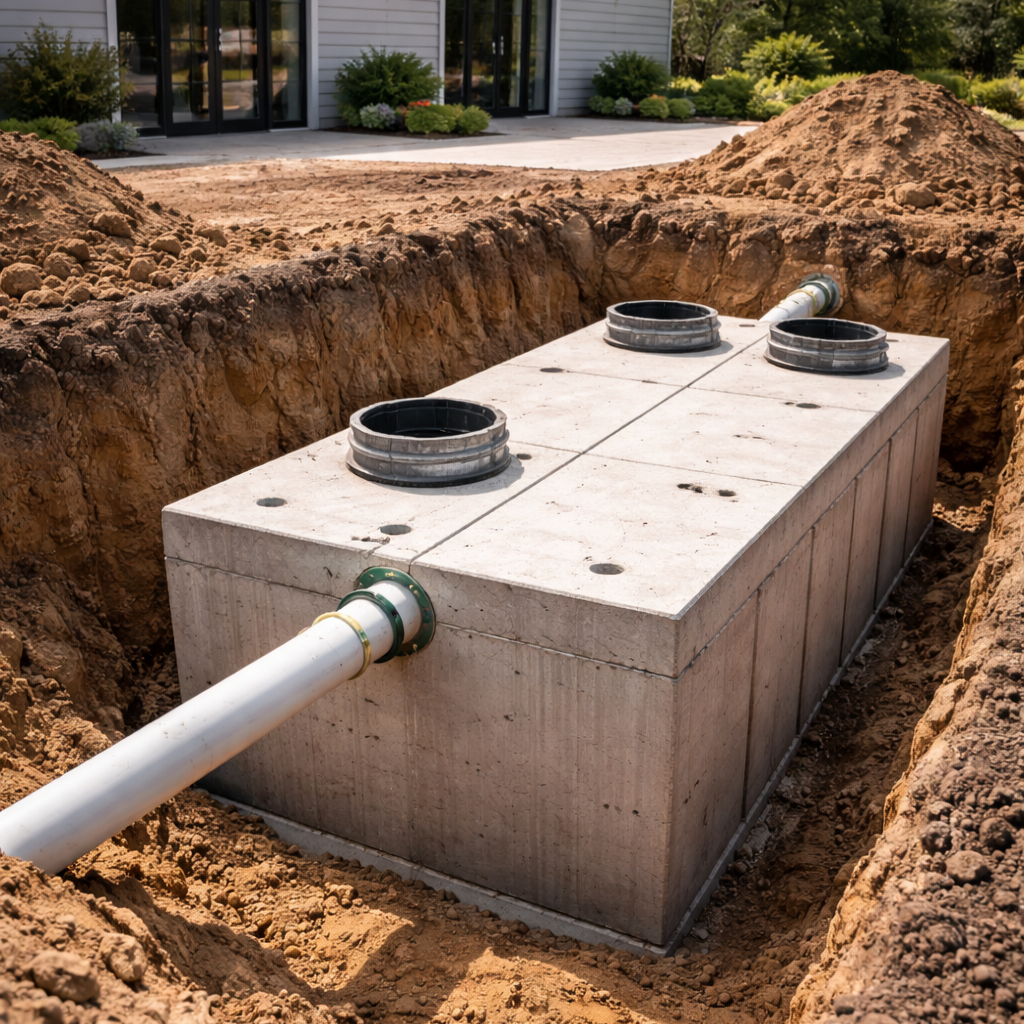
A septic tank separates waste into three layers: solids settle to the bottom as sludge, effluent fills the middle, and a floating scum layer sits on top. The effluent drains out to the drain field through distribution lines. When the tank approaches capacity — sludge built up past the 50% mark — effluent no longer has room to drain out cleanly. Pressure backs up into the house. The first sign is usually gurgling at the lowest fixtures: a floor drain, a basement toilet, the washing machine standpipe.
If your drain field has become saturated — either from heavy rain, soil compaction, or biomat buildup on the trench walls — water backs up from the field into the tank, and the same pressure ripples backward into the house. Gurgling after a heavy rain on a septic system is almost always a drain field signal. It's not the rain that caused the problem; it just exposed one that was already developing.
Root Intrusion: The Cause That Comes Back
Tree roots follow moisture. The joints and hairline cracks in older clay or cast iron sewer lines are a reliable water source, and roots grow toward them over years — first as thin tendrils, then as fibrous mats that accumulate waste and narrow the flow path. A line with 30–40% root restriction will gurgle intermittently, especially after heavy water use like laundry or showering. The roots aren't stopping flow yet — they're slowing it and trapping air.
Root-related gurgling tends to get worse gradually over months, then suddenly after a heavy rain when the roots absorb extra moisture and swell. A camera inspection will show them clearly. Cutting them out with a root-cutting head clears the line temporarily, but the roots regrow from the same point unless the line is treated or eventually replaced. Gurgling that returns within 6–12 months after a cleaning is a classic root-intrusion pattern.
One Fixture vs. Multiple: The Decision You Need to Make
This is the single most important diagnostic question.
One fixture gurgling only. You can start with drain snaking — a 25-foot hand snake handles most bathroom clogs, and a longer powered auger reaches kitchen line blockages 15–20 feet down. If snaking clears it and the gurgling stops, the problem was local. Watch for recurrence.
Multiple fixtures gurgling, or any gurgling during toilet flushing. This is not a DIY situation. The blockage is in the main line or beyond, and home-grade tools won't reach it. High-pressure hydro jetting or professional sewer and septic line clog clearing is needed.
Gurgling with sewage odor. Call the same day. Sewer gas contains hydrogen sulfide, which is detectable by smell at low concentrations but dangerous at higher ones. Don't run water or use fixtures until the source is identified.
Gurgling on a septic system after rain or after years without pumping. Schedule an inspection — septic tank pumping and a drain field evaluation will tell you whether the problem is capacity, field saturation, or something structural.
Frequently Asked Questions
Household water use is lower at night, which changes the pressure dynamics in the line. If a partial obstruction is present, the reduced flow creates more pronounced air movement past the restriction — you hear it more clearly because the house is quiet, but also because low-flow conditions make the gurgling more pronounced.
For a single fixture, you can monitor it briefly while you arrange a service call — but don't ignore it indefinitely. Partial blockages grow. What gurgles today and drains slowly next month is a full backup the month after. Addressing it early costs far less than addressing it after an overflow.
Yes. Two fixtures sharing a drain line — and one affecting the other — means the blockage is in the shared section, past where both lines connect. This is a main line issue and requires professional cleaning. Using the fixtures will make it worse.
On a septic system, rain saturates the soil around the drain field and reduces its ability to absorb effluent. This creates backpressure that registers as gurgling at house fixtures. On a city sewer system, heavy rain can overwhelm a partially blocked main line or cause stormwater infiltration that reduces sewer capacity temporarily.
A dry P-trap — one where the water seal has evaporated, usually in a floor drain or unused guest bath — causes gurgling and sewer gas odors when other fixtures run nearby. The fix is pouring a quart of water down the drain to reseal the trap. If the smell continues, the problem is downstream of the trap.
Vent-related gurgling tends to occur across multiple fixtures simultaneously and doesn't respond to drain cleaning. You won't see slow drainage — water moves fine, but the gurgling persists. A plumber or technician can use a smoke test or camera inspection to confirm vent blockage without opening walls.
A Gurgle Is a Signal, Not Just a Sound
Plumbing problems rarely announce themselves loudly. A gurgle is one of the few early warnings a drain system gives before something fails completely. The pipes are working harder than they should, pulling air from places they shouldn't have to reach. That sound is worth taking seriously before it becomes a backup.
