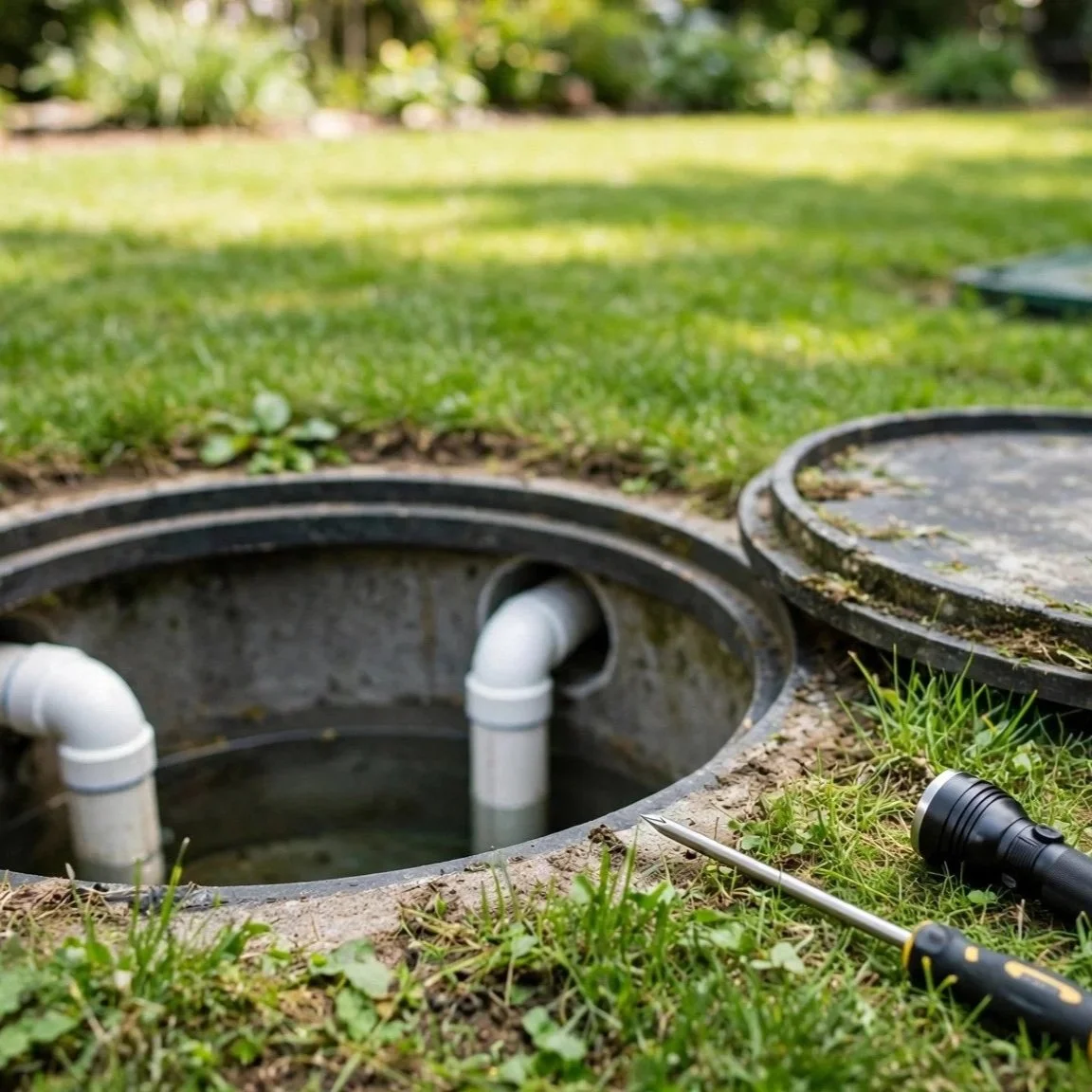
The septic system is the part of a property nobody thinks about until it backs up into the house or bubbles up in the yard. It sits buried and out of mind, quietly handling everything that goes down the drains, which is exactly why a periodic inspection matters, and why a septic inspection is one of the smartest things to do before buying a home with one. The trouble is, most people have no idea what an inspector is actually looking at down there.
Knowing what a septic inspection covers takes the mystery out of it and shows why it catches expensive problems before they become emergencies.
The System an Inspection Covers
A septic system has a few connected parts, and a thorough inspection looks at each: the tank that holds and separates the waste, the baffles or tees that control flow inside it, the distribution box that spreads the effluent, and the drain field (also called the leach field) where the liquid finally filters into the soil. An inspection is not just a peek in the tank; it is a check of how the whole system is functioning from the house to the ground. That is why a proper one turns up problems a quick glance would miss.
What the Inspector Actually Examines
Here is what a full septic inspection looks at, component by component.
| What's checked | What it tells the inspector |
|---|---|
| Tank location and access | Where the system is and whether it can be serviced |
| Liquid level in the tank | Too high signals a drain-field or outlet problem; too low can mean a leak |
| Scum and sludge layers | How full the tank is and whether it is due for pumping |
| Tank condition and watertightness | Whether the tank is cracked or leaking in or out |
| Baffles and tees | Whether the flow control inside the tank is intact |
| Distribution box | Whether the effluent is spreading evenly to the field |
| Drain field | Signs of saturation, surfacing effluent, or failure |
The liquid level is one of the most telling checks. It should sit at a specific height; water that is too high suggests the effluent is not draining into the field as it should, while a level that is too low can point to a leak in the tank. Measuring the scum layer on top and the sludge layer on the bottom tells the inspector how full the tank is and whether it needs pumping. And the tank itself is checked for watertightness, because a cracked tank lets wastewater escape into the groundwater or lets groundwater flow in and overload the system.
The Drain Field Is Where Problems Hide
The most expensive part of a septic system to fix is the drain field, so a good inspection pays close attention to it. The inspector looks for signs that the field is saturated or failing: soggy or unusually green patches over the field, effluent surfacing to the ground, or sewage odors outdoors. A failing drain field cannot absorb the effluent that the tank sends it, which backs the whole system up. Catching early signs of field trouble is one of the biggest reasons an inspection pays for itself, because a drain-field replacement is far costlier than the maintenance that prevents it.
Why a High Water Table Raises the Stakes
In areas with a high water table, the soil and water tables make septic system performance especially worth monitoring. A high water table leaves less dry soil beneath the drain field to filter and absorb effluent, so a field that would work fine on drier ground can struggle, and heavy rain can saturate the ground and push a marginal system over the edge. That is why septic systems in these conditions are designed around them, and why an inspection closely examines whether the field is coping with the water table and wet stretches. A system that seems fine in a dry spell can reveal its limits after a big storm, which is exactly what a careful inspection anticipates.
Frequently Asked Questions
Because a failing septic system is expensive and largely invisible from inside the house, and repairs, especially to the drain field, can cost a great deal. An inspection before buying reveals the system's condition, whether the tank is sound, whether it is due for pumping, and whether the drain field is failing, so you are not inheriting a costly surprise after closing. It is one of the most valuable inspections you can add.
A common guideline is to have the system inspected every few years and pumped as needed, depending on how full the tank gets, though household size and usage affect the interval. In areas with challenging soils or a high water table, more frequent attention is wise. Regular inspection catches small problems, like a tank due for pumping, before they become failures.
When the sludge on the bottom or the scum on top climbs to the level of the outlet, solids carry past the outlet baffle and out into the drain field, where they clog the soil and are one of the main ways a field fails early. This is why an effluent filter on the outlet tee matters: it screens those solids before they leave the tank and is checked and rinsed at each service. Measuring the layers and pumping on schedule keeps them well below the baffle in the first place, protecting the far more expensive field.
Beyond looking for soggy ground, standing water, and unusually lush grass over the field, an inspector can push a soil probe or auger down beside the trenches to feel for saturation at the gravel line. On a fuller inspection, a hydraulic load test, running a measured volume of water through the system, or a dye flush that tints the effluent, shows whether the field accepts the load or pushes color to the surface. Those active checks confirm what the surface signs only hint at, on the costliest part of the system to repair.
Yes. Beyond eyeballing the walls for cracks, the inspector runs a water-level drop test: the tank is filled to the top of the outlet pipe and left to sit, and a drop in level over the next several minutes to a couple of hours indicates a leak through a crack or a failed seam. A level that instead rises can signal groundwater seeping in. The riser lids, inlet and outlet penetrations, and seams between sections are the usual leak points the test exposes.
Pump the tank on schedule, be mindful of what goes down the drains, avoid overloading the system with excessive water, and keep heavy vehicles and deep-rooted plants off the drain field. In a high-water-table area, managing runoff and avoiding field stress during wet seasons helps too. Regular inspections tie it together by catching issues early.
An Inspection Sees What You Can't
A septic inspection examines the whole hidden system: the tank's level, scum and sludge, and watertightness; the baffles and distribution box; and the drain field where the costliest failures start. It turns a buried unknown into a clear picture of the system's health, which is why it is essential before buying a home with a septic system and valuable as routine maintenance. In an area of challenging soils and a high water table, that early look is what keeps a manageable fix from becoming a drain-field replacement.
Whether you are buying a home or just due for a check, an inspection tells you exactly where your septic system stands. Heavy Duty Pumping & Septic LLC serves Lucedale, Leakesville, Hurley, and the Gulf Coast. Call (601) 804-2230 to schedule.
