
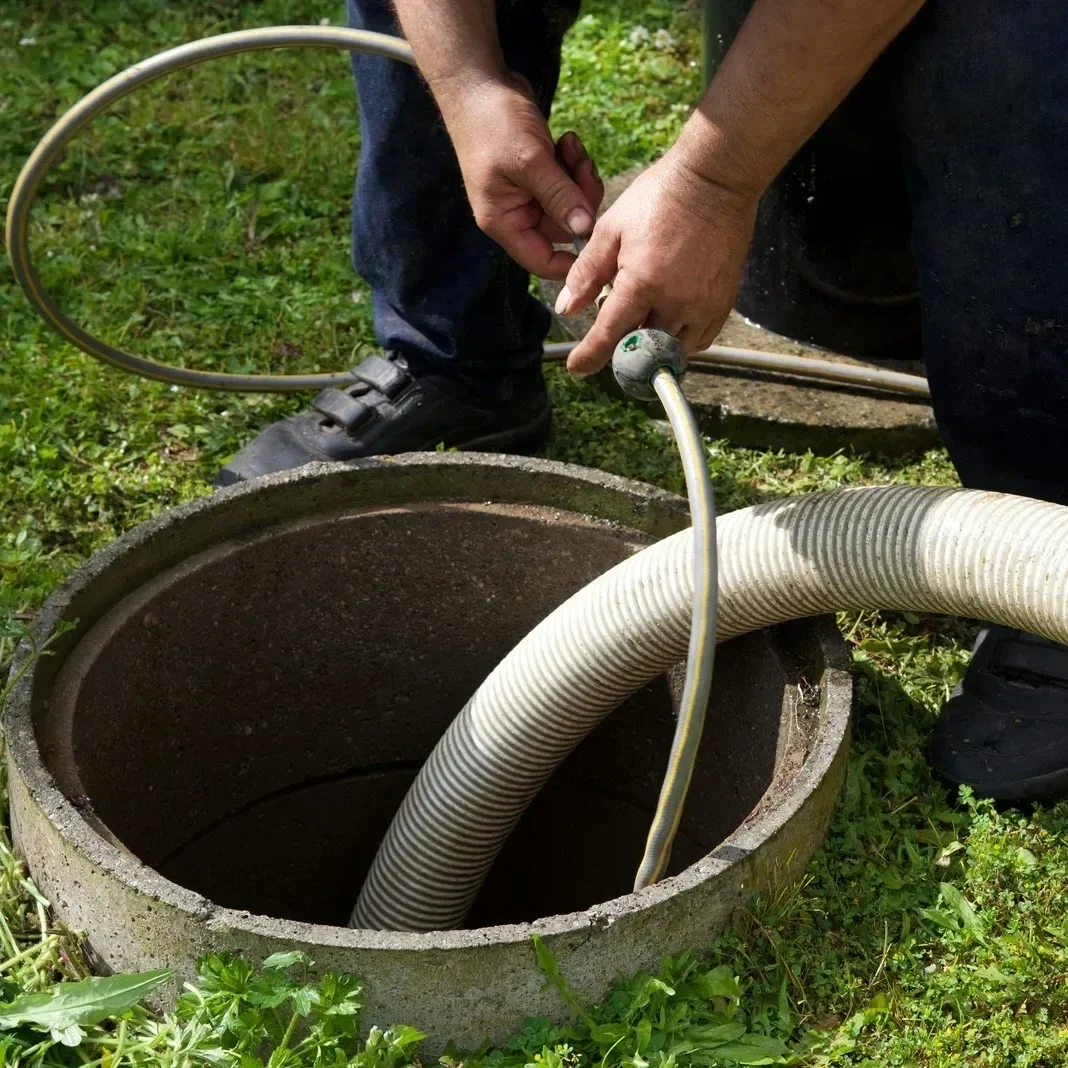
The inspector spent 45 minutes walking around your yard, lifting the tank lid, and checking the cleanout. He wrote "system appears functional" on the form. You paid $150 and feel no more confident than before. The drains have been slow for three months, and nobody can tell you why.
That's what a visual-only inspection looks like. It tells you whether the tank is full and whether the grass near the drain field is unusually green. It can't tell you there's a 4-inch section of pipe 18 feet from the house that's been sagging since the ground shifted two winters ago — a belly that holds standing waste every time you flush, slowly turning an inconvenience into a backup.
A video camera inspection is different. The camera goes where the problems actually live.
What the Camera Actually Does
A camera inspection uses a waterproof, high-resolution camera head mounted on a flexible fiber-optic cable. The technician feeds that cable into your system through a cleanout or access point, threading it down the pipe while watching a live feed on a monitor at ground level. The camera head carries its own LED lighting, so it can illuminate the inside of a pipe even 6 inches in diameter at 15 feet underground.
As the camera travels, the technician is watching the pipe wall in real time. Cracks show as white lines against dark pipe material. Root intrusion looks like a tangle of white threads narrowing the bore from the joint. A bellied section shows as standing liquid in a low spot — water that should have moved to the tank hours ago. The camera captures all of it.
Most camera heads also carry a sonde transmitter — a small radio device that lets the technician pinpoint the camera's exact underground location with a receiver above ground. If the camera is sitting at a cracked joint 22 feet from your cleanout and 3 feet off your driveway edge, the technician marks that spot before any excavation begins. The repair crew digs exactly where they need to. Not 6 feet in four directions, hoping they find it.
What a Camera Can Find
The range of problems visible through a camera inspection is wider than most people expect.
Root intrusion. Tree roots follow moisture into any gap they can find — a hairline crack in an older clay pipe, a loose rubber gasket at a joint. Once inside, they don't stop. A camera catches intrusion at every stage: from a few white threads near a joint all the way to a full mat of roots narrowing a 4-inch pipe to less than an inch of open bore. You can see how far it's spread and whether clearing the roots will give lasting relief or just a few months before they're back.
Cracked and offset pipes. Ground movement, vehicle traffic over buried lines, and plain aging cause pipe sections to crack or shift at joints. Even a small offset creates a ledge where toilet paper and solids catch. The crack itself allows groundwater to infiltrate during rain events, flooding your tank with clean water that forces sewage into the drain field faster than the soil can absorb it.
Bellied pipe sections. A belly is a low spot — usually from soil settling — where the pipe loses its downward slope and waste pools instead of draining. The standing waste decomposes in place, building a mat that restricts flow even further. There's no symptom you can diagnose from the surface. Slow drains that don't respond to snaking are one of the most reliable signs of a blockage somewhere in the line.
Grease and scale accumulation. Years of fats, oils, and grease coat the inside of kitchen drain lines. The camera shows this as a narrowing of the clear bore — sometimes dramatically. A pipe that looks fine on the outside is carrying half its designed capacity because the walls are coated with a decade and a half of cooking residue.
Separated connections. Joints between pipe sections can pull apart with ground movement, especially in older systems using rubber couplings. A separated joint leaks sewage into the surrounding soil before it reaches the tank — you're contaminating the ground and losing treatment capacity at the same time.
What a Camera Can't Find
This matters. A camera inspects the inside of your pipes and the condition of the pipe walls. It doesn't assess drain field saturation, soil percolation rate, or the biological health of the tank itself. If your drain field is failing because the soil is biomat-clogged after years of hydraulic overloading, the camera won't show that directly..
| What Camera Inspection Covers | What It Doesn't Cover |
|---|---|
| Cracks, breaks, and offset joints | Soil percolation in the drain field |
| Root intrusion at any stage | Biomat buildup in drain field trenches |
| Bellied or sagging pipe sections | Tank baffle condition (requires tank entry) |
| Grease and scale accumulation | Groundwater table relative to drain field |
| Separated pipe connections | Full system hydraulic load capacity |
| Precise location for repair excavation | Pump performance (requires lift station testing) |
A complete septic system inspection typically combines camera inspection of the lines with tank pumping and physical inspection of the baffles, along with drain field evaluation — either by observation or hydrostatic testing. The camera is one piece of the diagnostic picture, but it's the piece that tells you what's happening in the buried pipe network that you can't access any other way.
When a Camera Inspection Makes Sense
Before buying a home. A standard home inspection won't include a camera run of the septic lines. The inspector lifts the tank lid, checks the level, and calls it done. That tells you whether the tank needs pumping. It tells you nothing about the condition of the inlet and outlet lines. If the outlet pipe has a separated joint 10 feet from the tank, effluent has been leaking into the soil for years — and you won't know until you're the owner dealing with the smell.
When drains are slow and snaking doesn't fix it. A cable machine punches a hole through whatever's in the way, but it doesn't address a bellied pipe or a root system that regrows within a few months. If your sewer line has been snaked twice in two years and the problem keeps coming back, a camera inspection tells you whether the snaking is treating the symptom or the cause.
Before any major repair. A technician recommending pipe replacement or drain field work should be able to show you exactly what they're repairing and why. A camera inspection before septic system repair gives both you and the crew a precise picture of what needs to come out of the ground and what can stay.
For older systems. Systems installed in the 1970s and 1980s often use clay or Orangeburg pipe — materials that degrade in ways PVC doesn't. A camera run gives you a condition baseline: how much deterioration is present, which sections are at risk, and whether spot repairs or a full pipe reline is the right call.
After the Camera Finds Something
Finding the problem is step one. What happens next depends on what the camera shows.
Grease and root buildup that hasn't reached structural damage is often addressed with hydro jetting — high-pressure water that strips the pipe walls clean rather than boring through like a snake. The camera confirms the blockage is soft enough for jetting and documents the before-and-after condition of the pipe wall.
Root intrusion with intact pipe walls calls for mechanical cutting followed by a root-growth inhibitor treatment applied to the joints. If the pipe wall at the joint is cracked, cutting the roots buys time but doesn't eliminate the re-entry point. That means periodic root removal becomes part of the maintenance plan until the damaged section is addressed or replaced.
Offset joints, separated connections, and bellied sections require excavation and pipe repair. The sonde-located coordinates from the camera inspection tell the crew exactly where to dig — a focused 2-foot trench rather than exploratory trenching across the yard.
Frequently Asked Questions
Yes. The camera is typically fed from the cleanout near the house through the entire inlet line to the tank. In some cases it can also inspect the initial runs of distribution pipe leading to the drain field, though those lines are narrower and may require a different camera head size.
The camera inspects the pipes leading to and from the tank, and can see the inlet and outlet connections from the pipe side. Inspecting the tank baffles, the effluent level, and the tank's internal condition requires the lid to be opened and the contents pumped for a full visual inspection.
For most residential systems, a camera run every 3–5 years is a reasonable baseline. Systems with large trees overhead, older clay or Orangeburg pipe, or a history of recurring backups are worth inspecting more frequently — closer to every 2 years.
Requirements vary by state and county, but even where it's not required, a pre-sale camera inspection protects both parties. Buyers get documentation of pipe condition. Sellers eliminate post-closing disputes about issues that were present but undetected.
A severe blockage, a collapsed section, or an extremely bellied line may stop the camera before it reaches the tank. The technician can still pinpoint where the camera stopped — identifying the first major problem area. That finding defines what repair is needed and what additional inspection follows.
Yes. Root intrusion starts at a crack or joint gap and grows inward for months before it creates noticeable flow restriction. By the time you're seeing slow drains, the root mass has typically been building for one to three years. Catching root intrusion early — before it fills the pipe bore — is the difference between a jetting or cutting job and a pipe replacement.
Know What's Underground Before It Becomes an Emergency
The most expensive septic repairs are the ones that announce themselves as emergencies — sewage backing up into the house, a drain field that failed while no one was watching, a pipe collapse discovered during a home sale. In most of those cases, the warning signs were underground for a year or more before the system forced the issue.
A camera inspection doesn't prevent problems from existing. It puts them on your schedule instead of theirs.
