
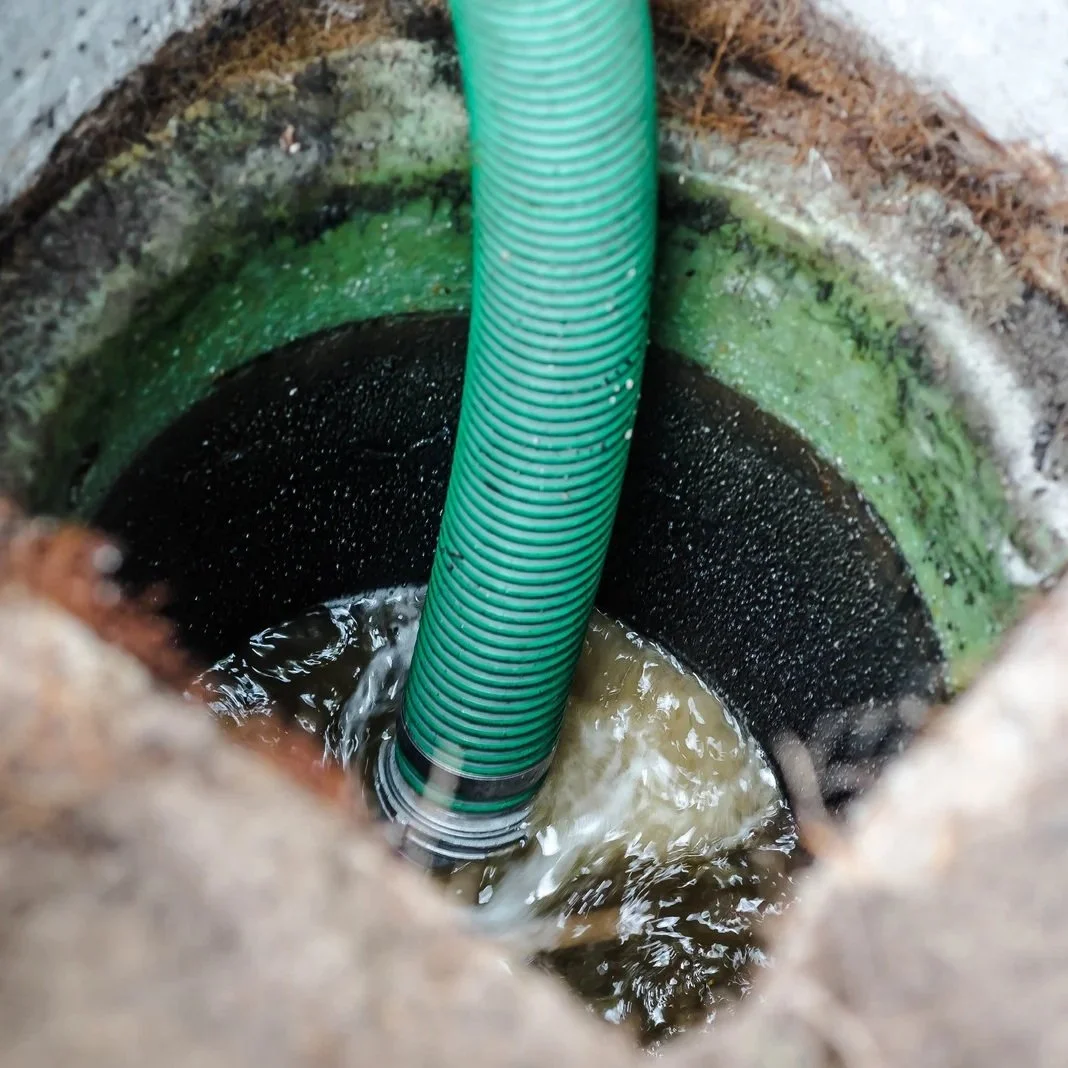
Your grease interceptor alarm goes off at 11:30 on a Friday morning — an hour before the lunch rush. The kitchen drain is backing up and a service tech is on the way. When he pulls the lid, the interceptor is packed. The system was never sized for what this kitchen actually produces in a day.
Commercial kitchens are hard on septic systems. The volume of water, the concentration of fats and oils, and the relentless daily load are nothing like what a residential system sees in a week. Getting the sizing right before installation is the difference between a system that runs clean for decades and one that needs emergency calls twice a year.
Why Commercial Kitchen Sizing Is a Different Problem
A typical household generates around 75–100 gallons of wastewater per day. A commercial kitchen doing 100 lunch covers can push 350–500 gallons of wastewater in a four-hour service window — and that's just one meal period. The wastewater also carries a far higher concentration of fats, oils, and grease, usually abbreviated as FOG, than anything coming out of a residential sink.
That concentration is what makes the grease interceptor the most important piece of the sizing equation. Without proper FOG capture upstream, the downstream septic tank fills with grease sludge that can't break down biologically, the drain field clogs, and the whole system backs up.
But the grease interceptor isn't the only thing to size. A properly designed commercial kitchen septic system has three components that all need to work together: the grease interceptor, the septic tank, and the drain field. Undersize any one of them and the entire chain fails.
The Three-Part System
| Component | What It Does | What Happens When It's Undersized |
|---|---|---|
| Grease interceptor | Captures FOG before it reaches the septic tank | Grease carries through, coats the tank walls, and reaches the drain field |
| Septic tank | Holds and separates solids from liquid effluent | Tank fills too fast, requires constant pumping, passes solids downstream |
| Drain field | Disperses treated effluent into the surrounding soil | Gets overwhelmed by daily volume, saturates, and fails permanently |
No amount of pumping fixes a drain field that was sized for a two-bedroom house when the building is running a 60-seat diner.
Sizing the Grease Interceptor
The grease interceptor is the piece that most local health and building departments regulate directly. And there are two distinct types.
A grease trap — typically installed under a sink or close to a dishwasher inside the kitchen — handles flow rates at or under 50 gallons per minute (GPM). These work for smaller kitchens or low-volume food-prep operations.
A grease interceptor is the larger, outdoor-buried unit. It handles more than 50 GPM, or carries a minimum storage capacity of 750 gallons. Most commercial kitchens of any real volume need one of these, with common sizes running from 750 to 10,000 gallons depending on the operation. And it's worth knowing that some local codes apply different sizing formulas depending on whether the establishment is a restaurant or another type of food-service operation — a cafeteria, a school kitchen, a hospital kitchen. If you're in a jurisdiction with stricter FOG rules, the formula for restaurants is usually more conservative.
Single-fixture installation: For a kitchen where the interceptor only handles one fixture — say, a three-compartment sink — sizing is based on the manufacturer's peak flow rate for that fixture. Always install the next size up from the calculated peak. Never install a unit rated below what it will actually see.
Multi-fixture installation: This is where most sizing mistakes happen. If you just add up peak flow rates from every fixture in the kitchen, you get a number that assumes every drain opens at full capacity at the same moment. Kitchens don't work that way. The right approach uses an averaging multiplier for each fixture type — floor drains get a much lower multiplier than a three-compartment sink, because floor drains rarely drain at peak rate.
A second method works from fixture dimensions. Measure the sink's interior in inches (length × width × depth), convert to gallons (231 cubic inches = 1 gallon), multiply by a loading factor — typically 0.75 for a sink filled to about 75% capacity — then multiply by 7 and divide by the drain time in minutes, usually 1–2 minutes. That gives you the GPM for that fixture. Run the calculation for each fixture type, add the results, and you have your interceptor sizing target.
Some commercial kitchens in shared-use developments — a food court or a strip mall with two or three restaurants — share a single large interceptor. These shared units often run 1,300 to 1,600 gallons minimum, and the sizing needs to account for every contributing establishment. Who maintains the shared system, and how often, gets complicated fast when multiple tenants are involved. Make sure any shared-use agreement spells out the pumping schedule and who pays when one tenant's volume changes.
Sizing the Septic Tank
Once wastewater passes through the interceptor, it moves to the septic tank. For commercial kitchens, the tank needs to be sized based on actual daily wastewater volume — not by the number of bedrooms or bathrooms the way residential systems are calculated.
The standard rule engineers apply is 35–50 gallons of wastewater generated per meal served per day. A kitchen doing 150 lunch covers and 100 dinner covers produces 250 meals × 40 gallons = 10,000 gallons of daily load at a conservative estimate. That's not a 1,500-gallon tank situation.
Commercial septic tanks typically run from 1,500 gallons at the low end — a light seasonal snack bar — up to 15,000 gallons or more for high-volume operations. The tank needs enough retention time to let solids settle and anaerobic bacterial digestion begin before effluent moves on to the drain field. When the tank is undersized, solids carry through before they settle, and that material goes straight into the drain field soil — shortening its lifespan by years.
One piping detail worth checking on any retrofit installation: grease interceptor discharge should enter the septic tank at the inlet end, not the outlet. If it was piped wrong during a renovation, the interceptor isn't giving the tank the retention time it needs, and the grease load skips most of the treatment process.
Sizing the Drain Field
The drain field is where the system either handles the load or collapses under it. Two factors set drain field capacity: the volume of effluent that needs to be absorbed each day, and how fast the native soil can accept it — which is measured by a percolation test.
Sandy, well-draining soil might absorb 1.2 gallons per day per square foot of field. Slower soils typically manage around 0.74 gallons per day per square foot. Clay-heavy soil can drop below 0.5, or fail the perc test entirely, which rules out a conventional drain field and requires an alternative system like a mound or a drip irrigation setup.
Do the math on a kitchen producing 10,000 gallons per day with soil that absorbs at 0.74 gallons/day/sq ft: you need over 13,500 square feet of drain field. That's a significant footprint on a commercial lot. Kitchens that skip the perc test early in site selection sometimes find out there isn't enough land to put an adequate drain field on the property at all — a problem that can't be solved with a bigger tank.
Why Undersizing Happens
Most undersizing isn't accidental. It happens for a handful of predictable reasons.
A kitchen opens as a low-volume café and grows into a full-service restaurant without anyone reassessing the septic system. The interceptor and tank that worked for 50 covers can't keep up with 150.
A building was originally designed as retail or office space and converted to food service. The original system was sized for office workers using restrooms — not a commercial kitchen pushing 8,000 gallons of FOG-heavy wastewater through it every day.
An outdoor interceptor was installed at minimum code size to cut construction costs. When business picks up, it fills in two weeks instead of six. The pumping schedule can't keep up, and grease starts carrying through to the septic tank.
And in some cases, the soil conditions on a property were assumed rather than tested. A drain field built on an assumed perc rate instead of an actual test result starts saturating within a year of operation.
Frequently Asked Questions
Size It Right Before You Dig
Sizing a septic system for a commercial kitchen isn't something you can estimate from a floor plan. The daily effluent volume, the FOG concentration, and the three-component chain of interceptor, septic tank, and drain field all need to be assessed together — not in pieces.
A grease interceptor that's too small sends FOG downstream. A tank with too little retention time passes solids before they settle. A drain field installed in soil that wasn't tested can fail before the kitchen's second anniversary.
