
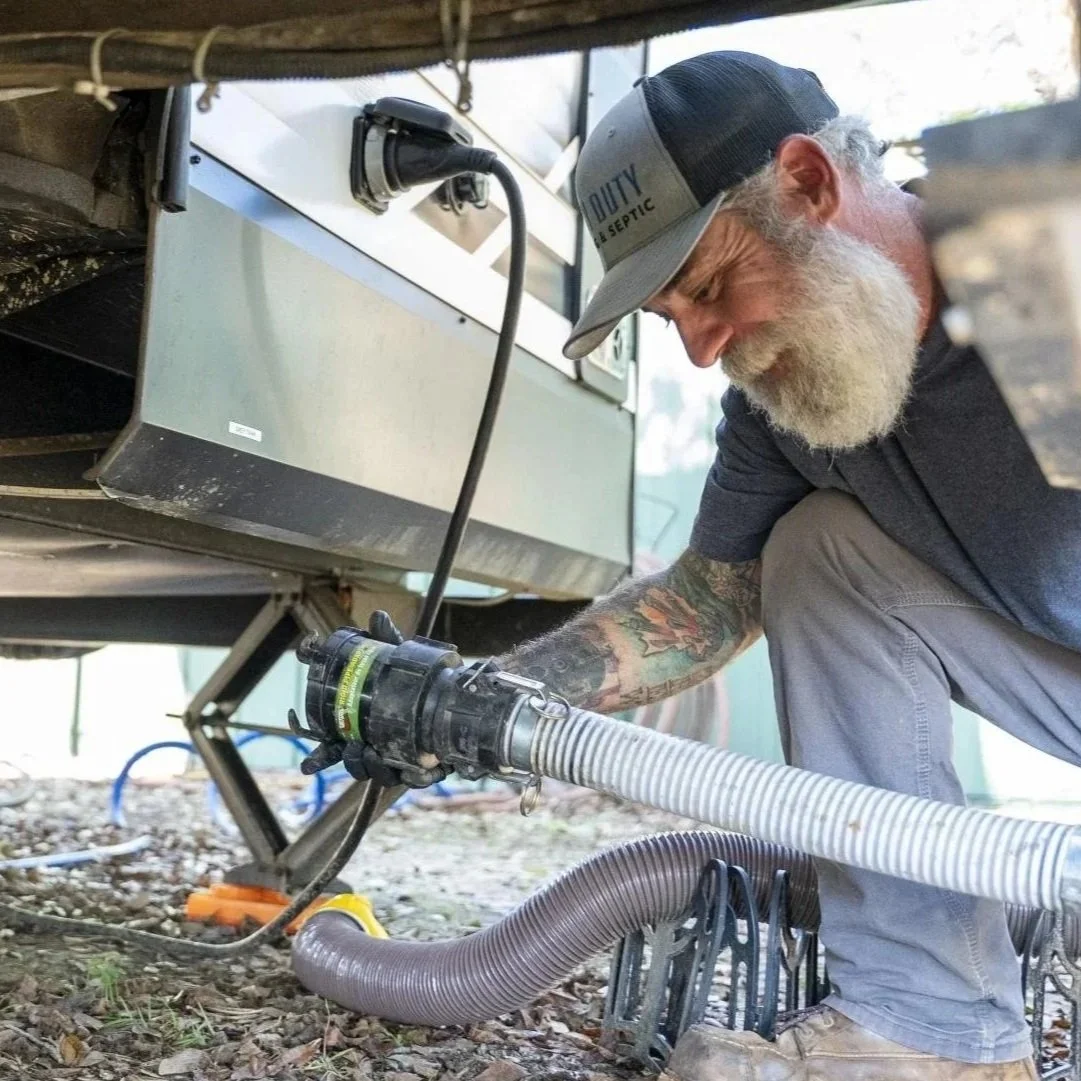
The toilet won't flush. The bathtub is filling with murky water that smells like it came from somewhere underground. You've made the call, and someone is on the way.
Now what?
The next 30 to 60 minutes matter more than most people realize. What you do while you wait can mean the difference between a contained problem and sewage pushing deeper into your floors, walls, and yard. A few specific actions protect your home and family. A few other actions — including some that feel logical — can turn a manageable emergency into a much larger repair.
Steps to Take Right Now
1. Stop all water use immediately. Every gallon of water that enters your plumbing system has nowhere to go when the septic tank or main line is backed up. The hydraulic pressure from that water pushes sewage further back into your fixtures and out into your yard. Shut off washing machines and dishwashers mid-cycle if they're running. Don't run showers or faucets. Don't flush the toilet to see if it's fixed. Every drop you send down a drain right now makes the situation harder to contain.
2. Keep people and pets away from affected areas. If wastewater is surfacing near the tank or drain field, rope it off or place something visible to mark the boundary. Raw sewage carries bacteria, viruses, and parasites that pose genuine health risks. Inside the house, keep everyone out of rooms where sewage has backed up and avoid direct contact with any affected surfaces.
3. Open windows and doors in affected rooms. Septic tanks release gases as waste breaks down — including hydrogen sulfide and methane. Hydrogen sulfide has a recognizable rotten-egg smell, but at higher concentrations it actually dulls your ability to smell it, which is what makes it dangerous. Ventilate any room where sewage has entered or where a strong odor has appeared.
4. Don't try to open the septic tank lid. The impulse to investigate makes sense. Resist it. Gases trapped inside an open tank can be lethal in a confined space, and the structural area around a septic tank during an active emergency is unstable ground. Leave the lid access to the technician and their equipment.
5. Note what you're seeing and be ready to describe it. Where is the backup showing up — toilets, tubs, floor drains, and basement? Are multiple fixtures affected or just one? Is there surfacing water in the yard? When was the tank last pumped? A technician who gets specific answers when they pull in can locate the problem in minutes instead of spending 20 minutes mapping your system from scratch.
6. Clear a path to the tank and drain field. Move any vehicles, lawn furniture, or equipment that might block access. The technician will need to get a vacuum truck within reach of the tank lid — anything in the way adds time when time already matters..
What Counts as a Septic Emergency — and What Doesn't
Not every septic problem requires an immediate call-out. Understanding where your situation falls on the urgency scale helps you decide how fast to act and how strictly to limit water use while you wait.
| What you're seeing | Urgency level |
|---|---|
| Sewage backing up into tubs, toilets, or floor drains | Emergency — stop water and call now |
| Multiple drains gurgling or sluggish at the same time | Emergency — points to a system-wide problem |
| Standing water surfacing near the tank or drain field | Emergency — overflow risk is active |
| Strong sewage odor inside the house | Emergency — possible gas buildup, ventilate |
| Septic alarm going off with slow drains or backup | Emergency |
| Septic alarm only, no other symptoms | Urgent — limit water sharply and call same day |
| Single slow drain, no other symptoms | Not an emergency — schedule service within days |
| Faint outdoor odor after heavy rain only | Watch for other signs before escalating |
If you're looking at anything in the top half of that table, the call you already made was right. The bottom two rows are warning signs worth acting on promptly — but they're usually not middle-of-the-night situations.
What Not to Do While You Wait
Some of the most instinctive responses to a septic emergency make the problem harder to fix. These are the moves worth skipping:
Don't pour chemicals down the drain. Bleach, drain cleaners, and "septic activator" products won't dislodge a main line blockage or relieve a full tank. What they will do is kill the beneficial bacteria inside the tank that digest solid waste — and that bacterial ecosystem takes weeks to rebuild. Chemical drain cleaners also soften older pipe joints, which is exactly the wrong outcome during a plumbing emergency.
Don't keep flushing to test whether the system cleared. A toilet that empties is not proof the problem is gone. What it usually means is the tank temporarily equalized by routing partially treated water into a drain field that's already struggling. Continued flushing accelerates that process and can push a drain field that might have recovered into a condition that requires excavation and replacement.
Don't drive or park over the tank or drain field. Saturated soil compresses easily. Vehicle weight can crush the distribution pipes buried beneath the drain field, collapse a tank lid, or damage access risers — all of which convert a pump-and-recover situation into something more involved. Park on the street or driveway.
Don't start cleaning up until the system is stabilized. If sewage has entered a room, cleanup obviously matters. But cleanup before the system stops pushing wastewater into the house means mopping the same floor twice, minimum. Wait until the technician confirms the system is flowing before you start remediation.
What Happens When the Technician Arrives
Knowing what to expect reduces the stress of the wait.
The first thing a technician does is locate the tank and check fluid levels. If the water inside the tank is sitting above the outlet pipe, that confirms the tank is overloaded and needs to be pumped. They'll also look for signs that the problem extends beyond the tank itself — saturated soil above the drain field, effluent surfacing between the distribution lines, or unusually green grass over the field during dry weather are all indicators that the drain field is under stress.
Emergency pumping uses a vacuum truck to fully evacuate the tank — solids and liquid both. A standard residential tank takes 30 to 60 minutes to pump, depending on size and how accessible the lid is. Once empty, the interior walls, inlet baffle, outlet tee, and structural condition of the tank are visible. That's the point where you get real answers: what caused the failure, whether the tank or components need repair, and what the system needs going forward.
A camera inspection run through the inlet and outlet lines after the pump-out can identify blockages, root intrusion, or pipe damage that isn't visible from the surface — and that inspection is often what separates a one-time emergency from a problem that keeps coming back every six months.
Preventing the Next One
Emergency pumping resolves the immediate crisis. What happens in the days and months that follow determines whether the crisis repeats.
Most residential septic systems need pumping every three to five years. That interval shortens when household water use is heavy — a family of five running multiple loads of laundry daily will fill the tank faster than a household of two with modest water use. If you don't know when your tank was last pumped, finding that out is the first thing to schedule after the emergency is resolved.
What enters the system matters as much as how often the tank gets pumped. Cooking grease poured down the kitchen drain enters as a liquid and exits as a solid, coating the inside of the inlet baffle and the pipes that feed the drain field. Marketed "flushable" wipes don't break down the way toilet paper does and pile up inside the tank faster than most people expect. Bleach and disinfectants used in quantity kill the bacteria that process waste — run at normal household levels they're fine, but cleaning a floor with straight bleach and hosing it into a drain will set back the tank's bacterial balance.
The early warning signs to watch for between service visits: multiple drains that back up or run sluggish over several days, a gurgling sound from the toilet when you run water elsewhere, a faint outdoor sewage smell that doesn't come from an obvious source, or a patch of grass over the drain field that's noticeably greener and wetter than the surrounding yard. Any of those individually might be nothing. More than one at the same time usually means something worth scheduling a look at before it becomes a 10 p.m. emergency call.
Frequently Asked Questions
Once the Truck Pulls Away
The emergency is the worst part. What comes after is just problem-solving. Once the tank is pumped and the technician has walked you through what they found, you'll have a clear picture of what the system needs — whether that's a return to a regular pumping schedule, a targeted repair, or a follow-up inspection to confirm the drain field recovered. That conversation is genuinely useful, and it's the part that keeps this from happening again.
