The rain hasn't let up in three days. You flush a toilet and notice it draining slower than usual. Then the shower drain starts bubbling. By morning, there's a faint sewage smell coming from somewhere you can't quite place. Nothing inside the house changed — but the system is telling you something's wrong.
The rain changed things. The part of your septic system doing the most work on a normal day — the drain field — has essentially stopped. When the soil around it gets saturated, it can't accept any more liquid. The wastewater your tank was trying to push out has nowhere to go, so it backs up instead.
What Happens Underground When It Rains
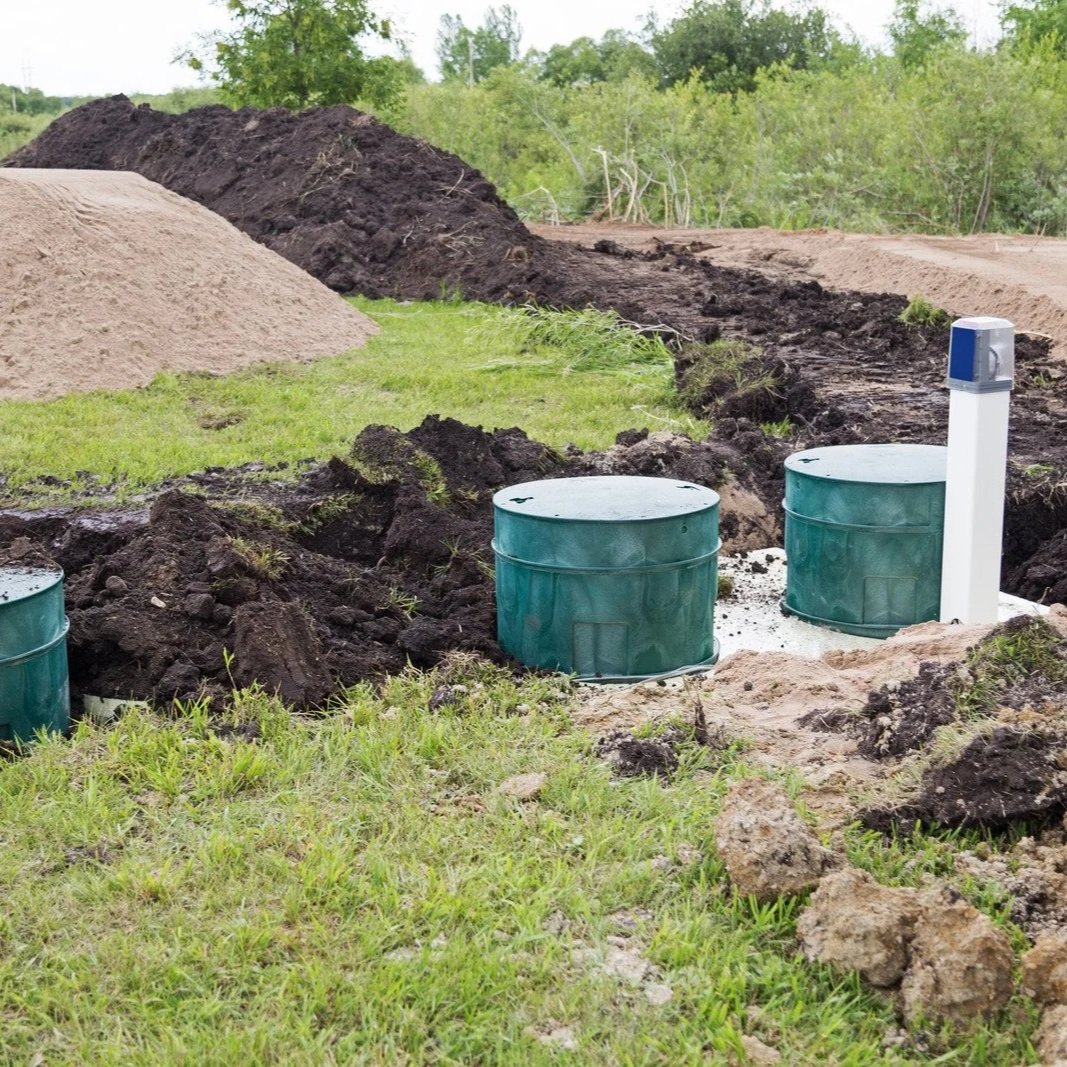
Your septic system runs on gravity and soil absorption. Wastewater flows from the house into the tank, solids drop to the bottom, and the liquid layer — called effluent — exits through perforated pipes into the drain field. From there, it disperses into the soil, where bacteria break it down over the last few feet of its journey.
That final step requires space. Specifically, it requires that the soil around the drain field isn't already holding water. After several days of heavy rain, it often is. The pore spaces that normally absorb effluent are occupied by rainwater. Effluent pools around the distribution pipes, backs up into the tank, and eventually has nowhere to go but toward the house.
Think of it like pouring water into a soaking-wet sponge. The sponge isn't broken. It's just full. And the problem isn't your tank or your pipes — it's that the soil can't take any more liquid until the rain stops and the ground dries out.
Why the Drain Field Is the Weak Point
Not all drain fields struggle the same way. How fast yours recovers depends almost entirely on what kind of soil you're dealing with.
Sandy or loamy soil drains quickly. After the rain stops, effluent can move through it fast enough that the drain field starts working again within 24–48 hours.
Clay soil is a different story. Water moves through clay 10 to 100 times slower than through sandy soil. If your yard sits on a clay base — common across much of the South — even a moderate rainstorm can saturate the drain field for days. A prolonged rain event can leave it soggy for a week or longer.
High water tables make things worse. When the water table rises after heavy rain, it can get to within a few feet of your drain field pipes. At that point, the field has almost no absorption depth left, and effluent has nowhere to go but back.
How Water Gets Into the Tank Itself
The drain field is one part of the picture. But surface water can also find its way directly into the tank — and that makes things worse faster.
Older tanks have concrete lids, risers, and inlet pipes that crack over time. During heavy rain, water doesn't just fall on the ground — it flows across the yard and finds the lowest entry point. A hairline crack in a concrete lid or a worn seal around an access riser is enough to let significant volume in.
When rain runs directly into the tank, the liquid level rises faster than normal. Effluent gets pushed out through the outlet before solids have had time to settle. That means more suspended material heading into the drain field, which clogs the soil faster and makes the backup worse.
You can usually tell if this is happening. If your system backs up during every rain event but works fine in dry weather, surface infiltration is often the cause. A camera inspection of the tank lid and inlet pipe confirms it quickly.
Warning Signs Your System Is Struggling
| What You're Seeing | What It Means | How Urgent |
|---|---|---|
| Slow drains in multiple fixtures | Tank or drain field overwhelmed | Monitor closely; call if it lasts 24+ hours after rain stops |
| Gurgling sounds from toilets or drains | Air being pushed back through pipes | Same-day attention if worsening |
| Wet, spongy ground over the drain field | Drain field saturated or effluent surfacing | High — surface sewage is a health hazard |
| Sewage smell indoors or near the tank | System actively backing up | Call today |
| Sewage or water backing up into drains | Active backup in the house | Emergency — stop water use, call now |
| Standing water near the tank lid | Possible surface infiltration or overflow | Same day — inspect for cracked lid |
The first two signs — slow drains and gurgling — are early. At that stage, cutting indoor water use can give the drain field time to catch up. The last three are serious. Once waste is surfacing or backing into the house, you need someone on-site.
What to Do During and After Heavy Rain
Cut your water use immediately. Every gallon you put down the drain is one more gallon the drain field has to absorb while it's already at capacity. Shorten showers, hold off on laundry, skip the dishwasher. The goal is to take pressure off the tank while the drain field recovers.
Don't pump the tank while the drain field is still saturated. This is the mistake people make most often, and it can create a much bigger problem. Pumping removes the weight of wastewater from inside the tank. But in waterlogged soil, that weight was helping hold the tank in place. An empty tank in saturated ground can shift or float upward — and pulling a tank out of the ground and reinstalling it costs far more than a standard pump job. Wait until the soil has dried before scheduling service.
Stay off the drain field. Saturated soil compacts easily. Driving over the drain field area — or even walking it repeatedly — can collapse the perforated pipes underground.
After the rain stops, wait and watch. Most systems with a functioning drain field recover within 24–72 hours. Clay-heavy soils can take up to a week. During that window, keep water use low and check the drains every 12 hours or so. If things are still sluggish seven days after the storm ended, something more is going on.
When Rain Exposes a Bigger Problem
A healthy system shouldn't back up every time it rains. One week of steady rain or a major flood event can overwhelm almost anything. But if your drains slow down after a normal afternoon thunderstorm, or if you've dealt with rain-related backups two or three seasons in a row, the rain isn't causing the problem. It's exposing one that was already there.
The most common culprits are an undersized drain field that was never adequate for daily household output, a drain field that's already failing from grease buildup or years of overloading, a high water table that leaves the field short on absorption depth year-round, and surface water getting into the tank through cracked lids or deteriorating pipe penetrations.
Repair costs shift significantly depending on which of these you're dealing with. Sealing a cracked lid or regrading drainage away from the tank runs $250–$2,000. Drain field repair or replacement typically falls in the $3,000–$15,000 range. A full system replacement — new tank and new field — can reach $15,000–$35,000. Catching the issue before the drain field degrades further makes a real difference in which end of that range you land on.
Frequently Asked Questions
What Rain-Related Backups Are Actually Telling You
One backup during a multi-day downpour doesn't mean your system is failing. It may just mean the soil couldn't drain fast enough and needed a few days to catch up. But a system that backs up whenever it rains, or one where recovery takes more than a week, is telling you something specific — either the drain field is already compromised or the system was never sized for what it's handling.
Catching that early, before a clogged field or cracked tank lid has been running long enough to push solids into the absorption zone, is the difference between a repair and a full replacement.
