
Why Does Your Yard Smell Like Sewage?
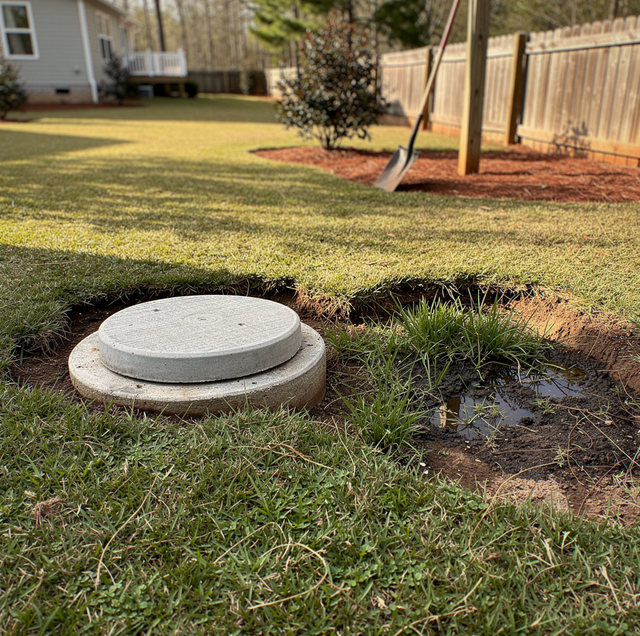
A septic system is built to keep waste and the gases that come with it completely out of your nose. When it's working correctly, you should never catch a whiff of sewage while you're out mowing the grass or walking the dog. So when a sour, rotten-egg odor starts drifting up from somewhere in the yard, it's not a smell to shrug off. It's the system telling you, in the only language it has, that something along the line isn't sealed, isn't draining, or isn't being managed the way it should be.
How A Healthy System Keeps The Smell Contained
Every septic system produces sewer gas as bacteria break down waste inside the tank. That's normal and expected. What's not supposed to happen is for that gas to reach the surface of your yard. A properly functioning system routes those gases through the plumbing vent stack that runs up through the roofline, where they disperse harmlessly into open air, well above where anyone would notice. Meanwhile, the tank itself sits below grade with a lid and access points intended to remain sealed, and the drain field is designed to absorb liquid into the soil rather than let it pool on the surface.
When any one of those three barriers- the vent, the tank seal, or the drain field's absorption- stops doing its job, sewer gas or actual wastewater finds another way out. That's the smell reaching your yard instead of staying contained where it belongs. Four causes account for most cases: a drain field that's surfacing wastewater, a cracked tank lid or failed riser seal, a blocked vent stack, or a tank that's simply overdue for pumping and nearing capacity.
A Drain Field That's Surfacing Wastewater
The drain field's job is to receive the liquid effluent from the tank and allow it to soak into the soil, where natural filtration completes the treatment. When the field can't keep up, whether because solids have clogged the pipes, the ground is saturated, or the field has simply reached the end of its service life, that liquid has nowhere left to go but up. Instead of soaking in unseen, it rises to the surface and carries its odor with it.
You'll usually notice this cause in a specific spot rather than across the whole yard. Look for ground that feels spongy or unusually wet underfoot along the rows where the field's pipes run, sometimes paired with grass that's greener or grows faster than the rest of the lawn. The smell tends to be strongest right over those trenches and can get noticeably worse after a heavy rain or a stretch of high household water use, since both add more liquid than the soil can absorb at once.
| Cause | Where the smell shows up | Other clues |
|---|---|---|
| Surfacing drain field | Over the field's trench rows | Wet or spongy ground, patchy lush grass |
| Cracked lid or riser seal | Directly above the tank | Odor stays fixed at one small spot |
| Blocked vent stack | Near the house or a low vent riser | Smell follows flushing or heavy water use |
| Tank nearing capacity | Around the tank and access points | No obvious wet spots, smell comes and goes |
A Cracked Tank Lid Or Failed Riser Seal
Tank lids and the risers that extend access up to grade are supposed to form an airtight barrier over the tank. Concrete lids can develop hairline cracks as they age or shift with the ground, and a riser that's been driven over, struck by landscaping equipment, or simply installed with a worn gasket can lose its seal entirely. Once that seal fails, gas that would normally travel up through the plumbing vent instead escapes straight up through the gap, right into the yard above the tank.
This cause tends to show up as a fixed-point smell rather than one that spreads. If you can walk the yard and pinpoint the odor to a small area directly over the tank, and it doesn't seem to move or spread the way a surfacing field would, a compromised lid or riser seal is a likely explanation. It's also one of the easier problems to confirm visually, since a cracked lid or a gap around a riser collar is often something a technician can spot at a glance once the area is exposed.
A Clogged Or Blocked Vent Stack
The vent stack that runs from your plumbing up through the roof exists specifically to let sewer gas escape above the house, where it disperses instead of building up pressure inside the system. Leaves, a bird's nest, ice in cold weather, or general debris can block that opening, and once it's obstructed, the gas has to find another exit. Depending on how your plumbing is laid out, that can mean odor working its way out near an exterior cleanout, a low-lying secondary vent, or another gap in the system closer to ground level.
A blocked vent often has a pattern worth noticing: the smell tends to appear or grow stronger right after you flush a toilet, run a load of laundry, or use several fixtures at once, since that's when the system is pushing the most air and gas through the line. If the odor seems tied to water running through the house rather than being constant, a vent problem is worth checking before anything else.
A Tank Nearing Capacity
Inside a septic tank, solids settle to the bottom, grease and scum float to the top, and a layer of gas sits above the liquid as bacteria continue breaking down waste. That gas layer is always there, but as the tank fills with more sludge and scum than it's designed to hold, usually because it's overdue for pumping, there's less open space for that gas and more pressure pushing to escape somewhere. Any weak point in the system, whether a lid seam, a riser joint, or the vent itself, becomes the path of least resistance.
This cause is a little harder to pin to one exact spot, because the smell can seem to drift or come and go rather than sit fixed over a single location. If it's been several years since your tank was last pumped and you're noticing an odor without any obvious wet ground or a visible crack, capacity is often the simplest explanation, and it's usually the easiest of the four to resolve.
Reading Where The Smell Points You
Before calling anyone, a short walk around the yard can narrow things down considerably. Note whether the smell is tied to one fixed spot or spreads across a wider area, whether the ground nearby feels wet or spongy, and whether the odor changes when water is actively running through the house. A smell that intensifies after rain and sits over a wide, soggy strip usually points to the drain field. One that stays put in a small area right over the tank suggests a lid or riser problem. Odor that tracks with flushing or running water points toward the vent stack. And a smell with no wet ground, no visible crack, and no clear pattern often comes down to a tank that simply needs to be pumped.
None of that replaces a professional look, but it does help a technician start in the right place rather than having to work through every possibility from scratch. It also helps you describe what's happening clearly when you call, which speeds up getting the right fix scheduled.
What This Means For Your System
An outdoor sewage smell is never just a nuisance to mask with air freshener or ignore until it fades. Each of these four causes points to a real gap somewhere in how the system is meant to contain waste and gas, and each one tends to get worse rather than better on its own. A surfacing drain field can progress toward full field failure. A cracked lid or riser leaves an open path for gas and, potentially, standing water to collect near a hazard you can't see. A blocked vent can push gas toward the house itself instead of safely above the roofline. And a tank nearing capacity that isn't pumped in time risks solids reaching the drain field, turning a simple, routine service call into a much larger repair.
Surfacing wastewater and escaping sewer gas are also a real health concern, not just an unpleasant smell, since they can carry bacteria and contaminants that don't belong anywhere near where people or pets spend time. Once you notice a persistent odor, keep the area clear of foot traffic and have a septic professional inspect the tank, lids, risers, vent, and drain field to identify which of the four causes applies and what it takes to fix it. Often the fix is as simple as scheduled pumping or resealing a riser. Left alone, any of the four tends to compound into something more involved, so acting on the smell early is almost always the easier path.
Frequently Asked Questions
A sudden sewage smell usually means one of four things has changed: the drain field has started surfacing wastewater, a tank lid or riser seal has cracked or shifted, the plumbing vent stack has become blocked, or the tank has filled to the point where gas is escaping through a weak spot instead of venting normally. A short walk around the yard, noting where the smell is strongest and whether the ground feels wet, usually points toward one of these causes.
Yes, in more than one way. Surfacing wastewater and escaping sewer gas can carry bacteria and other contaminants that pose a health risk to people and pets, and the smell itself often signals a system problem that will only get worse if ignored. It's best to keep the area clear of foot traffic and have the cause identified and addressed promptly.
Location and pattern are the biggest clues. A smell spread over a wider strip of yard, especially with spongy or wet ground and patchy lush grass, usually points to the drain field. A smell fixed to one small spot directly over the tank, without spreading, more often points to a cracked lid or a failed riser seal. If there's no wet ground at all and the odor comes and goes, a tank nearing capacity is a common explanation.
Yes. The vent stack is designed to release sewer gas above the roofline, and when it's blocked by debris, leaves, or a nest, that gas has to escape somewhere else in the system, sometimes near an exterior cleanout or a low vent closer to the ground. A smell that gets noticeably stronger right after flushing or running water through the house is a common sign the vent, rather than the tank or field, is the issue.
Not always, but it's worth checking. If the tank is overdue for pumping and there's no obvious wet ground or visible crack anywhere, capacity is often the simplest and most likely explanation, and pumping typically resolves it. If pumping doesn't clear the odor, that points toward one of the other causes needing attention instead.
It's not something to attempt without the right training, since it involves exposing and working directly around the tank. A professional can confirm whether a lid or riser is actually the source, reseal or replace the damaged part, and check that the rest of the system, including the drain field and vent, isn't also contributing to the smell.
Schedule a septic odor inspection — Have a technician pinpoint whether the smell traces to your drain field, tank lid, vent stack, or pumping schedule before it gets worse. Heavy Duty Pumping & Septic LLC serves Lucedale, Leakesville, Hurley, MS. Call (601) 804-2230.
