
Repair or Replace: When Is a Septic Tank Really Done?
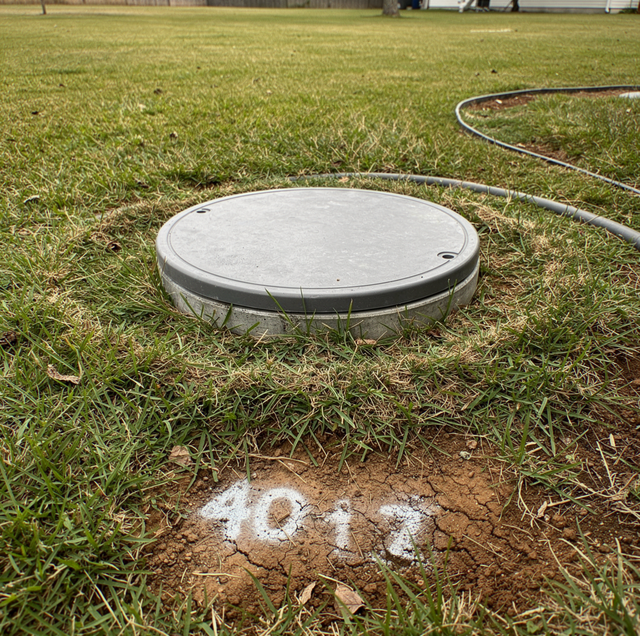
A septic tank rarely fails all at once. It fails in stages, and the first stage almost always looks like a nuisance rather than an ending. Drains run slow, the yard stays soft in one spot, or a pumping company mentions a hairline crack in passing. None of that tells you, by itself, whether the tank needs a patch or a burial plot. The honest answer is that repair and replacement are two different questions wearing the same symptoms, and telling them apart takes more than a glance at the lid.
This is the decision homeowners get wrong in both directions. Some pour money into patch after patch on a tank that has quietly become a liability, while others tear out and replace a tank that only needed a new baffle and a fresh gasket. Getting it right means separating a few things that tend to get lumped together: what kind of damage you actually have, what the tank is made of and how old it is, and whether the drain field downstream of it is still doing its job.
Structural Damage Versus a Simple Pumping or Maintenance Issue
The first sort is the most important one. A tank that is simply overdue for pumping behaves in predictable ways: it fills faster than expected, solids build up near the outlet, and once it is emptied and cleaned, it returns to normal operation. Nothing about the shell has changed. A stuck or corroded effluent filter, a clogged outlet baffle, or scum that has built up past the point it should have been checked all read as "maintenance" and clear up once the tank is serviced.
Structural damage is a different animal, because it does not clear up with service. A tank that keeps drawing down between pumpings, or one that refills faster than any household could produce wastewater, is losing or gaining liquid through the shell itself. A depression forming in the yard over the tank, a lid that has visibly settled, or a crack a technician can see and measure with a probe, all point to the container itself, not what is inside it. The test that separates the two is simple to state and hard to fake: does the problem go away after a normal pump-out and a baffle check, or does it come right back within weeks? A recurring problem on a fixed schedule is a structural one, and no amount of routine service will resolve it.
Why Tank Material Changes the Decision
What the tank is built from changes both how it fails and how repairable that failure tends to be. Concrete tanks, which dominate most new installations, are heavy, resist crushing loads well, and tend to fail through cracking along a seam, spalling from decades of exposure to the corrosive gases inside, or a baffle that rusts away even though the shell itself is fine. A concrete tank with a single hairline crack, caught early, is often a strong candidate for repair because the surrounding structure is usually still sound.
Plastic and fiberglass tanks fail differently. They do not corrode the way metal does, and they resist the acidic gases inside far better than older steel tanks ever did. But they are lighter and more flexible, which creates their own set of weak points. Improper backfill, a rock pressing against the wall, or the weight of a vehicle parked overhead can flex or crack the shell in a way concrete rarely does. An empty plastic or fiberglass tank in wet, saturated ground can also float upward if it was not anchored correctly, a failure mode concrete tanks are heavy enough to avoid. When a lightweight tank shows a crack from an impact or an anchoring failure, replacement is usually the safer path, since a flexible shell that has already deformed once is likely to deform again under the same pressure.
Age and Wear: Reading the Clock on Any Tank
Material sets the ceiling on a tank's life, but age tells you how close to that ceiling a given tank actually sits. A concrete tank in stable, well-drained soil can reasonably be expected to last around four decades, sometimes longer, though the baffles and risers usually need attention well before the shell itself does. Older steel tanks are the shortest-lived of the common types, often reaching the end of a usable life somewhere between two and three decades as rust works through the metal from both the inside and the outside. Plastic and fiberglass tanks are newer to the market and generally hold up on a timeline similar to concrete, provided the installation and backfill were done correctly the first time.
Age alone rarely forces a decision. A twelve-year-old tank with a broken baffle is a repair. A tank at or past the upper end of its expected life with the same broken baffle is a different conversation, because a shell that has spent decades absorbing soil pressure and sewer gas is closer to a second failure than a young one is. When a technician finds damage on an older tank, the honest question is not "can this be patched" but "how many more repairable problems does this tank have left in it."
The Drain Field Can Decide the Answer for You
A tank in good repair means very little if the drain field downstream of it has stopped absorbing water. This is the piece that gets skipped most often, because the tank is the visible, easy-to-inspect part of the system and the field is buried and harder to read. Soil in a failing field loses its capacity to filter and disperse effluent; the ground stays soggy or develops standing water, and drainage throughout the house slows down even when the tank itself is watertight and freshly pumped.
A field that has failed changes the math on tank repair completely. Fixing a crack or replacing a baffle on a tank whose field can no longer accept the water it sends out solves one problem while leaving the bigger one in place. In that situation, a full system evaluation, covering both the tank and the field, usually makes more sense than treating the tank in isolation. Conversely, a tank with genuine structural damage sitting on a field that is otherwise healthy is a cleaner case: replace or repair the tank, and the field keeps doing the job it was designed for. Any repair-versus-replace conversation about the tank alone is incomplete until the field has been checked too.
Weighing the Effort of a Repair Against a Full Replacement
Repair work on a tank is generally quick and contained. Swapping a baffle, resealing a lid, or patching a caught-early hairline crack can often be done in a single visit with minimal disruption to the yard. Full replacement is a bigger undertaking by nature: it means excavation, removing the old tank, setting and leveling a new one, backfilling properly, and reconnecting the plumbing, all of which take more time, more equipment, and a greater disturbance to the property.
The tradeoff is not simply "repair is cheaper, replacement is not." A tank that keeps needing new repairs, season after season, ends up costing more in cumulative effort and disruption than a full replacement would, and it leaves the underlying risk of a sudden failure in place the entire time. A tank that only needs one contained repair, on the other hand, is clearly the lower-effort and lower-disruption path, and there is no reason to replace a structurally sound tank just because it is old on paper. The honest framing is effort over the life of the system, not the size of a single invoice: a repair that reliably holds is worth doing, and a repair that is really a stall on an inevitable replacement is worth recognizing for what it is.
Making a Call That Holds Up
None of these factors work in isolation. A young concrete tank with a broken baffle and a healthy field is an easy repair. An aging steel tank with a structural crack sitting above a struggling field is an equally easy call in the other direction. Most real situations fall somewhere between those two, which is exactly why an inspection that checks the shell, the material, the age, and the field together matters more than guessing from symptoms alone. A tank that has been opened, tested, and understood gives you a decision you can live with, instead of a repair you will be redoing within the year or a replacement you did not actually need.
Frequently Asked Questions
A single repair on an otherwise sound tank is normal and expected over decades of use. A pattern of repeated patching on the same spot, or a new crack appearing near an old repair, is a different signal: it usually means the surrounding material has weakened broadly rather than failed in one isolated place, and a fresh patch will not hold any better than the last one.
Size and location both matter more than the presence of a crack alone. A short hairline crack above the liquid level, caught early in an otherwise solid shell, is often sealable. A crack running through a seam, below the liquid line, or paired with visible corrosion or a shifted baffle points to a shell that is failing structurally rather than suffering a single defect.
No. A new tank and a struggling field are two separate systems joined by one pipe, and replacing the tank does nothing to restore soil that has already lost its ability to absorb water. A field that was failing before the tank was replaced will keep failing afterward unless it is inspected and addressed on its own, sometimes through rest, sometimes through partial reconstruction of the absorption area.
The decision usually rests on more than one test: a water-level reading to see whether liquid is entering or escaping through the shell, a visual or camera inspection of the walls and baffles, and a check of how the tank's age lines up with its material's typical service span. A tank that fails two or more of those checks at once is treated as done, while one that fails only a minor point, like an aging baffle in an otherwise sound shell, is usually still repairable.
A tank leaking in either direction keeps causing damage as long as it sits unrepaired. Effluent escaping outward moves untreated waste into the surrounding soil, while groundwater entering inward overloads the tank and pushes more liquid than the field was designed to handle out into the yard. Delaying the fix does not pause the leak; it just gives it more time to spread before the eventual repair or replacement happens anyway.
Sometimes. Where the field is healthy and only the tank needs replacing, a technician may set the new tank and reconnect it to the existing field in a single visit. When both the tank and the field need attention, the work is sometimes phased, addressing the more urgent failure first and following with field repairs once the tank is stable, rather than tackling both under time pressure in a single project.
Get a professional read on your tank before you commit to a repair or a full replacement — an inspection settles it either way. Heavy Duty Pumping & Septic LLC serves Lucedale, Leakesville, Hurley, MS. Call (601) 804-2230.
